


We're pleased to have you join us
30-day trial with Audible is available.
New Releases

-
Imperfect
- Bug or Feature?
- By: Boris Kriger
- Narrated by: Donna Dew
- Length: 3 hrs and 50 mins
- Unabridged
-
Overall0
-
Performance0
-
Story0
Why do we remember what never happened? Why do we plan for futures that never arrive as planned? Why do we seek meaning where none exists and feel torn between what we think and what we feel? For centuries, these contradictions have been treated as flaws in human reasoning—bugs in the cognitive machinery that education and willpower should correct. But what if they are not bugs at all? What if they are features?
By: Boris Kriger

-
Spinoza, Evolution, and The Model Trap
- Why We Cannot Perceive Reality Directly (Philosophical Questions)
- By: Boris Kriger
- Narrated by: Darla G Foradora
- Length: 3 hrs and 7 mins
- Unabridged
-
Overall0
-
Performance0
-
Story0
We do not see the world as it is. We see only our model of it. For over two millennia, philosophers have described this condition: Plato's shadows on the cave wall, Kant's veil of phenomena, Spinoza's confused imagination. But why are we trapped behind this perceptual barrier? The answer is not metaphysical mystery, but evolutionary necessity. Direct perception works beautifully for bacteria and simple organisms-they respond immediately to the world without models, without prediction, without the illusion of a separate self.
By: Boris Kriger

-
The Call from Tomorrow
- How The Future Shapes Who We Are (Philosophical Questions)
- By: Boris Kriger
- Narrated by: C.L. Berns
- Length: 3 hrs and 35 mins
- Unabridged
-
Overall0
-
Performance0
-
Story0
What if the future is not empty? We are taught that causes precede effects, that the past shapes the present, and that the future is nothing more than an open space waiting to be filled. But our deepest experiences tell a different story. We fall in love before there is evidence. We sense what is approaching before it arrives. We feel pulled toward purposes we cannot yet name. Something ahead of us is already at work.
By: Boris Kriger
-
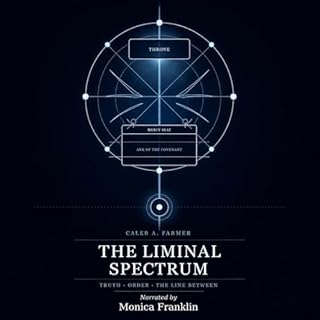
The Liminal Spectrum
- Truth, Order, the Line Between
- By: Caleb Farmer
- Narrated by: Monica Franklin
- Length: 2 hrs and 50 mins
- Unabridged
-
Overall0
-
Performance0
-
Story0
The Liminal Spectrum: Truth, Order, and the Line Between challenges one of modern life’s deepest assumptions: that approved knowledge is the same as truth. Caleb A. Farmer explores the hidden “approval economy” that shapes what societies call objective, neutral, and legitimate, arguing that consensus often reflects power, timing, and institutional permission more than final reality. Moving through philosophy, sociology, theology, and cultural critique, the book reframes subjectivity and objectivity as positions on a threshold rather than opposites.
By: Caleb Farmer

-
The Fourth Wall of Reality
- By: Heinrich Wilson
- Narrated by: Dr. Christopher Spindler
- Length: 4 hrs and 33 mins
- Unabridged
-
Overall0
-
Performance0
-
Story0
In theatre, the fourth wall is the invisible barrier that keeps the audience separate from the performance. When it breaks, the illusion collapses — and you finally see what’s real. The Fourth Wall of Reality takes this idea and applies it to modern life, revealing the quiet structures that shape how people think, behave, and understand themselves. Most move through the world without ever noticing the expectations guiding them, the roles they slip into, or the subtle pressures that decide their choices long before they do.
By: Heinrich Wilson

-
Evidence-Based Philosophy
- By: Boris Kriger
- Narrated by: Tyler Fine
- Length: 3 hrs and 30 mins
- Unabridged
-
Overall0
-
Performance0
-
Story0
Philosophy has been debating the same questions for two and a half thousand years. What is consciousness? What is justice? What can we know? Despite the brilliance of its practitioners, the discipline has not converged on answers. Meanwhile, every field that adopted formal methods and empirical accountability—from alchemy becoming chemistry to natural philosophy becoming physics—made staggering, cumulative progress. In this groundbreaking book, Boris Kriger argues that philosophy's stalemate is not caused by the difficulty of its questions but by the limitations of its methods.
By: Boris Kriger
-
Imperfect
- Bug or Feature?
- By: Boris Kriger
- Narrated by: Donna Dew
- Length: 3 hrs and 50 mins
- Unabridged
-
Overall0
-
Performance0
-
Story0
Why do we remember what never happened? Why do we plan for futures that never arrive as planned? Why do we seek meaning where none exists and feel torn between what we think and what we feel? For centuries, these contradictions have been treated as flaws in human reasoning—bugs in the cognitive machinery that education and willpower should correct. But what if they are not bugs at all? What if they are features?
By: Boris Kriger
-
Spinoza, Evolution, and The Model Trap
- Why We Cannot Perceive Reality Directly (Philosophical Questions)
- By: Boris Kriger
- Narrated by: Darla G Foradora
- Length: 3 hrs and 7 mins
- Unabridged
-
Overall0
-
Performance0
-
Story0
We do not see the world as it is. We see only our model of it. For over two millennia, philosophers have described this condition: Plato's shadows on the cave wall, Kant's veil of phenomena, Spinoza's confused imagination. But why are we trapped behind this perceptual barrier? The answer is not metaphysical mystery, but evolutionary necessity. Direct perception works beautifully for bacteria and simple organisms-they respond immediately to the world without models, without prediction, without the illusion of a separate self.
By: Boris Kriger
-
The Call from Tomorrow
- How The Future Shapes Who We Are (Philosophical Questions)
- By: Boris Kriger
- Narrated by: C.L. Berns
- Length: 3 hrs and 35 mins
- Unabridged
-
Overall0
-
Performance0
-
Story0
What if the future is not empty? We are taught that causes precede effects, that the past shapes the present, and that the future is nothing more than an open space waiting to be filled. But our deepest experiences tell a different story. We fall in love before there is evidence. We sense what is approaching before it arrives. We feel pulled toward purposes we cannot yet name. Something ahead of us is already at work.
By: Boris Kriger
-
The Liminal Spectrum
- Truth, Order, the Line Between
- By: Caleb Farmer
- Narrated by: Monica Franklin
- Length: 2 hrs and 50 mins
- Unabridged
-
Overall0
-
Performance0
-
Story0
The Liminal Spectrum: Truth, Order, and the Line Between challenges one of modern life’s deepest assumptions: that approved knowledge is the same as truth. Caleb A. Farmer explores the hidden “approval economy” that shapes what societies call objective, neutral, and legitimate, arguing that consensus often reflects power, timing, and institutional permission more than final reality. Moving through philosophy, sociology, theology, and cultural critique, the book reframes subjectivity and objectivity as positions on a threshold rather than opposites.
By: Caleb Farmer
-
The Fourth Wall of Reality
- By: Heinrich Wilson
- Narrated by: Dr. Christopher Spindler
- Length: 4 hrs and 33 mins
- Unabridged
-
Overall0
-
Performance0
-
Story0
In theatre, the fourth wall is the invisible barrier that keeps the audience separate from the performance. When it breaks, the illusion collapses — and you finally see what’s real. The Fourth Wall of Reality takes this idea and applies it to modern life, revealing the quiet structures that shape how people think, behave, and understand themselves. Most move through the world without ever noticing the expectations guiding them, the roles they slip into, or the subtle pressures that decide their choices long before they do.
By: Heinrich Wilson
-
Evidence-Based Philosophy
- By: Boris Kriger
- Narrated by: Tyler Fine
- Length: 3 hrs and 30 mins
- Unabridged
-
Overall0
-
Performance0
-
Story0
Philosophy has been debating the same questions for two and a half thousand years. What is consciousness? What is justice? What can we know? Despite the brilliance of its practitioners, the discipline has not converged on answers. Meanwhile, every field that adopted formal methods and empirical accountability—from alchemy becoming chemistry to natural philosophy becoming physics—made staggering, cumulative progress. In this groundbreaking book, Boris Kriger argues that philosophy's stalemate is not caused by the difficulty of its questions but by the limitations of its methods.
By: Boris Kriger