

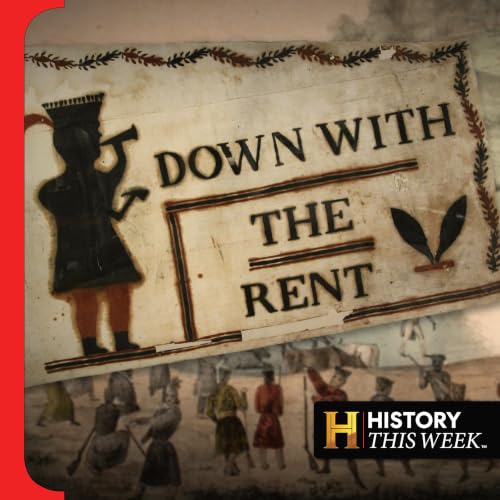
The *Other* Declaration of Independence (Part I)
Failed to add items
Add to basket failed.
Add to wishlist failed.
Remove from wishlist failed.
Adding to library failed
Follow podcast failed
Unfollow podcast failed

The *Other* Declaration of Independence (Part I)
-
Narrated by:
-
By:
July 4, 1839. Sixty-three years after 1776—and centuries after the medieval period—feudalism is alive and well in the United States.
High on a rocky plain in upstate New York, a crowd of tenant farmers gathers in the village of Berne to read aloud a declaration of independence… but not the one you're thinking of. These families are still bound to a landlord by perpetual leases their grandfathers signed, owing bushels of wheat and a share of every sale for as long as the land exists.
Today they're done. They call their leases "voluntary slavery" and vow to "take up the ball of the Revolution where our fathers stopped it." It's the opening shot of the Anti-Rent War, a revolt that will pit disguised farmers against sheriffs and posses across the Hudson Valley, and force New York to ask whether a feudal bargain has any place in a republic.
How did manor lords survive the Revolution? And what would it finally take to break their grip?
Special thanks Reeve Huston, emeritus associate professor of history at Duke University and author of Land and Freedom: Rural Society, Popular Protest, and Party Politics in Antebellum New York; Victoria Kupchinetsky and Misha Gutkin, director and producer of the film Calico Rebellion; David Fleming, the town supervisor of Nassau, NY; Nancy Newman, professor at SUNY Albany and author of Songs and Sounds of the Anti-Rent Movement in Upstate New York; and the Association of Public Historians of New York State.
You can find all the books we’ve used to make recent HISTORY This Week episodes at historythisweekpodcast.com.