• Ep.75, Still Exhausted? Why "Successful" Sleep Apnea Treatments Still Fail, Dr. Layne Martin and Chris Gillette
    Mar 31 2026
    In this episode of ASAP Pathway: The Podcast, Dr. Stacy dives into a powerful and eye-opening conversation with Chris Gillette and Dr. Layne Martin on a topic that is often overlooked in Dental Sleep Medicine: sleep architecture. While most discussions in airway dentistry focus on opening the airway and reducing apnea events, this episode challenges that narrow perspective. Chris, a registered sleep technologist with over 20 years of experience, and Dr. Layne Martin, a Dentist with Orthodontic Residency experience, share how treating apnea alone does not guarantee restorative, high-quality sleep.They explore what happens between sleep stages, why fragmented sleep can leave patients feeling exhausted even after “successful” treatment, and how both CPAP and traditional oral appliances can unintentionally disrupt the brain’s natural sleep patterns.The conversation expands into pediatric sleep, mouth breathing, growth and development, and why early intervention matters more than ever. Dr. Layne Martin also shares how his own journey—from full mouth rehab dentistry to orthodontics and sleep—completely shifted how he evaluates and treats patients.This episode is a must-listen for dentists, healthcare providers, and anyone interested in understanding why true sleep health is far more complex than just airway management—and how a more comprehensive approach can transform patient outcomes.Chris Gillette: LinkedInDr. Layne Martin: LinkedInairVata WebsiteOpen Air Pillow ($25 off either pillow code: ASAP_Podcast25)$35 off airVata for the Month of April 2026! CLICK HERE⏱ Chapters00:00 — Intro + ASAP Pathway course announcement 00:53 — Meet Chris Gillette and Dr. Layne Martin 02:29 — What is a sleep technologist (RPSGT)? 03:45 — Chris’s journey into sleep medicine 05:10 — Dr. Layne Martin’s journey from dentistry to airway-focused care 08:56 — Challenging the current paradigm in sleep dentistry 12:01 — What is sleep architecture and why it matters 13:19 — Why patients still feel exhausted after treatment 14:56 — Fragmented sleep and micro-arousals explained 15:50 — Why removing CPAP mid-sleep is harmful 17:10 — Sleep stages, REM, and restorative sleep cycles 18:48 — The impact of foreign objects on sleep quality 21:20 — Mouth breathing, nasal function, and airway health 24:08 — Developing a better oral appliance approach 28:12 — Why sleep medicine is too focused on airway alone 31:06 — Rethinking treatment: beyond CPAP and appliances 34:52 — Pediatric sleep, growth, and early intervention 36:12 — Dentistry’s role in airway (whether you realize it or not) 40:25 — Why deep sleep (delta sleep) is critical for growth 41:10 — Introducing jaw stabilization and new device concepts 46:01 — Bite changes and why traditional devices can fail 48:05 — Static vs dynamic appliances and brain response 50:30 — Comfort, compliance, and long-term success in treatment🧠 Key Learnings 1. Treating apnea alone does not equal good sleep Reducing AHI (apnea events) does not guarantee that a patient is getting restorative sleep. Sleep quality and architecture matter just as much. 2. Sleep architecture is critical to health True restorative sleep requires proper cycling through stages: Stage 1 → Stage 2 → Deep Sleep → REM, multiple times per night. 3. Fragmented sleep is a major hidden issue Micro-arousals caused by discomfort, devices, or airway instability can prevent patients from reaching deep and REM sleep—even if apnea is treated. 4. Foreign objects can disrupt the brain CPAP masks or bulky oral appliances can trigger the brain to perceive a threat, leading to disrupted sleep transitions and poor sleep quality. 5. REM sleep is essential—and often missed Patients frequently miss REM sleep due to fragmentation, leading to fatigue, poor recovery, and long-term health risks. 6. Mouth breathing has no physiological benefit The nose has dozens of functions that support health, while mouth breathing contributes to poor airway function and overall health issues. 7. Jaw position and stability matter in sleep An unstable or falling jaw can worsen airway obstruction and contribute to poor sleep quality and clenching/grinding. 8. Dentistry is always affecting airway Whether intentional or not, every dental treatment (orthodontics, restorations, night guards) impacts airway and breathing.9. Pediatric sleep is critical for development Children require deep sleep for growth and brain development. Disrupted sleep can lead to developmental and health issues. 10. Traditional approaches may be too narrow The current model often focuses only on airway mechanics, ignoring neurological and physiological aspects of sleep.11. Comfort drives compliance If a patient cannot tolerate a device, they will not use it—making even the most effective treatment useless.12. Sleep medicine needs a more comprehensive approach True treatment must consider airway, neurology, behavior,...
    Show More Show Less
    1 hr and 11 mins
  • Ep. 74, From Survival to Fulfillment: A Dentist’s Story of Recovery, Dr Jaren Argyle
    Mar 23 2026
    📝 In this episode, Drs. Stacy and Michelle sit down with Dr. Jaren Argyle, founder of The Elevated Dentist, for a deeply personal and important conversation about mental health, fulfillment, and the hidden emotional burden many dentists carry. Dr. Argyle shares how the traits that often make dentists successful—high achievement, perfectionism, and deep care for others—can also create the perfect storm for burnout, depression, and isolation. He opens up about his own life-changing experience with suicidal ideation during a difficult season in his marriage, and how that moment became the catalyst for a profound shift from external validation to internal peace.Together, they explore why so many dentists define success by productivity, revenue, and outside expectations, and how easily that can pull them away from what they actually want in life and practice. The conversation highlights the importance of vulnerability, coaching, supportive community, and what it means to move from “prevention” toward actively promoting wellness, joy, and fulfillment before crisis occurs.This episode is an honest and hopeful reminder that professional success does not guarantee emotional wellbeing—and that it is possible to build a life and practice that truly align with who you are.Suicide Hotline: #988, Open 24/7/365LinkedIn Jaren ArgyleFB Jaren ArgyleIG Jaren ArgyleThe Elevated Dentist Redefining Success MasterclassBooks of Interest Below: ⬇️Wheel of LIfe AssessmentSuccess MindsetsThe Gap and the GainInto the Magic Shop📖 CHAPTERS: 00:00 — Welcome + Introducing Dr. Jaren Argyle01:45 — Why dentistry can be the “perfect storm” for mental health struggles03:28 — The three personality traits common in dentists06:42 — Why dentists blame themselves when things go wrong09:14 — The problem with success being defined externally13:06 — Jaren’s personal story: marriage struggles and reaching a breaking point17:24 — Suicidal ideation, hopelessness, and the moment things shifted20:24 — From external validation to internal loci of control22:38 — “I don’t need my wife, but I want her” — changing the framework26:20 — Climbing the wrong ladder: why dentists chase the wrong goals33:16 — Needs vs wants, oxygen masks, and redefining what matters34:18 — Vulnerability, ego, and why dentists struggle to ask for help42:16 — The Gap and the Gain: how dentists measure success the wrong way47:05 — Why Jaren created The Elevated Dentist55:20 — Utah wellness events, unique ability, and designing a more fulfilling life01:05:02 — Promoting wellness instead of waiting for crisis01:15:19 — Rapid-fire questions and closing reflections🧠 Key LearningsDentistry creates a unique mental health risk profile Dr. Argyle explains that many dentists share three traits: they are high achievers, perfectionists, and deeply caring people. That combination can create a powerful internal pressure that becomes difficult to manage.Dentists often define success externally From school onward, many dentists are conditioned to measure success through grades, performance, productivity, revenue, and approval from others rather than by internal alignment or peace.Clinical success does not guarantee personal fulfillment A growing practice, income, and professional milestones can all be present while a dentist still feels emotionally empty, stuck, or disconnected.Suicidal ideation can appear suddenly Dr. Jaren Argyle’s story highlights that these thoughts may not always come after years of chronic depression—they can emerge quickly when stress, hopelessness, and emotional burden collide.Internal loci of control can be life-changing One of Jaren’s biggest turning points was realizing he could no longer define his worth based on someone else’s happiness or approval.There is a powerful difference between “need” and “want” Shifting relationships and life circumstances from need to want creates freedom, healthier attachment, and less emotional dependency.Dentists need more support before crisis Jaren emphasizes that wellness conversations should happen before someone reaches burnout, depression, or suicidal ideation—not only after a crisis.Vulnerability is essential for healing Dentists often struggle with ego and self-protection, but asking for help, opening up, and becoming more vulnerable is a crucial first step toward change. Many dentists live in “the gap” instead of “the gain” Comparing yourself to an ideal or to others creates discouragement, while comparing yourself to your own growth and progress creates a healthier mindset.Fulfillment grows when you work in your “unique ability” Identifying the work that energizes you, aligns with your strengths, and creates meaning is key to building a sustainable and joyful professional life.Wellness should be actively promoted, not just crisis-managed A major theme of the episode is the idea of promoting wellbeing, joy, connection, and ...
    Show More Show Less
    1 hr and 20 mins
  • Ep. 73, From Chewing Device to Neurological Tool: The MyoMunchee Journey, Dr. Mary Bourke
    Mar 9 2026
    📝 In this episode of ASAP Pathway; The Podcast, Dr. Stacy sits down with Australian chiropractor and Myomunchee leader Dr. Mary Bourke to explore the powerful connection between oral function, neurological development, and lifelong health.Dr. Bourke shares the story behind the Myomunchee device—originally developed by her father in the 1960s after observing the powerful jaw structure of indigenous populations and recognizing the role chewing plays in oral health. What began as a periodontal and salivary health tool eventually revealed broader impacts on jaw development, bite alignment, and muscular function.The conversation expands into the neurological foundations of oral development, including primitive reflexes, early feeding patterns, and how sucking, chewing, swallowing, and breathing must coordinate for proper development. Dr. Bourke explains how retained reflexes, prolonged pacifier use, and missed developmental milestones can influence oral function, nervous system regulation, and even behavioral patterns later in life.They also discuss the growing importance of collaboration between dentistry, chiropractic care, speech therapy, and other healthcare disciplines to support early childhood development. The episode highlights the importance of recognizing dysfunction early and introduces the Oral Motor Foundations program, designed to help healthcare professionals understand developmental milestones and support healthy neurological integration.IG: MyomuncheeFB: MyomuncheeYouTube: MyomuncheeMyomunchee Oral Motor FoundationsAre you a practitioner working in the 0-2 year space? Explore the Myo Munchee Baby Certification pathway https://www.youtube.com/watch?v=6nw_4auCdg0&feature=youtu.be Are you a parent?Visit https://www.myomunchee.com to access parent Resources or to get in touch with a Myo Munchee Certified practitioner.Follow & Connect with Myo Munchee:YouTube: @myomunchee7624   Instagram: https://www.instagram.com/myomunchee/Facebook: https://www.facebook.com/myomunchee/Email: hello@myomunchee.comWebsite: https://www.myomunchee.com⏱ CHAPTERS: 00:00 — Introduction to Dr. Mary Bourke and Myomunchee02:24 — The history of Myomunchee and its 1966 patent04:25 — Discovering chewing’s impact on oral health and salivary function06:30 — Early research with Osaka Dental University and children’s chewing studies08:01 — Chiropractic perspectives on TMJ, posture, and full-body health11:37 — Why healthcare silos prevent whole-body understanding12:47 — Discovering myofunctional therapy as the missing piece16:00 — Dentistry’s evolving role in prevention and neurological health18:44 — Introducing Oral Motor Foundations and the brain–mouth connection26:30 — Primitive reflexes, breastfeeding, and early neurological development31:30 — Pacifiers, chewing development, and oral milestones39:55 — Food aversions, nervous system dysregulation, and oral sensory input47:20 — Retained reflexes and long-term impacts into adulthood51:10 — The Oral Motor Foundations education platform for clinicians🧠 Key LearningsChewing plays a critical role in oral healthEarly Myomunchee research focused on improving salivary flow and periodontal health through chewing stimulation, which also strengthens oral musculature.Oral function can influence bite developmentClinicians observed that children using chewing devices showed changes in crossbites and open bites, demonstrating how muscular activity influences dental alignment.Dentistry and chiropractic perspectives can complement each otherDr. Bourke explains how viewing the jaw within a full-body framework—including posture and neurology—helps practitioners better understand dysfunction.Primitive reflexes form the foundation of early developmentBabies rely on reflexes such as rooting, sucking, and swallowing to coordinate breathing and feeding. These reflexes guide neurological wiring in early infancy. Breastfeeding supports neurological coordinationBreastfeeding activates suck-swallow-breathe coordination and stimulates early neurological development through central pattern generators in the brainstem.Pacifier use is helpful early—but timing mattersPacifiers can help organize newborn neurological patterns but should typically be phased out around six months so the tongue can assume its natural position in the palate. Retained primitive reflexes can affect oral and body functionIf reflexes do not integrate properly, individuals may experience oral hypersensitivity, gag reflexes, feeding challenges, or broader nervous system dysregulation.Early oral sensory exposure shapes brain developmentThe mouth is the first three-dimensional mapping system for the brain. Tongue contact with the palate and oral exploration provide essential neurological feedback.Oral dysfunction often appears alongside other symptomsMouth breathing, sleep disruption, ear infections, malocclusion, food aversions, and behavioral regulation issues often ...
    Show More Show Less
    1 hr and 5 mins
  • Ep.72, Beyond AHI: What Actually Drives Pediatric Growth and Development, Dr. Sandra Kahn
    Feb 24 2026
    🎙️In this episode of ASAP Pathway, Dr. Stacy sits down with orthodontist, researcher, and inventor Dr. Sandra Kahn to explore the deeper connection between sleep architecture, craniofacial growth, and long-term health in children. Drawing from her personal journey as a mother and clinician, Dr. Kahn shares how her own children’s challenges led her beyond traditional orthodontics and into the root causes of growth dysfunction—nasal breathing, oral posture, and most critically, deep sleep. Together, they discuss why early intervention alone isn’t always sustainable without maintenance, how nitric oxide and nasal breathing impact brain “cleaning” during stage 3 sleep, and why promoting health through proper resting posture may matter more than treating symptoms during the day. They also unpack the concept of the “invisible swallow,” the role of negative intraoral pressure during sleep, and how environmental—not genetic—factors may drive malocclusion and jaw shrinkage. Finally, the conversation turns toward the emotional realities for families navigating airway care, reminding parents that while form and function matter, preserving family connection and reducing overwhelm is equally essential.Register Here for Dr. Kahn's Family Reset Airway RetreatUSE CODE: DRSTACY5 for a DISCOUNT!!💰Visit ForwardonticsIG: ForwardonticsArticle Referenced: Impact of Palatal Expansion With Up-Locker on Children With Sleep-Disordered-Breathing: A Clinical Trial⏱️ Chapters00:00 — Introduction to Dr. Sandra Kahn04:28 — A Mother’s Journey Beyond Traditional Orthodontics07:34 — Two Children, Two Airway Extremes10:13 — Health Promotion vs Disease Prevention11:38 — Deep Sleep and Why “Health Happens at Night”13:03 — The Tropic Premise: Resting Oral Posture During Sleep16:03 — Sleep Architecture, Glymphatic Flow, and Growth20:20 — Nitric Oxide, Nasal Breathing, and Brain Disconnection26:00 — Early Intervention vs Long-Term Sustainability29:05 — The Invisible Swallow and Negative Pressure36:21 — Post-Surgical Rehab and Why Treatment Relapses50:21 — Family Stress, Less-Is-More, and Preserving Connection🧠 Key LearningsDeep (stage 3 non-REM) sleep is when growth hormone release and brain “cleaning” occur—making sleep architecture critical for pediatric growth and emotional regulation.Proper nasal breathing and relaxed oral resting posture during sleep may influence craniofacial development more than daytime behaviors alone.Nitric oxide’s bioavailability, not just its production, is influenced by nasal airflow dynamics and may affect vascular dilation and glymphatic drainage during sleep.Early orthodontic or ENT interventions can improve anatomy but may not be sustainable without functional maintenance (“rehab”) of resting oral posture.Malocclusion and jaw shrinkage may be environmentally driven, emphasizing the importance of early-life conditions over genetics alone.Teaching a relaxed “invisible swallow” (maintaining minimal negative intraoral pressure) may help support effortless resting posture during sleep.The first 1000 days—from conception through early childhood—represent a key developmental window for establishing healthy breathing and swallowing patterns.Over-focusing on treatment can create stress within families; promoting health through simple, consistent conditions may be more sustainable than aggressive intervention.Preserving parent-child relationships during care is essential—family bond disruption can have lasting emotional consequences.This is the ASAP Pathway Podcast, Airway, Sleep, and Pediatric Pathway, where sleep and airway health take center stage, one breath at a time. VISIT: ASAP Pathway Please subscribe, share, and tune in to future episodes of how we can help children live their best lives, one breath, and restful night's sleep at a time. Don't miss this exciting launch into a world of knowledge and transformation.Because Kids Can't Wait...CLICK HERE To Find an ASAP Pathway ProviderCLICK HERE To Become an ASAP Pathway ProviderCLICK HERE FOR ASAP Pathway IN-PERSON COURSESCLICK HERE To See If Your Child Is At Risk!ASAP FREE GIFT AND E NEWSLETTERSUBCRIBE AND SHARE AT OUR OTHER PLATFORMS BELOW ⬇️ASAP YouTube ▶️ 🔗ASAP YouTube Music 🔗 ASAP on Spotify 🔗ASAP IHeartRadio ❤️🔗 ASAP Amazon Music 🎵🔗 ASAP Apple Podcast 🍎🔗ASAP Pathway MEMBERSHIP OPTIONS, LEARNING and COURSES BELOW ⬇️ 🙌Join The Practice Breakfast Club! ☕️🔗2026 ASAP Mini-Residency Pathway 🙌🔗WANT TO BE A MEMBER IN ASAP Pathway? ASAP Membership Options BELOW: 🎉👇ASAP Immersion Membership🔗ORComprehensive ASAP Pathway Membership🔗
    Show More Show Less
    1 hr and 6 mins
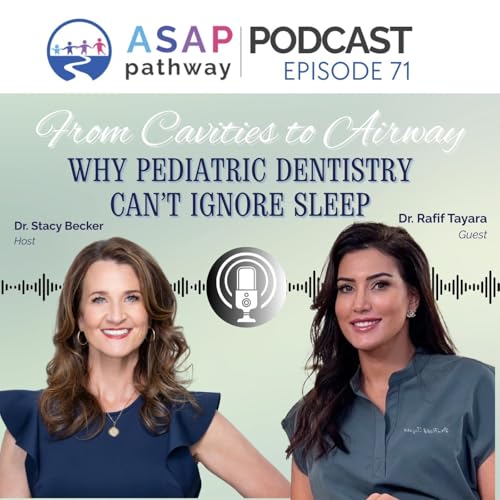
  • Ep. 71, From Cavities to Airway: Why Pediatric Dentistry Can’t Ignore Sleep, Dr. Rafif Tayara
    Feb 2 2026
    🎙️Dr. Stacy welcomes pediatric dentist and airway-focused clinician Dr. Rafif Tayara to the ASAP Pathway Podcast for a global conversation on early interceptive care, pediatric sleep-breathing red flags, and why “just looking at teeth” misses the real root causes.Dr. Tayara shares how her career across Montreal, Abu Dhabi, Dubai, and Qatar led her to connect recurring childhood cavities to mouth breathing and low nighttime saliva—pushing her beyond traditional pediatric dentistry into airway, function, and sleep medicine (including training at Tufts University). They unpack why parents’ anxiety can transfer directly to kids in the dental chair, how behavior management affects early orthodontic access, and why multidisciplinary teamwork (ENT + dental + myofunctional therapy and more) is the only sustainable path. They also address the backlash that can come with changing paradigms, the logic behind orthodontics influencing airway, and why early expansion and functional re-education can reduce complexity later—sometimes making “Phase 2” minimal. The episode wraps with fun rapid-fire questions, including a Tiësto concert night in Dubai and a bold Bangkok food moment.IG: Dr. Rafif TayaraIG: Junior DentalJunior Dental WebsiteDr. Tayara’s Book: Danny and Sarah Go to Dr Smile🕰️ Chapters:02:04 — “Danny and Sarah Go to Dr. Smile”03:06 — Where to find the book + why she wrote it (fear-free first visits)06:30 — “Kids borrow a parent’s mental health” in the dental chair09:58 — Why kids behave differently when the parent steps out11:38 — Dubai context + her career path and opening her clinic14:15 — The cavity relapse problem: mouth breathing, saliva, and nighttime risk16:10 — Airway + function journey: tongue posture, swallow, palate, adenoids20:06 — Social media backlash + why early ortho/airway work matters23:34 — Multidisciplinary care: ENT + function + expansion + resistance reduction28:53 — Protocols in practice: myofunctional therapy, expanders, Invisalign First45:47 — Barriers in dentistry: time, screening, questionnaires, practice models + wrap-up🧠 Key Learnings: A big driver of pediatric dental “failure” can be airway-related, especially mouth breathing and reduced saliva at night—leading to cavity relapse even with strong hygiene and motivated parents.Parent anxiety can directly shape a child’s dental experience, and well-meaning language can unintentionally increase fear (the “unknown” is often the trigger).Behavior management is a real bottleneck for early orthodontic care—if clinicians can’t comfortably scan, take impressions, or earn trust, early intervention gets delayed into “come back later” monitoring.If you don’t know what you’re looking for (tongue posture, swallow pattern, function), you won’t find it—and “nothing to see here” becomes a training blind spot.The tongue can be the best or worst orthodontist: function can stabilize results or drive relapse, depending on posture and habits.Orthodontics influencing airway is basic anatomy/physics logic, especially when comparing adult sleep treatment mechanics (mandibular advancement/CPAP/MMA concepts) to pediatric orthopedic/orthodontic approaches.Kids often improve through combined care, not a single fix: airway evaluation + ENT involvement + expansion + functional re-education + myofunctional therapy (and sometimes osteopathy) working together.Early expansion in primary dentition can be controversial—but momentum is shifting, with more clinicians adopting earlier approaches and airway screening increasingly discussed in pediatric guidelines.Practice model limitations are real (high-volume pediatric schedules, limited time): screening tools and questionnaires can help capture key data without derailing workflow.The long game is prevention and simplification: early work can reduce the intensity of later “phase 2” ortho and, in some cases, make it minimal.This is the ASAP Pathway Podcast, Airway, Sleep, and Pediatric Pathway, where sleep and airway health take center stage, one breath at a time. VISIT: ASAP Pathway Please subscribe, share, and tune in to future episodes of how we can help children live their best lives, one breath, and restful night's sleep at a time. Don't miss this exciting launch into a world of knowledge and transformation.Because Kids Can't Wait...CLICK HERE To Find an ASAP Pathway ProviderCLICK HERE To Become an ASAP Pathway ProviderCLICK HERE FOR ASAP Pathway IN-PERSON COURSESCLICK HERE To See If Your Child Is At Risk!ASAP FREE GIFT AND E NEWSLETTERSUBCRIBE AND SHARE AT OUR OTHER PLATFORMS BELOWASAP YouTube ▶️ 🔗ASAP YouTube Music 🔗 ASAP on Spotify 🔗ASAP IHeartRadio ❤️🔗 ASAP Amazon Music 🎵🔗 ASAP Apple Podcast 🍎🔗ASAP Pathway MEMBERSHIP OPTIONS, LEARNING and COURSES BELOW ⬇️ 🙌Join The Practice Breakfast Club! ☕️🔗2026 ASAP Mini-Residency Pathway 🙌🔗WANT TO BE A MEMBER IN ASAP ...
    Show More Show Less
    53 mins
  • Ep.70, How Orthodontics Impacts the Whole Patient, Dr. Jackie Demko
    Jan 26 2026
    🎙️In this episode Dr. Stacy sits down with orthodontist Dr. Jackie Demko for an honest, experience-driven conversation about airway, growth, and the realities clinicians face when patients don’t fit neatly into traditional timelines or treatment silos.Dr. Demko shares how her clinical perspective has evolved over time, what she began noticing in patients long before airway became a mainstream conversation, and why so many individuals struggle to get clear answers when dentistry and medicine fail to communicate. Together, they explore patterns seen repeatedly in real patients, the long-term impact of delayed intervention, and why listening carefully often reveals more than any single test or protocol.This episode blends clinical insight with patient-centered reality, offering perspective for providers and patients alike who are navigating complex airway, growth, and sleep-related concerns.IG: Demko OrthodonticsFB: Demko OrthodonticsTIKTOK: Dr DemkoArticles Mentioned in this Episode: ⬇️A Rationale for ExpansionDr. Michael Owen Wiliams, DDSDr. Larry W White, DMD, MSBeyond the Ligament:A “Whole Bone” Approach to Dentofacial Orthopedics and Falsification of Universal Alveolar Immutability ©Neal C. Murphy, DDS, MS 1.2 And Michael O. Williams, DDS, MS3 A special private publication for the American Association of Orthodontists 107th Annual Meeting Seattle, Washington USA May 19-21, 2007Ortho Tribune, Interview:Advances in NonSurgical Transverse Dimension Development and Tissue Engineering for Long-Term Cosmetic ResultsInterview with: Dr Michael Williams⏱️ CHAPTERS:01:05 – Introducing Dr. Jackie Demko and Her Clinical Background04:20 – How Jackie’s Perspective on Airway Began to Change08:45 – Patterns She Kept Seeing in Patients Over Time13:30 – When “Wait and Watch” Doesn’t Serve the Patient18:40 – Why Patients Get Conflicting Answers Between Providers24:15 – Growth, Function, and the Consequences of Delay30:05 – What Experience Teaches That Training Often Doesn’t36:20 – The Importance of Asking Better Questions42:50 – Collaboration: What’s Missing and What’s Possible49:10 – Putting the Patient at the Center of Decision-Making55:40 – Final Reflections and Why These Conversations Matter🧠 Key Learnings:Clinical experience often reveals patterns long before literature catches upPatients are frequently caught between specialties without coordinated careDelaying intervention can carry long-term functional and developmental costs“Normal” timelines don’t apply equally to every patientListening closely often reveals problems before imaging or diagnostics doCollaboration improves outcomes more than rigid adherence to protocolsPatient-centered care requires flexibility, humility, and communicationThis is the ASAP Pathway Podcast, Airway, Sleep, and Pediatric Pathway, where sleep and airway health take center stage, one breath at a time. VISIT: ASAP Pathway Please subscribe, share, and tune in to future episodes of how we can help children live their best lives, one breath, and restful night's sleep at a time. Don't miss this exciting launch into a world of knowledge and transformation.Because Kids Can't Wait...CLICK HERE To Find an ASAP Pathway ProviderCLICK HERE To Become an ASAP Pathway ProviderCLICK HERE FOR ASAP Pathway IN-PERSON COURSESCLICK HERE To See If Your Child Is At Risk!ASAP FREE GIFT AND E NEWSLETTERSUBCRIBE AND SHARE AT OUR OTHER PLATFORMS BELOWASAP YouTube ▶️ 🔗ASAP YouTube Music 🔗 ASAP on Spotify 🔗ASAP IHeartRadio ❤️🔗 ASAP Amazon Music 🎵🔗 ASAP Apple Podcast 🍎🔗ASAP Pathway MEMBERSHIP OPTIONS, LEARNING and COURSES BELOW ⬇️ 🙌Join The Practice Breakfast Club! ☕️🔗2026 ASAP Mini-Residency Pathway 🙌🔗WANT TO BE A MEMBER IN ASAP Pathway? ASAP Membership Options BELOW: 🎉👇ASAP Immersion Membership🔗ORComprehensive ASAP Pathway Membership🔗
    Show More Show Less
    59 mins
  • Ep.69, The ENT & Dentist Collaboration Wishlist, Dr. Keith Matheny
    Jan 20 2026
    In this episode Dr. Stacy sits down with Vanderbilt-trained ENT and sleep specialist Dr. Keith Matheny for a wide-ranging, real-world conversation about the airway—starting where many discussions skip: the nose. They unpack why nasal obstruction (fixed and functional) is often minimized in sleep care, how “CPAP intolerance” is frequently a nasal problem in disguise, and why the nasal valve is commonly missed even by clinicians—sometimes because the tools used to examine the nose temporarily “fix” the problem. Dr. Matheny shares practical, current ENT options that don’t require major surgery, including in-office radiofrequency treatments that can address nasal valve issues, turbinates, and septal swell bodies with minimal downtime. From there, the conversation expands into pediatric airway concerns, the long-term cost of “waiting it out,” and how chronic mouth breathing can shape growth, sleep quality, and even the labels kids accumulate.They finish with a compelling vision for what’s next: true medical-dental collaboration—sleep boards, shared language, better screening, and models that make treatment more accessible for patients. And, because Dr. Matheny is also “The Grill Doctor,” the episode closes with pizza wedges, skiing attempts, grilled salmon, and a seasoning drop coming soon!!US ENT PARTNERSDr. Matheny's Practice, Collin County ENTSLEEP VIGILSEPTUM SOLUTIONSGRILL DOCTOR ON IGCHAPTERS:00:00 – Welcome + Why Dr. Matheny Had to Be on the Show00:46 – Structure vs. Function in Airway Care02:48 – Meet Dr. Keith Matheny: ENT, Sleep, Patents… and BBQ06:40 – Authenticity in Healthcare: Patients Need a Real Human08:22 – ENT + Dentistry: Same Playground, Not Enough Collaboration09:22 – “The Nose Doesn’t Matter” in Sleep? Let’s Talk About That13:49 – Nasal Valve Collapse + The Cottle Maneuver (Why It’s Missed)17:22 – Septal Swell Bodies: The Obstruction People Overlook22:16 – In-Office Radiofrequency: What It Treats + What Recovery Is Like25:10 – Kids, Mouth Breathing, and the Cost of Waiting41:38 – The “Sleep Board” Idea: Copying Oncology’s Team Model47:35 – Keith’s Model: Sleep Dentist Inside the ENT Office (Insurance + Access)🌟 Key Learnings The nose is central to sleep-disordered breathing—literally and functionally, even when some clinicians downplay it.“CPAP intolerance” often points to nasal obstruction, fixed or functional, because most CPAP is delivered at least partially through the nose.Functional nasal obstruction can look “fine” at rest, then collapse during inspiration/expiration due to weak cartilage or mobile tissue.Nasal valve collapse is frequently missed, partly because putting a speculum in the nose can temporarily “fix” the collapse during an exam.Septal swell bodies are an under-recognized contributor to obstruction and inflammation and have become a bigger topic only in the last ~6–10 years.Small increases in airway diameter can feel huge (Keith references aerodynamics/“to the fourth power” effect on perceived breathing).In-office radiofrequency procedures can treat turbinates/valve/swell bodies with minimal downtime and can also help chronic rhinitis/post-nasal drip.“Wait until adolescence” can cost years of sleep and development—kids may “outgrow” adenoids, but not the consequences of chronic mouth breathing and fragmented sleep.Mouth breathing can affect craniofacial growth, sleep quality, school performance, and lead to labels like ADHD-type behavior patterns.Medical-dental collaboration isn’t optional in sleep care—better screening, shared language, and structured collaboration models are needed.Keith shares a practical collaboration model: bringing a sleep dentist into the ENT office as a delegate/contractor so oral appliances can be billed through medical insurance (state-dependent/legal-dependent).CPAP in growing children can influence midface growth, similar to orthodontic “headgear effects,” which makes coordination with airway-minded dentistry/orthodontics critical.This is the ASAP Pathway Podcast, Airway, Sleep, and Pediatric Pathway, where sleep and airway health take center stage, one breath at a time. VISIT: ASAP Pathway Please subscribe, share, and tune in to future episodes of how we can help children live their best lives, one breath, and restful night's sleep at a time. Don't miss this exciting launch into a world of knowledge and transformation.Because Kids Can't Wait...CLICK HERE To Find an ASAP Pathway ProviderCLICK HERE To Become an ASAP Pathway ProviderCLICK HERE FOR ASAP Pathway IN-PERSON COURSESCLICK HERE To See If Your Child Is At Risk!ASAP FREE GIFT AND E NEWSLETTERSUBCRIBE AND SHARE AT OUR OTHER PLATFORMS BELOWASAP YouTube ▶️ 🔗ASAP YouTube Music 🔗 ASAP on Spotify 🔗ASAP IHeartRadio ❤️🔗 ASAP Amazon Music 🎵🔗 ASAP Apple Podcast 🍎🔗ASAP Pathway MEMBERSHIP OPTIONS, LEARNING and COURSES BELOW ⬇️ 🙌Join The ...
    Show More Show Less
    1 hr and 10 mins
  • Ep.68, Crows Teaching Crows; The Empowered Sleep Apnea Project, Dr. Dave McCarty
    Dec 29 2025
    🎙️ PODCAST DESCRIPTIONIn this episode of the ASAP Pathway Podcast, Dr. Stacy is joined by Dr. David McCarty for a deeply thoughtful conversation about how patients—children and adults—are often misunderstood, mislabeled, and mistreated when care focuses on symptoms instead of root cause. Drawing from neuroscience, clinical experience, and real patient stories, Dr. McCarty challenges the way we approach diagnoses such as ADHD, anxiety, sleep disorders, and behavioral dysregulation. He explains how airway function, tongue stability, neurological signaling, and chronic physiological stress can quietly shape how patients think, feel, sleep, and function—often for years before anyone connects the dots.This episode speaks to the exhausted patient, the frustrated provider, and the family searching for answers, highlighting how siloed care and rushed labels can leave people stuck in cycles of treatment that never fully address what’s happening beneath the surface. At its core, this conversation is a call to slow down, listen better, and approach patients as whole humans—across all ages—whose bodies are communicating long before pathology shows up on a chart.LISTEN HERE for the Crows Teaching Crows Song! 🐦‍⬛🎶🔗Dr. Dave is Co-Creator (with Ellen Stothard, PhD) of the Empowered Sleep Apnea Project! 🔗Dr Dave McCarty on LinkedIn 🔗FB Empowered Sleep Apnea 🔗Dr. Dave as CMO of Rebis Health! 🔗🎧 EPISODE CHAPTERS 📖00:00 – Welcome to ASAP Pathway & Setting the Tone for the Conversation 00:16 – Introducing Dr. David McCarty & Why This Episode Matters00:26 – The “Cartoon” That Explains Where Airway & Diagnosis Are Right Now11:27 – Neurology, Anatomy & Why Symptoms Aren’t the Root Problem13:22 – Development, Adaptation & What Happens When the Body Compensates16:33 – The Risk of Diagnosis Without Understanding Physiology19:05 – Patients Who Are Exhausted, Out of Answers & Out of Hope19:33 – Where Medicine and Dentistry Must Work Together27:49 – Tongue Function, Airway & Nervous System Regulation38:10 – What Patients Are Communicating Through Their Symptoms49:40 – Rethinking Labels, Behavior & Chronic Dysregulation56:26 -- Building a Unified Language01:02:30 – What Patients Can Do First: Slowing Down & Asking Better Questions01:13:45 – Restoring Hope Through Whole-Patient Understanding01:21:10 – Closing Reflections & Why This Conversation Matters🌟 KEY LEARNINGS Symptoms are often adaptive responses, not primary disorders.Airway, tongue function, and neurology are tightly interconnected.Patients can compensate for years before breakdown occurs.Labels without physiology can delay meaningful healing.Chronic dysregulation affects sleep, cognition, mood, and behavior at any age.Medicine and dentistry must collaborate to see the full picture.Patients often feel unheard long before they feel “sick.”The future of sleep medicine includes a unified language around sleep apnea that all healthcare providers can share.Hope begins with better questions, not faster answersThis is the ASAP Pathway Podcast, Airway, Sleep, and Pediatric Pathway, where sleep and airway health take center stage, one breath at a time. VISIT: ASAP PathwayPlease subscribe, share, and tune in to future episodes of how we can help children live their best lives, one breath, and restful night's sleep at a time. Don't miss this exciting launch into a world of knowledge and transformation.Because Kids Can't Wait...CLICK HERE To Find an ASAP Pathway ProviderCLICK HERE To Become an ASAP Pathway ProviderCLICK HERE FOR ASAP Pathway IN-PERSON COURSESCLICK HERE To See If Your Child Is At Risk!ASAP FREE GIFT AND E NEWSLETTERSUBCRIBE AND SHARE AT OUR OTHER PLATFORMS BELOWASAP YouTube ▶️ 🔗ASAP YouTube Music 🔗 ASAP on Spotify 🔗ASAP IHeartRadio ❤️🔗 ASAP Amazon Music 🎵🔗 ASAP Apple Podcast 🍎🔗ASAP Pathway MEMBERSHIP OPTIONS, LEARNING and COURSES BELOW ⬇️ 🙌Join The Practice Breakfast Club! ☕️🔗2026 ASAP Mini-Residency Pathway 🙌🔗WANT TO BE A MEMBER IN ASAP Pathway? ASAP Membership Options BELOW: 🎉👇ASAP Immersion Membership🔗ORComprehensive ASAP Pathway Membership🔗
    Show More Show Less
    1 hr and 9 mins