About Living the Could Life cover art

About Living the Could Life

About Living the Could Life

Listen for free

View show details

About this listen

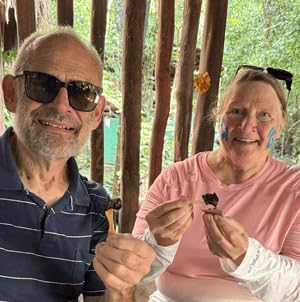
About this Episode: This episode introduces who we are, why we created Living the Could Life, and why we are here. If you’ve suddenly found that your body's performance doesn't sync with your mental attitude, you have come to the right place. Navigating disability, chronic illness, aging, or any kind of life change was not in your plans? Join us. This is basically an introduction to us and what we hope to share in upcoming episodes. Transcript Click Here for Transcript Theresa: Welcome to the very first episode of Living the Could Life. I'm Theresa. If you're here, you're probably someone who's had to adapt your life several times, maybe by choice, maybe not, or maybe you're still figuring out what the next chapter looks like.Either way, you are in the right place. Robert: And I'm Robert, your co-host, the guy who scopes out the area, takes photos of inaccessible places, and who's trying hard to earn his seeing-eye guy vest. Yep, you sure are. Theresa: You should have your vest really soon. You're getting really good at this. The show isn't about pretending everything is fine, easy, or trivial. It's all about adaptation. It's about the difference between what travel should look like, no pun intended, and what it could look like now. Don't expect any toxic positivity from us. We are here to support each other, be realistic, and share ideas. And since this is our first full episode, we want to start with the heart of the brand, where this idea came from, what it means, and why we're choosing to tell these stories now. By the way, we should tell you a bit more about ourselves. I'm Theresa, a travel writer who, in later life, suffered NAION, also known as Non-Arteritic Anterior Ischemic Optical Neuropathy. Basically, it's a stroke of the eye, and I started with that happening in my right eye. But did you know you can still be fairly independent with one well-functioning eye? It took a bit of adaptation, but I did okay for several years, until one day, the vision in the other eye rebelled. Maybe it thought it was being overworked. There was just a 20% chance of the same thing happening in my good eye, the left eye, and I never expected it to happen twice. I had no pre-existing condition that made me a candidate for it in the first place. But that second eye has a blurred tiny crescent moon area. So now, what was my good eye is now my bad eye, and vice versa. I didn't see that coming. Although I lost my independence, my ability to drive, and the ability to do many things that I took for granted, my condition is considered an impairment rather than a disability. Not sure who decides on that classification. It's obviously somebody without this impairment. Robert: I'm Robert, a former high school math teacher, now enrolled in the Seeing Eye Guy certification program. I even have a business card for proof of that. I never expected to be a caregiver so soon after my early retirement due to how COVID had changed teaching. We both enjoy travel, and now I have suddenly started noticing things that I never really paid attention to before. Like finding escalators and elevators, looking for trip hazards, and such. Theresa: Likewise. The idea of this podcast started spinning in our brains when we realized that we really hadn't seen much information about dealing with body changes that affect us later in life. For me, travel, something that always had meant freedom, joy, escape, independence, escape, and independence, suddenly became complicated. I often traveled solo in the past. I was accountable only to myself. I didn't have to do a lot of planning, and I wasn't the default tour guide. I was independent. And I was there thinking, okay, so what now? What could this look like? Not what it should look like. Not what it used to look like. Just what's possible from here. I was definitely not ready to give up travel, even though for a brief moment, a very brief moment, I considered lying on the couch with Robert waving palm fronds above me, and me drinking wine while eating bonbons. I don't think you would really do that. Robert: It's not really in your nature. Theresa: Well, nature's changed. Travel memories flashed before me. We had bicycled several times around New Zealand, in Mexico, and even did a transcontinental tour from the Pacific Ocean to the Atlantic Ocean. We hiked the Inca Trail. We took many adventurous trips. We camped. We did day trips. And now, my big adventurous trip is walking from the front door down the staircase to the car. And this was another incentive that made us think that Living the Could Life was important to not only us, but to many others. Giving up travel by somebody like me with a dominant gene and wanderlust would be incredibly harsh. There had to be alternatives. Robert: And that's something we're to talk about a lot here. Alternatives, adaptations, possibilities, grief, loss, and more. One of the themes you'll hear again and again on this show is adaptation, especially when it happens...
No reviews yet