Episodes

  • Amazing Arctic
    Apr 6 2026
    What’s it like to live on a block of ice, especially when it thaws? An environment writer shares his forty-year experience in the Arctic, including the time a paddling polar bear tracked him on a river. He describes the stunning beauty of America’s last truly wild place and the dramatic changes to the landscape he recently witnessed. Recent research has backed up his eyewitness accounts, as an arctic scientist presents the latest data collected from a part of world warming four times faster than the rest of the planet. Guests: Jon Waterman – Author of Into the Thaw: Witnessing Wonder Amid the Arctic Climate Crisis Twila Moon – Deputy Lead Scientist and Science Communication Liaison at the National Snow and Ice Data Center Descripción en español Featuring music by Dewey Dellay and Jun Miyake Originally aired March 17, 2025 Big Picture Science is part of the Airwave Media podcast network. Please contact advertising@airwavemedia.com to inquire about advertising on Big Picture Science. You can get early access to ad-free versions of every episode by joining us on Patreon. Thanks for your support! Learn more about your ad choices. Visit megaphone.fm/adchoices
    Show More Show Less
    54 mins
  • Flower Power
    Mar 30 2026
    Before everything could come up roses, there had to be a primordial flower – the mother, and father, of all flowers. Now scientists are on the hunt for it. The eFlower project aims to explain the sudden appearance of flowering plants in the fossil record, what Darwin called an “abominable mystery.” Meanwhile, ancient flowers encased in amber or preserved in tar are providing clues about how ecosystems might respond to changing climates. And, although it was honed by evolution for billions of years, can we make photosynthesis more efficient and help forestall a global food crisis? Guests: Eva-Maria Sadowski - Post doctoral paleobotanist at the Museum für Naturkunde, Berlin Regan Dunn - Paleobotanist and assistant Curator at the La Brea Tar Pits and Museum Royal Krieger - Rosarian and volunteer at the Morcom Rose Garden, Oakland, California Ruby Stephens - Plant ecology PhD candidate at Macquarie University in Australia, and member of the eFlower Project Stephen Long - Professor of Plant Science, University of Illinois Descripción en español Originally aired March 13, 2023 Featuring music by Dewey Dellay and Jun Miyake You can get early access to ad-free versions of every episode by joining us on Patreon. Thanks for your support! Big Picture Science is part of the Airwave Media podcast network. Please contact advertising@airwavemedia.com to inquire about advertising on Big Picture Science. Learn more about your ad choices. Visit megaphone.fm/adchoices
    Show More Show Less
    54 mins
  • Fantastic-er Voyage
    Mar 23 2026
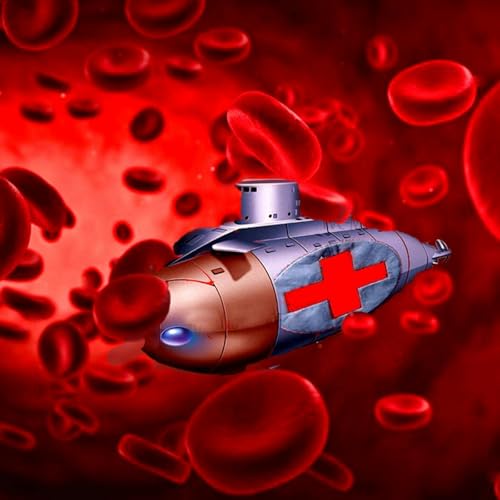
    Thinking small can sometimes achieve big things. A new generation of diminutive robots can enter our bodies and deal with medical problems such as intestinal blockages. But do we really want them swimming inside us, even if they’re promising to help? You might change your mind when you hear what else is cruising through our bloodstream: microplastics! We take a trip into the human body, beginning with the story of those who first dared to open it up for medical purposes. But were the first surgeons really cavemen? Guests: Ira Rutkow – Surgeon and writer, and author of “Empire of the Scalpel: The History of Surgery” Dick Vethaak – Emeritus professor of ecotoxicology, water quality and health at the Vrije Universiteit Amsterdam (Free University, Amsterdam) in The Netherlands Li Zhang – Professor in the Department of Mechanical and Automation Engineering, The Chinese University of Hong Kong Michael LaBarbera - Professor in organismal biology, anatomy and geophysical sciences, University of Chicago Descripción en español originally aired June 20, 2022 Opening theme by Jun Miyake Big Picture Science is part of the Airwave Media podcast network. Please contact advertising@airwavemedia.com to inquire about advertising on Big Picture Science. You can get early access to ad-free versions of every episode by joining us on Patreon. Thanks for your support! Learn more about your ad choices. Visit megaphone.fm/adchoices
    Show More Show Less
    54 mins
  • Skeptic Check: Project Hail Mary
    Mar 16 2026
    As protagonist Ryland Grace fights to save Earth - and possibly the universe - in Project Hail Mary, author Andy Weir discusses the science behind his sci-fi story and what it’s like to see it adapted for the big screen. From a diversity of aliens thriving in extreme environments, to our sun’s shortening lifespan, to the conundrum of keeping astronauts alive during intergalactic missions, we consider the possibility of science fiction becoming future reality. A NASA astrobiologist who consulted on the book weighs in on how Earthly creatures have inspired some of our favorite science fiction aliens. Plus, science fiction author Becky Chambers discusses how she balances science fact with fiction in her work. Guests: Andy Weir – science fiction writer, author of Project Hail Mary, The Martian, and Artemis Andy Fraknoi – professor of astronomy at the Fromm Institute at the University of San Francisco Becky Chambers – science fiction writer, author of To Be Taught if Fortunate, the Wayfinders series, and the Monk and Robot novellas Shawn Domagal-Goldman – NASA acting director, astrophysics division Big Picture Science is part of the Airwave Media podcast network. Please contact advertising@airwavemedia.com to inquire about advertising on Big Picture Science. You can get early access to ad-free versions of every episode by joining us on Patreon. Thanks for your support! Learn more about your ad choices. Visit megaphone.fm/adchoices
    Show More Show Less
    59 mins
  • Skeptic Check: Moon Conspiracy
    Mar 9 2026
    As NASA’s Artemis program promises to take us back to the moon for the first time in fifty years, we consider what it means that as many as 10% of Americans don’t believe we went there in the first place. Why, despite all the evidence, has the faked moon landing conspiracy persisted? We explore why this falsehood has such staying power and what it reveals about our relationship with science and its findings. Meanwhile, lunar science continues unabated. Scientists open a lunar soil sample that’s been vacuumed sealed for a half-century and receive a blast of four and a half billion-year-old solar wind. Guests: Peter Knight – professor of American Studies, English and American Studies and conspiracy expert at the University of Manchester, U.K. Ryan Zeigler – planetary scientist and NASA’s Lunar Sample Curator at Johnson Space Center Featuring music by Dewey Dellay and Jun Miyake Big Picture Science is part of the Airwave Media podcast network. Please contact advertising@airwavemedia.com to inquire about advertising on Big Picture Science. You can get early access to ad-free versions of every episode by joining us on Patreon. Thanks for your support! Learn more about your ad choices. Visit megaphone.fm/adchoices
    Show More Show Less
    57 mins
  • Chasing an Asteroid
    Mar 2 2026
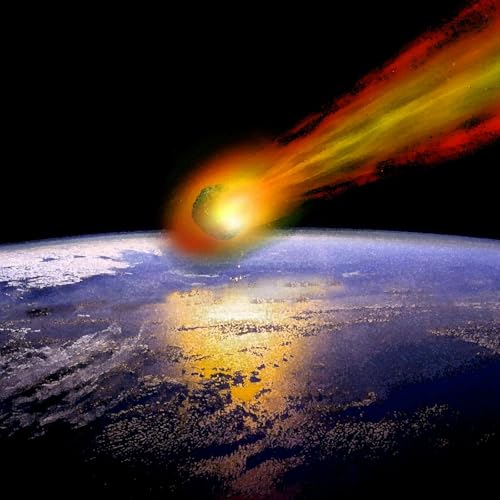
    Everyone knows that a big rock wiped out the dinosaurs. But the danger from an asteroid hitting Earth is not limited to ancient history. To deal with this threat, scientists recently ran an experiment to deflect a potential “city killer.” We’ll hear the results of that experiment, and about a visit to another asteroid. In the dusty material NASA brought back from the asteroid Bennu, scientists found the chemical building blocks of life, including many of the amino acids that are found in our cells. Could an asteroid have brought the ingredients for life to ancient Earth? In this episode, we look at our paradoxical relationship with the space rocks that taketh way – and may help giveth - life. Guests: Scott Sandford - Astrophysicist and Research Scientist at NASA’s Ames Research Center Robin George Andrews - Science journalist, volcanologist, and author of "How to Kill an Asteroid: The Real Science of Planetary Defense" Descripción en español Featuring music by Dewey Dellay and Jun Miyake Big Picture Science is part of the Airwave Media podcast network. Please contact advertising@airwavemedia.com to inquire about advertising on Big Picture Science. You can get early access to ad-free versions of every episode by joining us on Patreon. Thanks for your support! Learn more about your ad choices. Visit megaphone.fm/adchoices
    Show More Show Less
    56 mins
  • Birds of a Feather
    Feb 23 2026
    With only a microscope and a collection of birds, taxidermist Roxie Laybourne became the world’s first forensic ornithologist. The “feather detective” was on the case, examining pieces of plumage to solve mysteries. From bird strikes that caused plane accidents to homicide investigations, no case was too big. In the process, Roxie changed the world of aviation safety and crime investigation forever. Even now, feathers are unraveling a new type of mystery, as scientists from the Bird Genoscape Project use them to map the migratory routes of birds. Guests: Chris Sweeney – Journalist and author of “The Feather Detective: Mystery, Mayhem, and the Magnificent Life of Roxie Laybourne” Kristen Ruegg – Co-Director of the Bird Genoscape Project and Associate Professor of Biology at Colorado State University Featuring music by Dewey Dellay and Jun Miyake Big Picture Science is part of the Airwave Media podcast network. Please contact advertising@airwavemedia.com to inquire about advertising on Big Picture Science. You can get early access to ad-free versions of every episode by joining us on Patreon. Thanks for your support! Learn more about your ad choices. Visit megaphone.fm/adchoices
    Show More Show Less
    54 mins
  • Celestial Shake-Up
    Feb 16 2026
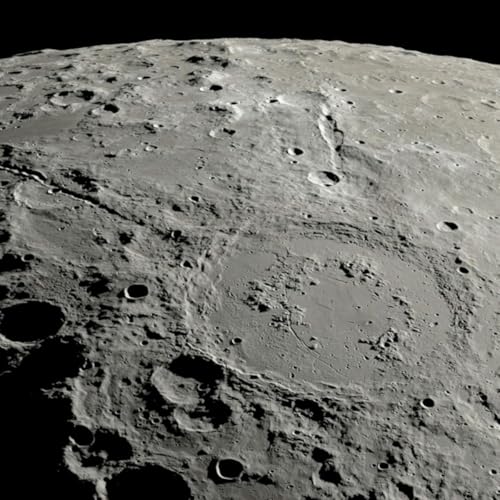
    We’re going back to the Moon. The planned March 2026 launch of Artemis II is the first crewed mission to the moon since 1972. Historic as it is, it isn’t the only lunar event creating a stir at NASA. Two seismometers are to be delivered to Schrödinger’s Crater in a mission called The Farside Seismic Suite, in which the instruments will measure moonquakes and record the possible impact of asteroid 2024 YR4 on lunar surface. Meanwhile, studies of the sun are heating up. The so-called PUNCH mission, a four-satellite constellation that will create an image of the sun’s corona and solar winds, may help us better understand what drives solar storms and how we can protect Earth from their energetic blasts. Guests: Eugene Cernan – Apollo 17 astronaut Harrison "Jack" Schmitt – Geologist and Apollo 17 astronaut Andrew Rivkin – Planetary astronomer at the Applied Physics Laboratory at Johns Hopkins University Ceri Nunn – Lunar seismologist and planetary scientist, NASA’s Jet Propulsion Laboratory Ryan French – solar physicist, at the Laboratory for Atmospheric & Space Physics, Boulder, Colorado, and author of “Space Hazards: Asteroids, Solar Flares and Cosmic Threats” Craig DeForest – Heliophysicist, Southwest Research Institute, principal investigator on NASA’s PUNCH mission Featuring music by Dewey Dellay and Jun Miyake Big Picture Science is part of the Airwave Media podcast network. Please contact advertising@airwavemedia.com to inquire about advertising on Big Picture Science. You can get early access to ad-free versions of every episode by joining us on Patreon. Thanks for your support! Learn more about your ad choices. Visit megaphone.fm/adchoices
    Show More Show Less
    54 mins