

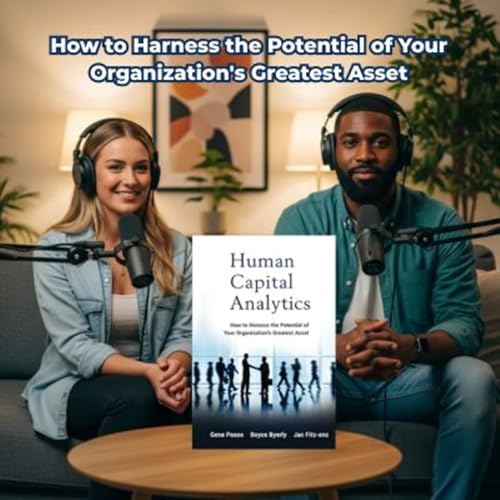
Human Capital Analytics | How to Harness the Potential of Your Organization's Greatest Asset by Gene Pease, Boyce Byerly & Jac Fitz-enz
Failed to add items
Add to basket failed.
Add to wishlist failed.
Remove from wishlist failed.
Adding to library failed
Follow podcast failed
Unfollow podcast failed

Human Capital Analytics | How to Harness the Potential of Your Organization's Greatest Asset by Gene Pease, Boyce Byerly & Jac Fitz-enz
-
Narrated by:
-
By:
Human capital analytics, also known as human resources analytics or talent analytics, is the application of sophisticated data mining and business analytics techniques to human resources data. Human Capital Analytics provides an in-depth look at the science of human capital analytics, giving practical examples from case studies of companies applying analytics to their people decisions and providing a framework for using predictive analytics to optimize human capital investments.
- Written by Gene Pease, Boyce Byerly, and Jac Fitz-enz, widely regarded as the father of human capital
- Offers practical examples from case studies of companies applying analytics to their people decisions
- An in-depth discussion of tools needed to do the work, particularly focusing on multivariate analysis
The challenge of human resources analytics is to identify what data should be captured and how to use the data to model and predict capabilities so the organization gets an optimal return on investment on its human capital. The goal of human capital analytics is to provide an organization with insights for effectively managing employees so that business goals can be reached quickly and efficiently. Written by human capital analytics specialists Gene Pease, Boyce Byerly, and Jac Fitz-enz, Human Capital Analytics provides essential action steps for implementation of advanced analytics on human capital.
This episode summarizes a strategic framework for human capital analytics, illustrating how organizations can transition from basic data collection to sophisticated workforce insights. This roadmap emphasizes the Human Capital Analytics Continuum, which guides managers through the progression of integrating simple metrics with complex performance drivers. Successful implementation requires strategic alignment between stakeholders and a structured Measurement Plan to ensure data collection serves specific corporate goals. The source further highlights the importance of balancing qualitative and quantitative data to uncover the narratives behind organizational trends. Finally, the text explores the utility of visual dashboards as essential tools for monitoring real-time performance and identifying areas for improvement. By following these principles, leaders can move beyond guesswork to foster a more productive and engaged work environment.
#HumanCapitalAnalytics #HRAnalytics #BusinessIntelligence #DataDrivenLeadership #PeopleAnalytics #Leadership #BusinessStrategy #WorkforceManagement #FutureOfWork #OrganizationalDevelopment #BusinessPodcast #ManagementStrategy #DataAnalytics #EmployeeEngagement #BookSummary