

Christian Old Testament.
Failed to add items
Sorry, we are unable to add the item because your shopping cart is already at capacity.
Add to basket failed.
Please try again later
Add to wishlist failed.
Please try again later
Remove from wishlist failed.
Please try again later
Adding to library failed
Please try again
Follow podcast failed
Unfollow podcast failed

Christian Old Testament.
-
Narrated by:
-
By:
Summary
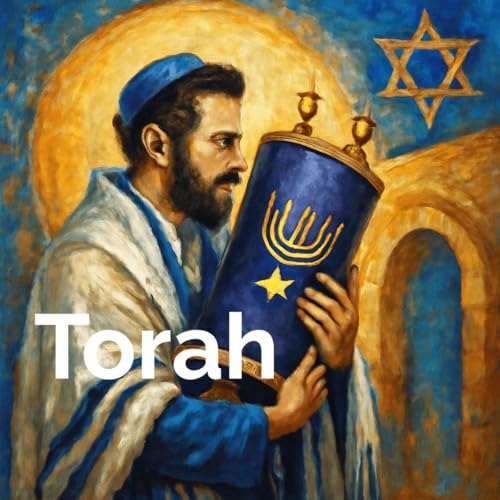
The Christian Old Testament incorporates the Torah as its foundational component, consisting of the five books—Genesis, Exodus, Leviticus, Numbers, and Deuteronomy—collectively termed the Pentateuch. These books are universally included in the Old Testament canons of Protestant, Catholic, and Eastern Orthodox traditions, forming the initial segment before historical, prophetic, and wisdom literature. While Protestant Bibles align the Old Testament's 39 books with the Jewish Tanakh's content for the Pentateuch, Catholic and Orthodox versions add deuterocanonical books elsewhere but retain the identical Torah texts.
Early Christian communities adopted the Pentateuch from Jewish scriptures, predominantly through the Septuagint, a third-century BCE Greek translation produced for Hellenistic Jews in Alexandria. This version, which rendered the Hebrew Torah into Koine Greek, became the primary Old Testament text for Greek-speaking Christians and is quoted over 300 times in the New Testament, with many direct citations from the Pentateuch, such as Deuteronomy 6:5 in Matthew 22:37 The Septuagint's Pentateuch occasionally diverges from the later Masoretic Text, including variant chronologies in Genesis (e.g., longer pre-flood lifespans) and textual expansions, influencing early patristic interpretations.
In Christian theology, the Torah represents the covenant law mediated by Moses, establishing God's moral order, sacrificial system, and ethical imperatives for Israel. New Testament authors, including Jesus, affirm its authority—Jesus declaring in Matthew 5:17 that he came not to abolish the law but to fulfill it—yet portray it as preparatory, exposing human sinfulness and anticipating redemption through Christ (Galatians 3:24). Mainstream interpretations distinguish enduring moral laws (e.g., Ten Commandments) from ceremonial and civil ordinances deemed fulfilled or obsolete post-resurrection, as in Colossians 2:16-17, though some traditions like Seventh-day Adventists retain select observances such as Sabbath-keeping. This framework underscores typology, where Torah narratives and rituals prefigure Christian doctrines, such as Passover symbolizing Christ's sacrifice (1 Corinthians 5:7).
Later translations, including Jerome's Latin Vulgate (completed 405 CE) and Reformation-era versions like the King James Bible (1611), drew from Hebrew manuscripts for the Pentateuch while preserving Septuagint influences in quotations. Modern critical scholarship notes archaeological and textual evidence supporting the Pentateuch's historical framework, such as Egyptian influences in Exodus, but debates Mosaic authorship, with conservative scholars upholding substantial Mosaic origin based on internal claims and early attestation. Christian engagement with the Torah thus emphasizes its revelatory role in salvation history, distinct from Jewish halakhic application.
This episode includes AI-generated content.
adbl_web_anon_alc_button_suppression_c
No reviews yet