• #136: Joanna and the God Who Uses Pharaoh's Gold
    Mar 21 2026

    • Email: hpaulsilas@hotmail.com
    • https://apostolicinternational.com/
    • Statement of beliefs: https://apostolicinternational.com/statement-of-beliefs
    • The sermon: https://apostolicinternational.com/sermons/JOANNA_AND_THE_GOD_WHO_USES_PHARAOHS_GOLD.pdf
    • This sermon highlights the powerful and often overlooked story of Joanna in Luke 8:3, revealing how God can use even unlikely sources for His divine purposes. Joanna, the wife of Chuza—Herod’s steward—ministered to Jesus out of her substance. This is remarkable because Herod’s household represented opposition to God, being part of a corrupt and violent dynasty that sought to destroy God’s work. Yet, through Joanna, resources from that very household were redirected to support the ministry of Christ. This demonstrates a profound truth: God can take what is meant for evil and transform it for good.

      The sermon emphasizes that while God does not condone unrighteous systems, He is sovereign over all resources. Once wealth is placed in the hands of a devoted, faithful giver, it is sanctified and used for His glory. Joanna becomes a symbol of light within darkness—someone who lived in a corrupt environment yet remained faithful and used her position to advance God’s kingdom. Her story echoes other biblical examples like Joseph in Egypt and Daniel in Babylon, where God’s people were placed in ungodly systems but used for divine purposes.

      A central theme is the importance of cheerful and sacrificial giving. God values not just the gift but the heart behind it. Scripture assures that such giving is never forgotten; God keeps a record of every act of faith and generosity. The testimony from Kapiri in Zambia illustrates this truth in action—offerings given by believers enabled the preaching of the gospel, resulting in lives being transformed and souls baptized.

      Ultimately, the sermon calls believers to trust God with their resources, give with gratitude, and recognize that their contributions—no matter how small—are seeds planted in eternity. Like Joanna, every faithful giver becomes part of God’s redemptive work, and their names are known and honored by Him.

    Show More Show Less
    1 hr and 17 mins
  • #135: Youth and Parents
    Mar 21 2026

    • Email: hpaulsilas@hotmail.com
    • https://apostolicinternational.com/
    • Statement of beliefs: https://apostolicinternational.com/statement-of-beliefs
    • The sermon: https://apostolicinternational.com/sermons/YOUTH_AND_PARENTS.pdf
    • This sermon emphasizes the sacred relationship between youth and parents, rooted in God’s commandment to honor father and mother (Exodus 20:12). It highlights that this is the only commandment accompanied by a promise—long life—showing how deeply God values the institution of parenting. Parents make significant sacrifices even before a child is born, giving up freedom, carrying lifelong responsibility for their children’s well-being. Because of this, God places great honor on parenting and expects children to recognize and respect this divine role.

      The message stresses that parenting is not merely a human responsibility but a God-ordained calling. Unlike angels or animals, humans are uniquely entrusted with raising children in God’s image. The example of Abraham demonstrates how seriously God regards faithful parenting. God trusted Abraham because he would lead his household in righteousness, even revealing His plans to him. This shows that God shares deeper spiritual insight with those who lead their families according to His ways.

      In contrast, the failure of Eli illustrates the consequences of neglecting this responsibility. Though a priest, Eli failed to discipline his sons, resulting in spiritual decline and loss of God’s trust. Instead, God chose to speak to the young Samuel, showing that God honors those who are faithful, regardless of age.

      The sermon also highlights key qualities of godly parenting. Abraham’s willingness to sacrifice Isaac revealed to his son that God must come first. Additionally, Abraham’s care in choosing a wife for Isaac shows intentional, spiritually guided parenting. Such diligence produces “godly seed,” children who honor God and bring joy to their families.

      Ultimately, the sermon calls both youth and parents to responsibility: children must honor and respect their parents, while parents must faithfully guide their children in God’s ways. When both roles are fulfilled, the result is blessing, joy, and a legacy that honors God.

    Show More Show Less
    1 hr and 11 mins
  • #134: Study What God has Made
    Mar 21 2026

    • Email: hpaulsilas@hotmail.com
    • https://apostolicinternational.com/
    • Statement of beliefs: https://apostolicinternational.com/statement-of-beliefs
    • The sermon: https://apostolicinternational.com/sermons/STUDY_WHAT_GOD_HAS_MADE.pdf
    • This sermon teaches that studying the world around us—both people and nature—is a meaningful way to know God more deeply, since He is the Creator of all things. Using the example of Daniel and his companions in Babylon, the message highlights that knowledge is valuable across cultures and boundaries. Though they were captives, their wisdom and learning elevated their status and earned respect from their captors. This demonstrates that knowledge is like a universal currency—it blesses both those who possess it and those who recognize it.

      The sermon emphasizes that knowledge cannot be taken away, even when everything else is lost. Daniel and his friends were stripped of their homeland and freedom, but their understanding, discipline, and devotion to God remained intact. Their example shows that a love for God combined with excellence in knowledge creates lasting influence.

      Studying creation—whether human behavior or the natural world—is ultimately a pursuit of understanding God Himself. As David reflected on the heavens in Psalm 8, observing creation leads to awe and deeper awareness of God’s majesty. Similarly, God granted Solomon extraordinary wisdom not only in spiritual matters but also in science, nature, and human behavior. Solomon became a model of a well-rounded thinker—demonstrating that divine wisdom can extend into every field of study.

      The sermon also presents knowledge as a “secret” revealed to those who fear God. When young believers pursue learning with reverence, God opens understanding to them. Biblical examples such as Moses, who was educated in Egypt and later used by God to write Scripture, and Luke, the educated physician who recorded parts of the New Testament, show that God values and uses educated individuals for His purposes.

      Finally, the message warns that in the last days knowledge will increase rapidly, making it even more essential for young Christians to seek wisdom from Christ. In a world overflowing with information, discernment rooted in God is crucial. Those who study both Scripture and creation with reverence will be equipped to navigate life wisely and serve God effectively.

    Show More Show Less
    1 hr and 28 mins
  • #133: Study the Word of God
    Feb 1 2026

    • Email: hpaulsilas@hotmail.com
    • https://apostolicinternational.com/
    • Statement of beliefs: https://apostolicinternational.com/statement-of-beliefs
    • The sermon: https://apostolicinternational.com/sermons/STUDY_THE_WORD_OF_GOD.pdf
    • This sermon emphasizes the vital role of studying the Word of God in shaping a life that is pleasing to God, especially for the young. Drawing from 2 Timothy 2:15, the apostle Paul’s exhortation to Timothy highlights that the goal of study is not human approval but divine approval. Timothy, who was likely converted as a teenager, was encouraged to become a diligent student of Scripture so that he might rightly divide the word of truth and serve God without shame. This establishes a foundational principle: anyone who desires to be used by the Lord must be rooted in the disciplined study of God’s Word.

      The sermon explains that study begins with humility. To study is to admit personal inadequacy and a need for divine wisdom. King Solomon exemplifies this posture when, at only twenty years of age, he acknowledged his inability to lead God’s people and asked for an understanding heart. God’s wisdom is revealed to those who first recognize their limitations and seek instruction. Many adults later regret not acquiring wisdom earlier, realizing that much pain could have been avoided through godly understanding.

      Studying Scripture also functions as a safeguard against trouble. One cannot easily fall into gossip, idleness, or sin when occupied with purposeful learning. Paul’s instruction to the Thessalonians to “study to be quiet” shows that disciplined focus promotes order and spiritual maturity. Moreover, study develops self-control and discipline—qualities especially crucial for young people. Modern neurological insights confirm that adolescents are still developing the brain regions responsible for decision-making and impulse control, reinforcing the wisdom of grounding youth in Scripture.

      The sermon concludes by highlighting the profound benefits of studying God’s Word: clarity, peace, moral purity, and spiritual understanding. As Psalm 119 declares, God’s Word brings light, wisdom, and peace. Ultimately, studying Scripture cultivates humility, discipline, and wisdom unto salvation, equipping the young to live godly, stable, and fruitful lives before God.

    Show More Show Less
    1 hr and 23 mins
  • #132: David and Goliath
    Feb 1 2026

    • Email: hpaulsilas@hotmail.com
    • https://apostolicinternational.com/
    • Statement of beliefs: https://apostolicinternational.com/statement-of-beliefs
    • The sermon: https://apostolicinternational.com/sermons/DAVID_AND_GOLIATH.pdf
    • This sermon presents the story of David and Goliath as a powerful reminder that God often uses the faith and wisdom of the young to awaken a forgetful generation. Though wisdom usually comes with age, David—likely only around sixteen years old—demonstrated a faith that surpassed that of Israel’s seasoned warriors. While the Philistine giant Goliath terrorized Israel for forty days, the adult soldiers were paralyzed by fear. David, however, acted from memory: he remembered what God had already done.

      David’s confidence was not reckless courage but faith forged through personal encounters with God’s power. As a shepherd in Bethlehem, he had already slain a lion and a bear by supernatural enablement. These experiences taught him that deliverance comes from God, not human strength. When David faced Goliath, he viewed the giant not through fear, but through the lens of past victories—just as God had delivered him before, He would do so again. While Israel forgot how God defeated giants through Caleb and Joshua, David remembered and acted.

      The sermon also highlights David’s wisdom in refusing Saul’s armor. David understood that victory must belong entirely to God. Wearing Saul’s armor could provoke jealousy, shift credit to human strength, or associate the victory with a backslidden king. Instead, David chose the simple attire of a shepherd, showing Israel that God saves not by sword or armor, but by humble faith. This moment became a living illustration of Psalm 23—God as the Shepherd protecting His flock in the valley of death.

      Ultimately, the sermon challenges young people to embrace who God has made them to be. God does not require borrowed identities, weapons, or approval from compromised leaders. He uses the young as they are—faithful, obedient, and dependent on His Spirit. The victory over Goliath declares a timeless truth: “Not by might, nor by power, but by my Spirit, saith the LORD.”

    Show More Show Less
    1 hr and 47 mins
  • #131: Exploits of the Young in Scripture
    Feb 1 2026

    • Email: hpaulsilas@hotmail.com
    • https://apostolicinternational.com/
    • Statement of beliefs: https://apostolicinternational.com/statement-of-beliefs
    • The sermon: https://apostolicinternational.com/sermons/EXPLOITS_OF_THE_YOUNG_IN_SCRIPTURE.pdf
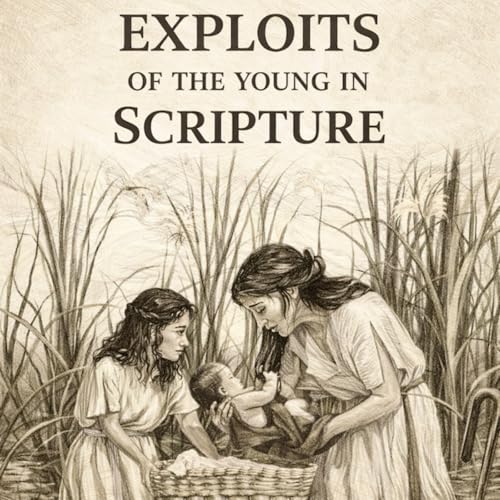
    • This sermon highlights the remarkable faith and courage of Miriam, demonstrating that God often accomplishes great purposes through the obedience of the young. Miriam, likely only ten to twelve years old, played a decisive role at a critical moment in Israel’s history by watching over her baby brother Moses as his ark floated on the Nile. While her parents rested in faith, Miriam acted in faith, positioning herself to intervene when the moment came. Her actions reveal spiritual maturity far beyond her years.Rather than being paralyzed by fear or emotion, Miriam showed calm wisdom and bold initiative. When Pharaoh’s daughter discovered the child, Miriam courageously approached her and suggested finding a Hebrew nurse—ensuring that Moses would be raised with the love of his own family while receiving protection and privilege in the royal household. This single, faith-filled decision preserved Moses’ life and ensured that he would grow up knowing his true identity and the promises of God.Miriam’s obedience produced lasting consequences. She became a key contributor to Israel’s deliverance long before Moses confronted Pharaoh or parted the Red Sea. Her faith ensured that Moses understood his heritage, which later empowered him to reject Egyptian identity and choose suffering with God’s people rather than the pleasures of sin. Miriam herself later emerged as a prophetess, leading Israel in worship after the Red Sea crossing—a moment made all the more meaningful because she had witnessed both Moses’ rescue and Egypt’s defeat.The sermon emphasizes that children should never be underestimated in God’s plan. Miriam’s example proves that faith, courage, and spiritual discernment are not limited by age. God Himself later honored her leadership, mentioning her alongside Moses and Aaron as one of Israel’s deliverers.Finally, the message underscores the importance of godly parents. The faith of Amram and Jochebed produced three powerful servants of God—Moses, Aaron, and Miriam—demonstrating that faithful parenting can shape the destiny of nations.

    Show More Show Less
    1 hr and 30 mins
  • #130: Wisdom Through the Scriptures
    Feb 1 2026
    • Email: hpaulsilas@hotmail.com
    • https://apostolicinternational.com/
    • Statement of beliefs: https://apostolicinternational.com/statement-of-beliefs
    • The sermon: https://apostolicinternational.com/sermons/WISDOM_THROUGH_THE_SCRIPTURES.pdf
    • This sermon emphasizes that while young people often lack life experience, they are not doomed to live unwisely. Scripture reveals that true wisdom does not depend solely on age or experience but can be acquired early through diligent engagement with the Word of God. Experience teaches through consequences, but God’s Word offers wisdom without requiring painful mistakes. This is why Scripture repeatedly urges believers—especially the young—to seek wisdom as the principal thing.Drawing from 2 Timothy 3:15, the sermon highlights that the Holy Scriptures are able to make a person “wise unto salvation through faith which is in Christ Jesus.” God, as the everlasting Father, provides instruction motivated by love and protection. Obedience to His Word leads to peace, longevity, and stability, offering guidance that shields the young from destructive decisions.King Josiah serves as a powerful example of early wisdom shaped by Scripture. Though he became king at just eight years old and had a wicked father, Josiah demonstrated a profound reverence for God’s Word. When the Book of the Law was discovered and read to him, his response—tearing his clothes and seeking the Lord—revealed a heart already tender toward God. His later reforms, including the destruction of idolatry and restoration of proper worship, show that deep familiarity with Scripture produces righteous action. Josiah’s success stemmed from his habit of inquiring of the Lord and aligning his life with God’s Word.The sermon also highlights Timothy, who benefited from a godly heritage through his mother and grandmother. Their faith shaped his character so deeply that Paul entrusted him with leadership, and there are even two books in the Bible named after him. Together, these examples demonstrate that young people can overcome lack of experience by immersing themselves in Scripture. God honors those who love, obey, and consult His Word from an early age, granting wisdom, direction, and lasting fruit.

    Show More Show Less
    1 hr and 30 mins
  • #129: God’s Claim on the Firstborn
    Jan 19 2026

    • Email: hpaulsilas@hotmail.com
    • https://apostolicinternational.com/
    • Statement of beliefs: https://apostolicinternational.com/statement-of-beliefs
    • The sermon: https://apostolicinternational.com/sermons/GODS_CLAIM_ON_THE_FIRSTBORN.pdf
    • This sermon explores the deep biblical significance of the firstborn and God’s rightful claim over the future of His people. In the ancient world, the firstborn represented strength, inheritance, leadership, and continuity. Nations invested their hopes and power in their firstborn children, which explains the severity of God’s warning to Pharaoh and the devastating judgment of Egypt’s firstborn. When God declared, “Israel is my son, even my firstborn,” He revealed both His covenantal love for Israel and His determination to free them from oppression.

      God’s judgment against Egypt was not arbitrary; it was a declaration that Egypt’s future would no longer dominate God’s people. The battle was not merely political but generational. God sought to claim the youth for Himself before corruption could shape them. Scripture consistently shows that the future of a nation depends on its young people. This is why Babylon targeted Judah’s best youth—Daniel and his companions—seeking to reshape their identity, faith, and loyalty. Their captivity stands as a tragic consequence of adult disobedience, where children bore the cost of their parents’ sin.

      The doctrine of the firstborn ultimately points to Jesus Christ. At Passover, a lamb died so that the firstborn might live. That lamb foreshadowed Christ, whose blood delivers humanity from death. Because the firstborn were spared by blood, God declared them His. Later, God substituted the tribe of Levi for the firstborn, reinforcing the principle of redemption rather than ownership by force.

      Jesus Himself is called the Firstborn, and believers belong to the “church of the firstborn.” The firstborn symbolizes the future, promise, and continuity of God’s plan. Having given His best—His Son—God now calls the youth to give their best to Him. Youth is a sacred offering, a clean slate upon which God desires to write His purposes. To give one’s youth to Christ is the greatest sacrifice and the strongest foundation for a godly future.

    Show More Show Less
    1 hr and 16 mins