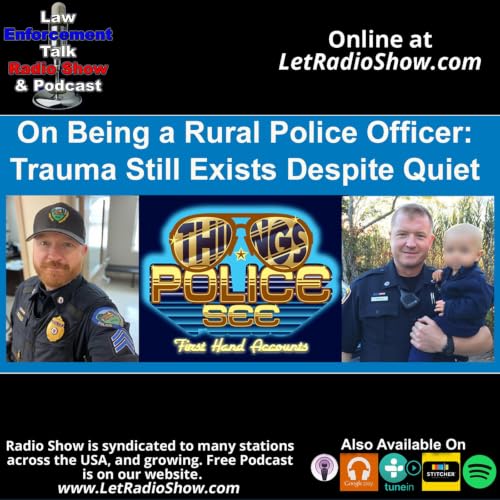
• On Being a Rural Police Officer
    Jul 1 2026
    On Being a Rural Police Officer: Trauma Still Exists Despite the Quiet Small-Town Life. Special Episode. Death and Injury, the Things Police See, and Why Rural Officers Carry Invisible Scars. The Podcast is available for free on the Law Enforcement Talk Radio Show and Podcast website, also on Apple Podcasts, Spotify, YouTube, iHeartradio and most major podcast platforms. #LawEnforcementTalk #Free #Podcast #Radio When most people picture a rural police officer, they often imagine something straight out of a Norman Rockwell painting. Neighbors know each other's names. Kids ride bicycles through quiet neighborhoods. The local police officer waves to residents while walking Main Street. The Law Enforcement Talk Radio Show and Podcast social media like their Facebook , Instagram , LinkedIn , Medium and other social media platforms. It seems like the perfect example of community policing. But behind that peaceful image lies a reality few people ever see. Death. Serious injury. Family tragedies. Suicides. Fatal crashes. Child abuse. Domestic violence. The things police officers see don't disappear simply because the town is small. On Being a Rural Police Officer: Trauma Still Exists Despite the Quiet Small-Town Life. Supporting articles about this and much more from Law Enforcement Talk Radio Show and Podcast in platforms like Medium , Blogspot and Linkedin. Those memories follow them home. Community Policing Doesn't Eliminate Trauma Police Sergeant Steven Gould serves with a smaller New England police agency where community policing remains a daily priority. Officers know many of the people they serve personally. They coach youth sports, attend local events, and often respond to calls involving neighbors they've known for years. That close connection makes the rewards of policing even greater. It also makes the tragedies far more personal. "When something terrible happens," Gould explains, "it's often someone you know." Unlike officers in large metropolitan departments who may never encounter the same victims again, rural officers frequently continue seeing grieving families, injured victims, and traumatized children long after the emergency has ended. The episode is available across major platforms including their website, Apple Podcasts, Spotify, YouTube, with highlights shared across their Facebook, Instagram, and LinkedIn profiles. The emotional weight doesn't simply disappear when the shift ends. The Myth That Rural Police Have It Easy Many assume officers working in smaller communities experience less stress because they respond to fewer violent crimes than officers in major cities. On Being a Rural Police Officer: Trauma Still Exists Despite the Quiet Small-Town Life. The reality is very different. Even if calls come less frequently, the emotional impact can be just as devastating. One horrific crash. One murdered victim. One child death. One suicide. Those incidents become part of an officer's memory forever. Trauma does not measure population size. It measures human experience. Leaving Police Work... Then Coming Back Steven Gould understands the profession from another perspective as well. After years working as both a natural resource officer and municipal police officer, he and his family decided to make a dramatic change. In 2016 they packed everything they owned into an RV, rented out their home, and drove across America toward California. After arriving in Los Angeles, Gould accepted a civilian position as a background investigator with the Los Angeles Police Department. Available for free on the Law Enforcement Talk Radio Show and Podcast website, also on Apple Podcasts, Spotify, Youtube and most major Podcast networks. It was supposed to be a new chapter. Instead, it reminded him why policing had become part of who he was. The Conversations That Changed Everything While working for the LAPD, Gould spent countless lunch breaks listening to veteran officers tell unbelievable stories. Some were hilarious. Others were heartbreaking. Many were terrifying. The conversations revealed something the public rarely gets to hear. Police officers witness extraordinary events every single day that never make the evening news. The emotional burden stays with them long after the headlines disappear. Those conversations inspired Gould to create a platform where officers could tell their stories honestly and without censorship. On Being a Rural Police Officer: Trauma Still Exists Despite the Quiet Small-Town Life. The Podcast is available for free on the Law Enforcement Talk Radio Show and Podcast website, also on Apple Podcasts, Spotify, YouTube, iHeartradio and most major podcast platforms. "I wanted people outside of law enforcement to hear what police officers actually deal with every day," Gould says. "If they heard these real stories, they'd better understand and appreciate what these men and women do." The Things Police See Stay Forever Whether serving in Los Angeles or a quiet New England town, ...
    Show More Show Less
    38 mins
  • A Deputy Was Shot and Killed
    Jun 28 2026
    A Deputy Was Shot and Killed During a Car Stop. He talks about this and the Mental Health Crisis in Law Enforcement. The Hidden Cost of Losing One of Your Own and the Mental Health Crisis in Law Enforcement. A Deputy was Shot and Killed during A Car Stop. Those words instantly capture attention, but they rarely tell the entire story. The Law Enforcement Talk Radio Show and Podcast social media like their Facebook , Instagram , LinkedIn , Medium and other social media platforms. The headlines focus on the fallen deputy. The criminal investigation follows. Eventually, the suspect is caught, prosecuted, and sentenced. The Podcast is available for free on the Law Enforcement Talk Radio Show and Podcast website, also on Apple Podcasts, Spotify, YouTube, iHeartradio and most major podcast platforms. #LawEnforcementTalk #Free #Podcast #Radio Then the news cameras leave. What often goes untold is what happens to the officers, supervisors, families, and entire law enforcement agency left behind. Supporting articles about this and much more from Law Enforcement Talk Radio Show and Podcast in platforms like Medium , Blogspot and Linkedin. For retired Bernalillo County Sheriff's Lieutenant Van Eldridge, that painful reality became part of his life forever when one of his deputies, Deputy Sheriff James McGrane, was murdered during what appeared to be a routine traffic stop. Years later, Eldridge shares not only what happened that tragic night but also how the experience shaped his understanding of trauma, resilience, and the urgent need to improve mental health resources for first responders. His emotional conversation is featured on the Law Enforcement Talk Radio Show and Podcast, available on their website, on Apple Podcasts, Spotify, YouTube, iHeartradio, Facebook, Instagram, LinkedIn, X, and most major podcast platforms worldwide. A Deputy Was Shot and Killed During a Car Stop. He talks about this and the Mental Health Crisis in Law Enforcement. The episode is available across major platforms including their website, Apple Podcasts, Spotify, YouTube, with highlights shared across their Facebook, Instagram, and LinkedIn profiles. When Routine Turns Deadly Every deputy begins a shift understanding that danger can appear without warning. Most traffic stops end with a warning, a citation, or an arrest. Occasionally, however, they become something far more devastating. Shortly after midnight on March 22, 2006, Deputy Sheriff James McGrane stopped a white pickup truck on Highway 337 in New Mexico. At approximately 12:46 a.m., he calmly radioed dispatch with the details of the stop. Nothing in his voice suggested anything unusual. Nothing indicated that within moments he would lose his life. Unknown to Deputy McGrane, the driver had allegedly been involved in an unsolved 2005 murder and was determined not to return to prison. As Deputy McGrane approached the driver's window, the suspect opened fire. The deputy was struck twice. He never had the opportunity to defend himself. Within minutes, nearby witnesses dialed 911 after hearing two gunshots echo through the quiet night and watching a white pickup speed away from the scene. A Deputy Was Shot and Killed During a Car Stop. He talks about this and the Mental Health Crisis in Law Enforcement. Available for free on the Law Enforcement Talk Radio Show and Podcast website, also on Apple Podcasts, Spotify, Youtube and most major Podcast networks. Emergency responders rushed to help. There was nothing they could do. Deputy James McGrane died where he had stopped the vehicle. The Supervisor's Nightmare For Sergeant Van Eldridge, the phone call changed everything. One of his deputies had been murdered. Every law enforcement supervisor knows the possibility exists. No one is ever prepared for it to become reality. A supervisor's responsibility instantly shifts from overseeing patrol operations to managing unimaginable grief. There are deputies in shock. Family members who need answers. Investigators arriving. Media gathering. Community members searching for information. Officers struggling to process what has happened. Yet the supervisor is expected to remain calm, make sound decisions, and lead everyone through one of the darkest days in the agency's history. The Podcast is available for free on the Law Enforcement Talk Radio Show and Podcast website, also on Apple Podcasts, Spotify, YouTube, iHeartradio and most major podcast platforms. Those moments become permanently etched into memory. Van explains that while people often remember the fallen officer, they seldom recognize the emotional burden carried by the partners and supervisors who must continue serving while grieving themselves. A Deputy Was Shot and Killed During a Car Stop. He talks about this and the Mental Health Crisis in Law Enforcement. The Law Enforcement Talk Radio Show and Podcast continues bringing listeners real conversations from the front lines of crime, policing, trauma, survival, and healing. ...
    Show More Show Less
    40 mins
  • 911 Dispatchers Suffer Too: Trauma on the Phone
    Jun 24 2026
    911 Dispatchers Suffer Too: Trauma on the Phone. Behind Every Emergency Call Is Someone Carrying the Weight of Another Person's Worst Day. When most people think of first responders, they picture police officers racing toward danger, firefighters battling flames, or paramedics fighting to save lives. The episode is available to listen to Free. The Podcast is available for free on the Law Enforcement Talk Radio Show and Podcast website, also on Apple Podcasts, Spotify, YouTube, iHeartradio and most major podcast platforms. #LawEnforcementTalk #Free #Podcast #Radio But there is another group of heroes who experience unimaginable tragedy every day without ever leaving their chairs. The Law Enforcement Talk Radio Show and Podcast social media like their Facebook , Instagram , LinkedIn , Medium and other social media platforms. 911 Dispatchers Suffer Too. Their battlefield isn't on the streets. Supporting articles about this and much more from Law Enforcement Talk Radio Show and Podcast in platforms like Medium , Blogspot and Linkedin. It's Trauma on The Phone. Every scream... Every desperate plea... Every child crying... Every gunshot... Every final breath... It all comes through a headset. 911 Dispatchers Suffer Too: Trauma on the Phone. On the latest episode of the Law Enforcement Talk Radio Show and Podcast, host John Jay Wiley welcomes Alex LeFever, a veteran 911 dispatcher who shares what many dispatchers have silently carried for years. The episode is available across major platforms including their website, Apple Podcasts, Spotify, YouTube, with highlights shared across their Facebook, Instagram, and LinkedIn profiles. His story reminds listeners that emotional scars don't require physical danger. Sometimes the deepest wounds are heard, not seen. The Calls That Never Leave Alex worked as a 911 dispatcher in both Arkansas and Pennsylvania. Like many emergency telecommunicators, thousands of calls blended together over time. But a few never disappeared. One involved a three-week-old baby. Another involved a woman trapped in a violent domestic abuse situation, who shot her attacker. Alex listened helplessly as the assault unfolded over the phone. Those voices never truly left him. "There are calls you never forget," Alex explains. "They stay with you long after your shift ends." Unlike police officers or firefighters who eventually arrive at a scene and begin resolving the crisis, dispatchers often experience something mental health experts call truncated trauma. 911 Dispatchers Suffer Too: Trauma on the Phone. Available for free on the Law Enforcement Talk Radio Show and Podcast website, also on Apple Podcasts, Spotify, Youtube and most major Podcast networks. They hear the terror. They imagine the scene. Then the phone disconnects. Most never learn how the story ended. Their minds are left to fill in the blanks. 911 Dispatchers Are Often the First First Responders Whether dispatchers are officially recognized as first responders depends largely on where they work. Many states, including California, Washington, and Delaware, have passed laws officially recognizing emergency dispatchers as first responders. Federal classifications have historically categorized them as administrative employees rather than protective service professionals. 911 Dispatchers Suffer Too: Trauma on the Phone. The Podcast is available for free on the Law Enforcement Talk Radio Show and Podcast website, also on Apple Podcasts, Spotify, YouTube, iHeartradio and most major podcast platforms. That distinction has sparked ongoing bipartisan efforts in Congress to update federal classifications through legislation such as the 9-1-1 SAVES Act and the Enhancing First Response Act. Regardless of job titles, dispatchers perform life-saving work every day. They calm panicked callers. Guide CPR. Provide emergency childbirth instructions. Coordinate police, fire, and EMS responses. Gather critical intelligence. Save lives. Long before emergency vehicles arrive, dispatchers are already working to keep victims alive. "They're often the first voice people hear during the worst moment of their lives." Trauma on The Phone Is Real Mental health professionals increasingly recognize that dispatchers experience extraordinarily high rates of Secondary Traumatic Stress (STS) and Post-Traumatic Stress Disorder (PTSD). The Law Enforcement Talk Radio Show and Podcast continues bringing listeners real conversations from the front lines of crime, policing, trauma, survival, and healing. Unlike field responders, dispatchers experience trauma through sound alone. The human brain reacts as if it is physically present. Adrenaline surges. Heart rate increases. Stress hormones flood the body. Yet dispatchers must remain calm. Professional. Focused. They cannot panic. They cannot cry. They simply answer the next call. Hour after hour. Day after day. Over time, that emotional weight accumulates. Symptoms may include: • Reliving disturbing calls • ...
    Show More Show Less
    40 mins
  • Cancer Caused by His Volunteer Work
    Jun 21 2026
    Cancer Caused by His Volunteer Work at a New York Attack: A 9/11 Volunteer's Fight Against Lung Cancer, Trauma, and Finding Hope. Those words summarize a journey that began with selfless service and evolved into a decades-long battle for survival. Twenty-five years after volunteering at Ground Zero following the September 11 terrorist attacks, Craig Sotkovsky continues fighting a different enemy, an aggressive form of lung cancer linked to toxic exposure at the World Trade Center. The Law Enforcement Talk Radio Show and Podcast social media like their Facebook , Instagram , LinkedIn , Medium and other social media platforms. His remarkable story is featured on the Law Enforcement Talk Radio Show and Podcast website, available on Apple Podcasts, Spotify, and shared across Facebook, Instagram, LinkedIn, X, and other major News and podcast platforms. The episode is available to listen to Free. The Podcast is available for free on the Law Enforcement Talk Radio Show and Podcast website, also on Apple Podcasts, Spotify, YouTube, iHeartradio and most major podcast platforms. #LawEnforcementTalk #Free #Podcast #Radio One Decision Changed Everything On September 11, 2001, Craig Sotkovsky watched history unfold from his home in Jersey City, New Jersey. Supporting articles about this and much more from Law Enforcement Talk Radio Show and Podcast in platforms like Medium , Blogspot and Linkedin. Like millions of Americans, he watched in disbelief as the Twin Towers collapsed after terrorists hijacked commercial airliners and carried out one of the deadliest attacks in U.S. history. But unlike most Americans, Craig didn't remain a spectator. A skilled carpenter and mason, he volunteered to help. He joined the bucket brigade at Ground Zero and spent two of the first five days working in the debris field following the collapse of the World Trade Center. Cancer Caused by His Volunteer Work at a New York Attack: A 9/11 Volunteer's Fight Against Lung Cancer, Trauma, and Finding Hope. The episode is available across major platforms including their website, Apple Podcasts, Spotify, YouTube, with highlights shared across their Facebook, Instagram, and LinkedIn profiles. At the time, he believed he was simply helping his country. He had no idea the toxic dust surrounding him would follow him for the rest of his life. "Twenty-five years ago, I answered a call for help." The Hidden Cost of Being a Volunteer Ground Zero contained a dangerous mixture of pulverized concrete, asbestos, glass fibers, lead, fuel residue, and countless other hazardous materials released when the towers collapsed. Available for free on the Law Enforcement Talk Radio Show and Podcast website, also on Apple Podcasts, Spotify, Youtube and most major Podcast networks. Years later, Craig received devastating news. He had developed a rare and aggressive lung cancer connected to his exposure at the World Trade Center. The diagnosis transformed every part of his life. He underwent multiple cancer surgeries. He endured physical pain, emotional trauma, and overwhelming financial hardship. The illness eventually cost him nearly everything. "Cancer changed everything." More Than a Medical Battle Craig explains that surviving cancer became more than simply recovering from surgery. It became a complete rebuilding of his identity. He describes losing financial security, emotional stability, and the life he once knew. The Podcast is available for free on the Law Enforcement Talk Radio Show and Podcast website, also on Apple Podcasts, Spotify, YouTube, iHeartradio and most major podcast platforms. Yet amid tremendous hardship, he discovered something unexpected. Purpose. "Growth can come from pain." That philosophy became the foundation for what Craig now calls "Gro-Win Through Pain," a message encouraging others to find strength through life's darkest moments. Cancer Caused by His Volunteer Work at a New York Attack: A 9/11 Volunteer's Fight Against Lung Cancer, Trauma, and Finding Hope. Trauma Doesn't Always End When the Crisis Is Over Many people associate September 11 with the horrific events of that single morning. Craig reminds listeners that for thousands of responders, recovery workers, and volunteers, the disaster never truly ended. For many, the effects emerged years later through chronic illness, cancer, respiratory disease, and lasting emotional trauma. The Law Enforcement Talk Radio Show and Podcast continues bringing listeners real conversations from the front lines of crime, policing, trauma, survival, and healing. His story highlights the reality that some of the greatest wounds are invisible for years. Research Continues to Show Elevated Cancer Risks Craig's experience reflects what researchers have documented for years. Studies examining World Trade Center responders have found elevated rates of several cancers among those exposed to Ground Zero dust. One study published in JAMA followed more than 12,000 World Trade Center responders. ...
    Show More Show Less
    39 mins
  • He Was Wrongfully Accused of One of the Worst Crimes
    Jun 17 2026
    He Was Wrongfully Accused of One of the Worst Crimes. A Father's Nightmare: False Allegations, Jail Time, and a Lifetime of Consequences. Imagine being accused of one of society's most hated crimes, sexual assault against your own child, only to discover that proving your innocence may take years, cost hundreds of thousands of dollars, and permanently destroy your family. The Podcast is available for free on the Law Enforcement Talk Radio Show and Podcast website, also on Apple Podcasts, Spotify, YouTube, iHeartradio and most major podcast platforms. #LawEnforcementTalk #Free #Podcast #Radio That nightmare became reality for Dean Tong. And he is a guest on our show talking about it. The Law Enforcement Talk Radio Show and Podcast social media like their Facebook , Instagram , LinkedIn , Medium and other social media platforms. Today, Tong is a nationally recognized forensic trial expert, author, and advocate for parents caught in high-conflict child custody disputes. But decades ago, he found himself at the center of a devastating accusation that changed his life forever. Supporting articles about this and much more from Law Enforcement Talk Radio Show and Podcast in platforms like Medium , Blogspot and Linkedin. His powerful story is featured on the Law Enforcement Talk Radio Show and Podcast, available on Facebook, Instagram, YouTube, Apple Podcasts, Spotify, LinkedIn, and other major platforms. The Accusation That Changed Everything In 1985, during a bitter custody battle with his estranged wife, Tong was accused of sexually abusing his three-year-old daughter. "The accusation alone was enough to destroy my life," Tong explains. Authorities arrested him and charged him with capital sexual battery. He was immediately prohibited from seeing his children and was incarcerated for two weeks without bail. Although he was eventually granted bail, the damage had already begun. He Was Wrongfully Accused of One of the Worst Crimes. The episode is available across major platforms including their website, Apple Podcasts, Spotify, YouTube, with highlights shared across their Facebook, Instagram, and LinkedIn profiles. For the next 14 months, Tong lived under the weight of allegations that carried the potential for life-altering consequences. Then something remarkable happened. The criminal charges were dropped. No prosecution followed. No conviction occurred. Ultimately, authorities found there was insufficient evidence to support the allegations. Yet the nightmare was far from over. Cleared, But Not Free Many people assume that when charges are dropped, life returns to normal. Tong says nothing could be further from the truth. "Even after the charges were dropped, I spent years trying to clear my name," he recalls. Over the next decade, he fought through lawsuits, custody battles, expert evaluations, and court proceedings. He estimates spending more than $120,000 on eight attorneys and seven psychiatrists. Available for free on the Law Enforcement Talk Radio Show and Podcast website, also on Apple Podcasts, Spotify, Youtube and most major Podcast networks. While he fought to rebuild his reputation, his children continued living with their mother. The emotional cost proved even greater. Today, Tong says he has no relationship with the daughter whose allegations sparked the case. That is by her choice. He Was Wrongfully Accused of One of the Worst Crimes. "That relationship was lost forever," he says. The Complex Reality of Child Abuse Allegations Tong is careful to emphasize that child abuse and sexual assault are very real crimes that deserve serious investigation and prosecution. At the same time, he believes the legal system must recognize the existence of false allegations and flawed investigative practices. The Podcast is available for free on the Law Enforcement Talk Radio Show and Podcast website, also on Apple Podcasts, Spotify, YouTube, iHeartradio and most major podcast platforms. Research over several decades has shown that false allegations do occur, particularly in contentious divorce and child custody disputes. Studies conducted between the late 1980s and mid-1990s found varying rates of false allegations, with estimates ranging from approximately 6% to 35%, depending on how researchers defined and measured false reports. Experts have noted that most allegations determined to be false did not originate with children themselves but were often introduced by adults involved in family conflicts. "Young children can be highly impressionable," Tong explains. "The way questions are asked can influence responses." He points to court findings and research that highlight concerns about suggestive interviewing techniques, particularly when very young children are involved. When Investigations Go Wrong One of the most controversial aspects of Tong's experience involves what psychologists call confirmation bias. Once investigators become convinced that abuse occurred, they may unintentionally focus on ...
    Show More Show Less
    40 mins
  • She Was Raped in Hollywood. Then Sailboat Trials at Sea
    Jun 14 2026
    She Was Raped in Hollywood. Then Sailboat Trials at Sea, the Book, and the Movie. How One Woman Turned Trauma, Survival, and Heartbreak Into a Story of Reinvention. Life rarely follows the script people imagine. The Law Enforcement Talk Radio Show and Podcast social media like their Facebook , Instagram , LinkedIn , Medium and other social media platforms. For Angela Harger Thompson is our guest. What began as a promising life in Southern California became a journey marked by trauma, survival, adventure, heartbreak, and ultimately transformation. Her story now reaches audiences through a book, a documentary movie, social media, and appearances on Podcast and Radio platforms across the country. The Podcast is available for free on the Law Enforcement Talk Radio Show and Podcast website, also on Apple Podcasts, Spotify, YouTube, iHeartradio and most major podcast platforms. #LawEnforcementTalk #Free #Podcast #Radio Today, Angela speaks openly about a devastating sexual assault that altered the course of her life and the extraordinary experiences that followed. Supporting articles about this and much more from Law Enforcement Talk Radio Show and Podcast in platforms like Medium , Blogspot and Linkedin. Her story is one of resilience, truth-telling, and finding purpose after unimaginable pain. She Was Raped in Hollywood Before the sailboat adventures, before the documentary film, and before writing her memoir, Angela endured a traumatic experience that would leave lasting emotional scars. She says she was drugged and sexually assaulted by someone she knew. The show is inspiring audiences through the Law Enforcement Talk Radio Show and Podcast Facebook, Instagram, YouTube, Apple, Spotify, iHeartradio and and many Podcast platforms. Like millions of women across America, Angela found herself confronting the painful reality of sexual violence. According to national studies, millions of women in the United States have experienced sexual assault while intoxicated, drugged, or otherwise incapacitated. In many cases, perpetrators use alcohol or drugs to make victims vulnerable, confused, unable to resist, or unable to remember what happened. She Was Raped in Hollywood. Then Sailboat Trials at Sea, the Book, and the Movie. "The hardest part wasn't just surviving it," Angela has explained. "It was learning how to live afterward." The emotional impact followed her for years. The betrayal, loss of trust, and trauma shaped many of the decisions that came next in her life. An Invitation That Changed Everything As she struggled to rebuild, a friend offered what seemed like an incredible opportunity. The episode is available across major platforms including their website, Apple Podcasts, Spotify, YouTube, with highlights shared across their Facebook, Instagram, and LinkedIn profiles. A sailboat voyage across the Pacific Ocean. It sounded like adventure. It sounded like freedom. It sounded like a chance to start over. Angela accepted. What she couldn't know was that the journey would soon become one of the most challenging experiences of her life. She Was Raped in Hollywood. Then Sailboat Trials at Sea, the Book, and the Movie. Available for free on the Law Enforcement Talk Radio Show and Podcast website, also on Apple Podcasts, Spotify, Youtube and most major Podcast networks. The Sailboat Trials at Sea In March 2020, Angela boarded a sailboat in Panama alongside five crew members and one beloved sea dog. The plan was simple: cross the Pacific Ocean and explore some of the world's most beautiful destinations. Then the world changed. Just one week into the voyage, news arrived through satellite communications. COVID-19 had become a global pandemic. Borders were closing. Governments were implementing restrictions. Ports were refusing entry. Entire nations were shutting down. Suddenly, the crew found themselves isolated in the middle of the Pacific Ocean with no clear destination and no certainty about what awaited them. She Was Raped in Hollywood. Then Sailboat Trials at Sea, the Book, and the Movie. The Podcast is available for free on the Law Enforcement Talk Radio Show and Podcast website, also on Apple Podcasts, Spotify, YouTube, iHeartradio and most major podcast platforms. "It felt like the world disappeared overnight," Angela recalled. As the pandemic spread, tensions aboard the vessel increased. Relationships became strained. What had begun as a dream adventure gradually evolved into a test of endurance, trust, and survival. The relationship with her sailing companion deteriorated, creating additional emotional challenges while trapped thousands of miles from shore. The experience would later become the foundation for a documentary film. The Movie: Quarantine at Sea Angela eventually transformed her extraordinary experience into a documentary movie titled Quarantine at Sea. The Law Enforcement Talk Radio Show and Podcast continues bringing listeners real conversations from the front lines of crime, policing,...
    Show More Show Less
    40 mins
  • When a Sibling Is the Problem: Growing Up in Abuse.
    Jun 10 2026
    When a Sibling Is the Problem: Growing Up in Abuse, Surviving Trauma, and Breaking the Cycle. From Childhood Abuse to Adult Freedom: Nathaniel Allenby's Extraordinary Journey. When people think about childhood abuse, they often imagine abusive parents or neglectful caregivers. What many don't realize is that one of the most common forms of family violence comes from an unexpected source: a sibling. The Podcast is available for free on the Law Enforcement Talk Radio Show and Podcast website, also on Apple Podcasts, Spotify, YouTube, iHeartradio and most major podcast platforms. #Free #Podcast #Radio For Nathaniel Allenby, the abuse began at home and followed him throughout much of his life. What started as mental, physical, and emotional abuse from a sibling eventually spilled over into his experiences at school and continued to impact him well into adulthood. The Law Enforcement Talk Radio Show and Podcast social media like their Facebook , Instagram , LinkedIn , Medium and other social media platforms. Today, Allenby is an author, entrepreneur, adventurer, and entertainer. But his journey to becoming an independent and free adult was anything but easy. Supporting articles about this and much more from Law Enforcement Talk Radio Show and Podcast in platforms like Medium , Blogspot and Linkedin. On a recent episode of the Law Enforcement Talk Radio Show and Podcast, Allenby shared his remarkable story of survival, healing, and personal transformation. When a Sibling Is the Problem: Growing Up in Abuse, Surviving Trauma, and Breaking the Cycle. The Hidden Reality of Sibling Abuse "Sibling abuse completely changed my life," Allenby explained. Many families dismiss aggressive behavior between brothers and sisters as normal childhood rivalry. However, experts increasingly recognize that sibling abuse is a serious issue that can have lifelong consequences. The show is inspiring audiences through the Law Enforcement Talk Radio Show and Podcast Facebook, Instagram, YouTube, Apple, Spotify, iHeartradio and and many Podcast platforms. Research suggests sibling abuse is one of the most common forms of family violence in the United States, affecting millions of children every year. Unlike ordinary disagreements, abuse involves a significant imbalance of power and repeated harmful behavior. Examples include: Physical violence such as hitting, kicking, or punching Psychological abuse including intimidation, humiliation, and threats Sexual coercion or unwanted sexual behavior Emotional manipulation designed to control another sibling Unfortunately, many victims suffer in silence because family members often view the behavior as simply "kids being kids." How Childhood Trauma Carries Into Adult Life The effects of sibling abuse rarely disappear when childhood ends. When a Sibling Is the Problem: Growing Up in Abuse, Surviving Trauma, and Breaking the Cycle. For Allenby, the emotional wounds followed him into school and eventually into adulthood. The episode is available across major platforms including their website, Apple Podcasts, Spotify, YouTube, with highlights shared across their Facebook, Instagram, and LinkedIn profiles. Mental health professionals have found strong links between childhood abuse and adult struggles with anxiety, depression, low self-esteem, complex trauma, and relationship difficulties. "Growing up in abuse affects how you see yourself and how you see the world," Allenby said. Like many survivors, he found himself carrying emotional scars that shaped his decisions, confidence, and ability to trust others. Yet his story was far from over. Mugged in London at Age 22 At twenty-two years old, Allenby found himself facing another traumatic experience. While traveling in London, he was mugged and left in shock. For many people, such an event would reinforce fears and distrust already created by years of abuse. Instead, it became one more chapter in a larger story of resilience. Rather than allowing trauma to define him, Allenby began searching for a different path forward. Available for free on the Law Enforcement Talk Radio Show and Podcast website, also on Apple Podcasts, Spotify, Youtube and most major Podcast networks. When a Sibling Is the Problem: Growing Up in Abuse, Surviving Trauma, and Breaking the Cycle. A Bicycle, a Friend, and a Life-Changing Opportunity Sometimes life changes because one person believes in you. Allenby's turning point came when his close friend Dan made an unusual offer. He offered Allenby a one-way ticket to Europe and promised him a bicycle upon arrival. What followed became the foundation for a journey that would transform his life. Together, the two friends traveled thousands of miles across Europe, often with little money, uncertain where they would sleep or find their next meal. "It wasn't just a trip," Allenby explained. "It became a journey of self-discovery." The Cycle of Kindness Those experiences eventually inspired Allenby's acclaimed book, The Cycle ...
    Show More Show Less
    40 mins
  • The Truth About American Police and the Danger of Drug Labs
    Jun 7 2026
    The Truth About American Police and the Danger of Drug Labs: He Shares What Most People Never See. The Truth about American Police is often far different from what appears in headlines, television dramas, or social media debates. Behind every badge are men and women who routinely face violence, uncertainty, and life-threatening situations that most citizens never experience. The Law Enforcement Talk Radio Show and Podcast social media like their Facebook , Instagram , LinkedIn , Medium and other social media platforms. In a powerful episode of the Law Enforcement Talk Radio Show and Podcast, retired DEA agent, former Omaha Police Department officer, and military veteran Charles Noonan pulls back the curtain on the realities of policing, the murder of a fellow officer, and the growing danger posed by modern illegal drug labs. The Podcast is available for free on the Law Enforcement Talk Radio Show and Podcast website, also on Apple Podcasts, Spotify, YouTube, iHeartradio and most major podcast platforms. #Free #Podcast #Radio The episode is available on Facebook, Instagram, YouTube, Apple Podcasts, Spotify, LinkedIn, and other major platforms as a Free Podcast. The Murder of Omaha Police Officer Jimmy Wilson Before joining the Drug Enforcement Administration, Charles Noonan served with the Omaha Police Department alongside Officer Jimmy Wilson. The Truth About American Police and the Danger of Drug Labs: He Shares What Most People Never See. Supporting articles about this and much more from Law Enforcement Talk Radio Show and Podcast in platforms like Medium , Blogspot and Linkedin. Wilson was more than a coworker. He was a close friend. On a tragic evening, Officer Wilson conducted what appeared to be a routine traffic stop involving a van displaying fictitious license plates. At approximately 8:00 p.m., he radioed his location and approached the vehicle. Moments later, the situation turned deadly. Two members of an eight-person gang exited the van and opened fire with an AK-47 rifle and a 9mm semi-automatic pistol. Officer Wilson was killed while still seated in his patrol vehicle, his seatbelt fastened and his microphone still in his hand. The suspects ranged in age from 14 to 20 years old. One gang member, affiliated with the Bloods street gang, was later convicted of First Degree Murder. Evidence showed he had told fellow gang members that he was "not going back to jail" before opening fire. He was sentenced to life imprisonment along with additional prison time for firearm charges. The Truth About American Police and the Danger of Drug Labs: He Shares What Most People Never See. The show is inspiring audiences through the Law Enforcement Talk Radio Show and Podcast Facebook, Instagram, YouTube, Apple, Spotify, iHeartradio and and many Podcast platforms. Officer Wilson had served with the Omaha Police Department for only 16 months. He was survived by his fiancée and parents. Policing ran deep in his family, as both his father and grandfather had also served with the department. For Noonan, the loss remains a stark reminder of the risks officers face every day. The Truth About American Police Stories like Jimmy Wilson's illustrate a reality many people never see. Most police officers begin every shift knowing they may encounter armed criminals, violent offenders, or dangerous situations with little warning. What appears to be a simple traffic stop can become a deadly encounter within seconds. Noonan explains that officer survival often comes down to preparation, awareness, and training. Yet even the most experienced officers can find themselves facing circumstances beyond their control. His decades in law enforcement provided firsthand insight into the sacrifices officers and their families make throughout their careers. The Truth About American Police and the Danger of Drug Labs: He Shares What Most People Never See. The episode is available across major platforms including their website, Apple Podcasts, Spotify, YouTube, with highlights shared across their Facebook, Instagram, and LinkedIn profiles. From Street Cop to DEA Expert Following his service with the Omaha Police Department, Noonan transitioned to the Drug Enforcement Administration, where he became an expert in clandestine drug laboratories and hazardous drug environments. Over the years, he investigated some of the most dangerous illegal drug operations in the United States and abroad. What surprised many people was where some of these labs were found. During the podcast, Noonan discusses two separate drug lab investigations that took place inside luxury condominiums in South Florida. The locations challenged common assumptions that illegal drug labs only exist in remote rural areas or abandoned buildings. In reality, dangerous criminal operations can be hidden in upscale neighborhoods, apartment complexes, and residential communities. The Modern Danger of Drug Labs The nature of illegal drug manufacturing has changed ...
    Show More Show Less
    39 mins