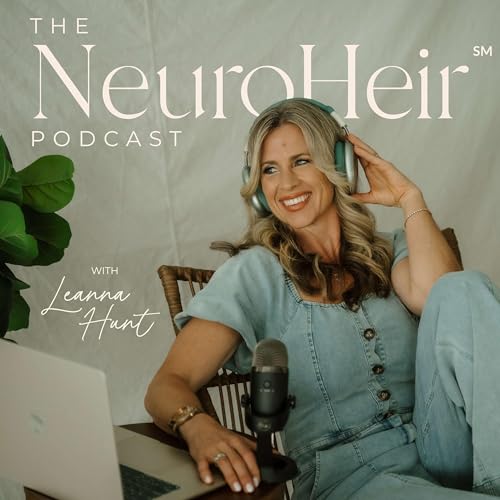
• 29. Spiritual Disconnection Explained: How Your Nervous System Impacts Your Connection to God
    Apr 29 2026

    What happens when you do the brave thing—open up, lean into vulnerability, and show up more honestly… but instead of feeling closer, you feel more disconnected?

    In this deeply personal episode, Leanna explores the confusing and often unspoken experience of feeling distant from God, yourself, or others especially in moments when you expected to feel more connected. Through her own story of grief after losing her father, she unpacks how the nervous system, not your faith or effort, may be influencing your ability to feel connection and how your breath can become the bridge back.

    In This Episode, We Cover:

    • Why vulnerability doesn’t always lead to immediate feelings of connection
    • The hidden role your nervous system plays in feeling disconnected
    • How grief, trauma, and stress can impact your sense of safety and faith
    • The connection between breath, the body, and spiritual connection
    • What happens in fight, flight, freeze, and appease states and how they affect you
    • A simple, guided practice for diaphragmatic (belly) breathing
    • How breathwork supports nervous system regulation and emotional safety
    • The “Four N’s” framework: Notice, Name, Nurture, Navigate
    • Reframing disconnection: What if nothing is wrong with you?
    • The connection between regulate → repair → rise in your healing journey
    • How to stay present even when connection feels out of reach

    Join the NeuroHeir Membership today

    Connect with me:
    Instagram → @aligningwithleanna

    Website → leannahunt.com

    Disclaimer:
    Although I am a licensed Associate Clinical Mental Health Counselor, The NeuroHeir℠ Podcast is not a substitute for therapy, counseling, or medical treatment. The tools and practices I share are for educational and coaching purposes only. Every nervous system is unique, and what we discuss on this podcast should not replace your own individual therapeutic work or professional support.

    The focus of this podcast is my coaching work, which centers on education, nervous system practices, and generational healing tools designed to support—not replace—your personal journey with a qualified provider.

    If you are struggling with your mental health or experiencing overwhelming emotions, please seek support from a licensed professional in your area. You don’t have to do this work alone.

    Show More Show Less
    22 mins
  • 28. How to Feel Safe Being Seen: A Nervous System Approach to Vulnerability
    Apr 22 2026

    Last week, we explored vulnerability—what it really means and why it can feel so uncomfortable. But today, we’re going deeper into what actually makes vulnerability possible in the first place: courage.

    Not the kind of courage that pushes through or overrides your body… but a more compassionate, nervous-system-informed version. Because if being seen once felt unsafe, your body isn’t going to magically welcome vulnerability just because your mind wants it to. In this episode, we unpack why courage can feel so hard, how your nervous system shapes your response to being seen, and how to begin building true, embodied courage—one small step at a time.

    Through personal stories, neuroscience insights, and practical tools, you’ll learn how to work with your body instead of against it so vulnerability becomes something you can gently allow, rather than force.

    In this episode, we talk about:

    • Why vulnerability often feels unsafe (and why that makes total sense)
    • A new, nervous-system-based definition of courage
    • How your past experiences shape your ability to be seen
    • The role of the nervous system in connection and protection
    • Hyperarousal vs. hypoarousal—and how courage looks different in each state
    • The “courage bridge” and what it actually requires
    • The power of small, titrated steps toward vulnerability
    • Why self-compassion after vulnerability is essential
    • The “4 N’s” framework: Notice, Name, Nurture, Navigate
    • How to build your personal “courage ladder”
    • Rewriting generational patterns around expression and emotional safety

    Key takeaway:

    Courage isn’t about eliminating fear—it’s about staying connected to yourself within it. And every small moment of honesty teaches your nervous system that being seen doesn’t have to come at the same cost it once did.


    APA Citations:

    • Arnsten, A. F. T. (2009) – Stress and prefrontal cortex function
    • Porges, S. W. (2011) – Polyvagal Theory
    • Levine, P. (Somatic Experiencing / titration concept)
    • Neff, K. (Self-compassion research)
    • Siegel, D. J. (“Name it to tame it” / interpersonal neurobiology)

    Join the NeuroHeir Membership today

    Connect with me:
    Instagram → @aligningwithleanna

    Website → leannahunt.com

    Disclaimer:
    Although I am a licensed Associate Clinical Mental Health Counselor, The NeuroHeir℠ Podcast is not a substitute for therapy, counseling, or medical treatment. The tools and practices I share are for educational and coaching purposes only. Every nervous system is unique, and what we discuss on this podcast should not replace your own individual therapeutic work or professional support.

    The focus of this podcast is my coaching work, which centers on education, nervous system practices, and generational healing tools designed to support—not replace—your personal journey with a qualified provider.

    If you are struggling with your mental health or experiencing overwhelming emotions, please seek support from a licensed professional in your area. You don’t have to do this work alone.

    Show More Show Less
    23 mins
  • 27. Why Vulnerability Feels Like a Threat (And How to Work Through It)
    Apr 15 2026

    Vulnerability is often talked about as something we should do but rarely do we pause to ask why it feels so hard in the first place.

    In this episode, we’re exploring vulnerability through a nervous system and generational lens, breaking down why opening up, taking risks, or being seen can feel unsafe… even when we deeply crave connection.

    Inspired by Brené Brown’s work on the myths of vulnerability, this conversation bridges science, somatic awareness, and real-life experiences to help you understand what’s actually happening in your body when vulnerability shows up. Because the truth is, it’s not a mindset problem. It’s a protection response.

    Through the lens of the Notice, Name, Nurture, Navigate framework, you’ll begin to see vulnerability not as weakness but as a nervous system state shaped by your experiences, your environment, and even generations before you. And from that place, you can start working with your body instead of against it.

    In this episode, we cover:

    • Why vulnerability can feel unsafe even when it leads to connection and growth
    • The six myths of vulnerability and how they show up in your nervous system
    • How generational patterns and family systems shape your relationship with vulnerability
    • The connection between vulnerability, uncertainty, risk, and emotional exposure
    • What “not doing vulnerability” actually looks like (hint: it often shows up as avoidance, overworking, or reactivity)
    • How hyper-independence and self-reliance can be nervous system adaptations
    • Why discomfort isn’t something to avoid but something to build capacity for
    • The truth about trust: why it doesn’t come before vulnerability, but is built through it
    • The difference between true vulnerability and oversharing and how to find safe, aligned expression
    • How to use the Notice, Name, Nurture, Navigate framework to move through vulnerability with intention

    This episode is an invitation to shift the question from “What’s wrong with me?” to “What is my nervous system trying to do?” and to meet yourself with more compassion in the process.

    Because you don’t stop feeling vulnerable…
    You just stop abandoning yourself inside of it.

    Resources:

    Barbara Markway, B. (2019, May 6). Brené Brown’s Netflix special busts six vulnerability myths. Psychology Today. https://www.psychologytoday.com/us/blog/shyness-is-nice/201905/bren-browns-netflix-special-busts-six-vulnerability-myths

    Brown, B. (2018). Dare to lead: Brave work, tough conversations, whole hearts. Random House.

    Join the NeuroHeir Membership today

    Connect with me:
    Instagram → @aligningwithleanna

    Website → leannahunt.com

    Disclaimer:
    Although I am a licensed Associate Clinical Mental Health Counselor, The NeuroHeir℠ Podcast is not a substitute for therapy, counseling, or medical treatment. The tools and practices I share are for educational and coaching purposes only. Every nervous system is unique, and what we discuss on this podcast should not replace your own individual therapeutic work or professional support.

    The focus of this podcast is my coaching work, which centers on education, nervous system practices, and generational healing tools designed to support—not replace—your personal journey with a qualified provider.

    If you are struggling with your mental health or experiencing overwhelming emotions, please seek support from a licensed professional in your area. You don’t have to do this work alone.

    Show More Show Less
    28 mins
  • 26. When Someone You Love Is Healing: Understanding Nervous System Work & Relationship Shifts
    Apr 8 2026

    What happens when someone you love begins their healing journey… and you don’t fully understand it?

    In this heartfelt and deeply grounding episode, Leanna speaks directly to those on the outside of the healing process—the partners, parents, friends, and family members who may feel confused, uncomfortable, or even disconnected as someone they care about begins to change.

    This conversation is not about blame or pointing fingers. It’s an invitation.

    An invitation to better understand what nervous system healing actually looks like, why it can shift relationship dynamics, and how you can stay connected even when things feel unfamiliar.

    Leanna shares both clinical insight and personal experience, including the profound impact of losing her father and the reflections that followed. Through this lens, she gently explores how unspoken patterns, emotional responses, and generational experiences shape the way we relate and how healing can open the door to deeper connection instead of separation.

    In this episode, we explore:

    • Why healing work can feel confusing or disruptive from the outside
    • How nervous system responses (like defensiveness or shutdown) are actually protective
    • The role of generational patterns in relationships and emotional responses
    • What it really means when someone invites you into their healing process
    • Simple ways to stay present, open, and curious in difficult conversations
    • Why healing doesn’t have to create distance and can actually deepen connection

    This episode is a reminder that healing is often messy, imperfect, and deeply human. But within that mess is the possibility for something new—more understanding, more connection, and a different path forward.

    If someone shared this episode with you, take a moment to honor that. It likely comes from a place of love and a desire to grow closer.

    Because healing isn’t about having all the answers.

    Sometimes, it’s simply about being willing to stay.

    Join the NeuroHeir Membership today

    Connect with me:
    Instagram → @aligningwithleanna

    Website → leannahunt.com

    Disclaimer:
    Although I am a licensed Associate Clinical Mental Health Counselor, The NeuroHeir℠ Podcast is not a substitute for therapy, counseling, or medical treatment. The tools and practices I share are for educational and coaching purposes only. Every nervous system is unique, and what we discuss on this podcast should not replace your own individual therapeutic work or professional support.

    The focus of this podcast is my coaching work, which centers on education, nervous system practices, and generational healing tools designed to support—not replace—your personal journey with a qualified provider.

    If you are struggling with your mental health or experiencing overwhelming emotions, please seek support from a licensed professional in your area. You don’t have to do this work alone.

    Show More Show Less
    23 mins
  • 25. Nervous System Healing in Relationships: Why Change Feels Like a Threat to Others
    Apr 1 2026

    Healing doesn’t happen in isolation—it happens in relationship. In this episode, we’re diving into what it really looks like to bring your nervous system healing into your relationships… especially when the people you love aren’t ready to meet you there.

    If you’ve ever tried to share your growth, your awareness, or your story with family only to be met with defensiveness, shutdown, or misunderstanding—this conversation will feel like a deep exhale.

    In this episode, we talk about:

    • Why healing in relationships can feel harder than doing the work on your own
    • How family systems naturally resist change (even when change is healthy)
    • Why your nervous system prioritizes familiarity over safety
    • What’s really happening when someone reacts defensively to your vulnerability
    • The concept of the “second wound” and why unmet moments can feel so painful
    • How to use the Notice, Name, Nurture, Navigate framework in real-time
    • Why not everyone will be ready to grow with you and what that means for your healing
    • How to stay connected to yourself without forcing connection with others

    If you’ve been feeling stuck in the “messy middle” of your healing journey where things aren’t the same, but they’re not fully different yet this episode will remind you that you’re not alone… and that what you’re doing truly matters.

    Research Link:

    Eisenberger, N. I. (2012).
    The pain of social disconnection: Examining the shared neural underpinnings of physical and social pain. Nature Reviews Neuroscience, 13(6), 421–434. https://doi.org/10.1038/nrn3231

    4Ns Practice: When You Feel Alone in Your Healing

    If you’re feeling like the one who is “early” in your family or relationships, try this short 4Ns check-in:

    1. Notice
    What’s happening in my body right now?
    Do I feel tight, heavy, hot, tense, or shut down?

    2. Name
    What am I feeling?
    This might feel like rejection, grief, anger, or loneliness.
    Maybe even: “I feel like I’m the only one.”

    3. Nurture
    Can I offer my body a moment of support before doing anything else?
    Slow your breath, place a hand on your chest, soften your shoulders.
    You’re not fixing it—just reminding your body you’re here.

    4. Navigate
    From this place, what feels like the most supportive next step?
    Do I continue this conversation?
    Do I step away and come back later?
    Or do I recognize this may not be the person I process this with?

    Remember:
    Not every conversation needs to be pushed through.
    Staying connected to yourself matters too.

    Join the NeuroHeir Membership today

    Connect with me:
    Instagram → @aligningwithleanna

    Website → leannahunt.com

    Disclaimer:
    Although I am a licensed Associate Clinical Mental Health Counselor, The NeuroHeir℠ Podcast is not a substitute for therapy, counseling, or medical treatment. The tools and practices I share are for educational and coaching purposes only. Every nervous system is unique, and what we discuss on this podcast should not replace your own individual therapeutic work or professional support.

    The focus of this podcast is my coaching work, which centers on education, nervous system practices, and generational healing tools designed to support—not replace—your personal journey with a qualified provider.

    If you are struggling with your mental health or experiencing overwhelming emotions, please seek support from a licensed professional in your area. You don’t have to do this work alone.

    Show More Show Less
    26 mins
  • 24. Inner Child Healing for Adults: Breaking Patterns and Rebuilding Emotional Safety with Drew Cost
    Mar 25 2026

    What does it really look like when someone chooses to break generational cycles and do the inner work?

    In this powerful conversation, Leanna sits down with faith-driven coach, consultant, and father Drew Cost to talk about healing, vulnerability, and what it means to reclaim your identity after years of emotional shutdown. Drew shares his personal journey growing up believing that men shouldn’t express emotion, how that belief shaped his relationships, and the transformative work he’s done to reconnect with his inner self.

    Together, they explore the deep impact of childhood experiences, the courage it takes to confront family wounds, and how nervous system work can help us reconnect with the younger parts of ourselves that still need care and safety.

    This conversation is honest, emotional, and incredibly hopeful—reminding us that healing doesn’t mean erasing the past, but learning how to show up for ourselves in a new way.


    In This Episode, We Talk About:

    • Why emotional vulnerability can feel especially difficult for men
    • How childhood experiences shape our nervous system and relationships
    • The power of reconnecting with your younger self during healing work
    • What it means to stop condemning yourself and start offering compassion
    • How small steps—like journaling or creating safe moments—can begin the healing process
    • Why breaking generational patterns starts with doing your own inner work

    Whether you’re beginning your healing journey or deep in the process, this episode will remind you that you’re not alone and that it’s never too late to reconnect with the parts of yourself that need care.

    🎧 Connect with Drew Cost
    Instagram: https://www.instagram.com/drewcostofficial

    Skool Community: https://www.skool.com/the-word-wellness-community-6348/about

    If today’s episode resonated with you, share it with someone who might need this conversation. Healing work isn’t meant to be done alone.

    Join the NeuroHeir Membership today

    Connect with me:
    Instagram → @aligningwithleanna

    Website → leannahunt.com

    Disclaimer:
    Although I am a licensed Associate Clinical Mental Health Counselor, The NeuroHeir℠ Podcast is not a substitute for therapy, counseling, or medical treatment. The tools and practices I share are for educational and coaching purposes only. Every nervous system is unique, and what we discuss on this podcast should not replace your own individual therapeutic work or professional support.

    The focus of this podcast is my coaching work, which centers on education, nervous system practices, and generational healing tools designed to support—not replace—your personal journey with a qualified provider.

    If you are struggling with your mental health or experiencing overwhelming emotions, please seek support from a licensed professional in your area. You don’t have to do this work alone.

    Show More Show Less
    45 mins
  • 23. Nervous System Healing Isn’t Instant: Understanding Triggers and Regulation
    Mar 18 2026

    Have you ever thought, “I know better… so why did I still react like that?” If you’ve been learning about nervous system regulation but still find yourself snapping, shutting down, or spiraling in stressful moments, this episode is an important reminder: knowing the work and integrating the work are not the same thing.

    In this episode, Leanna explores why nervous system reactions can override logic under stress and why awareness alone doesn’t immediately change long-standing patterns.

    In This Episode

    • Why understanding your triggers isn’t the same as rewiring your nervous system
    • How the brain’s survival system can override logic in stressful moments
    • The Micro State Check tool to help you reflect after activation
    • Why progress in nervous system work looks like faster recovery, not perfection
    • How awareness can feel uncomfortable at first and why that’s actually growth
    • The importance of practicing regulation when you’re calm, not just when you’re triggered
    • How stress load (sleep, hormones, conflict, overwhelm) narrows your window of tolerance
    • The healing cycle of Regulate → Repair → Rise and how it transforms shame into resilience
    • How the Four N’s Framework (Notice, Name, Nurture, Navigate) connects to nervous system healing

    Micro-State Check-In

    After a moment of activation, gently ask yourself:

    1. What number was I at when I reacted?
      (0–10 scale of activation)

    2. What was happening in my body?
      Tight, hot, numb, collapsed, restless?

    3. What was my nervous system trying to do?
      Defend, escape, shut down, or appease?

    This simple check-in helps you practice the first step of the 4Ns: Notice, building awareness without judgment.


    Reflection Questions from This Episode

    Take a few moments this week to reflect on these questions as you integrate today’s episode.

    1. Insight vs Conditioning
    Where in my life am I expecting cognitive insight to override nervous system conditioning?

    2. Measuring Progress
    Am I measuring growth by elimination… or by recovery?

    3. Awareness
    What am I noticing now that I couldn’t see before?

    4. Practicing in Calm
    When do I practice regulation when nothing is wrong?

    5. Stress Load
    What is narrowing my window that I’m pretending doesn’t matter?

    6. Repair
    Where in my life do I avoid repair because it feels vulnerable?

    7. Rising
    What is this trigger asking me to grow?


    Key Cycle from This Episode

    When activation happens, move through the cycle:

    Regulate → Repair → Rise

    Over time, this shortens the distance between trigger and wisdom and builds nervous system ca

    Join the NeuroHeir Membership today

    Connect with me:
    Instagram → @aligningwithleanna

    Website → leannahunt.com

    Disclaimer:
    Although I am a licensed Associate Clinical Mental Health Counselor, The NeuroHeir℠ Podcast is not a substitute for therapy, counseling, or medical treatment. The tools and practices I share are for educational and coaching purposes only. Every nervous system is unique, and what we discuss on this podcast should not replace your own individual therapeutic work or professional support.

    The focus of this podcast is my coaching work, which centers on education, nervous system practices, and generational healing tools designed to support—not replace—your personal journey with a qualified provider.

    If you are struggling with your mental health or experiencing overwhelming emotions, please seek support from a licensed professional in your area. You don’t have to do this work alone.

    Show More Show Less
    34 mins
  • 22. Navigate: From Survival to Self-Leadership
    Mar 11 2026

    In this final episode of the Four N’s series, we arrive at the fourth and transformative step: Navigate. If notice builds awareness, name reduces shame, and nurture creates safety, then navigate is where you consciously choose your direction. It’s where healing becomes movement.

    Through personal stories — from a honeymoon mishap navigating paper maps in 1999 to wrapping up in a quilt made from her late father’s shirts — Leanna explores what it truly means to move from survival patterns into self-leadership. Navigate isn’t about forcing change or bypassing emotion. It’s about leading from regulation.

    When your nervous system feels safe enough, you gain access to choice. And that choice is where generational patterns begin to shift.


    In This Episode, You’ll Learn:

    • Why navigate requires nervous system regulation — not willpower
    • How chronic stress impacts the prefrontal cortex and decision-making
    • The difference between nurture (safety) and navigate (self-agency)
    • What navigating looks like in everyday life from boundaries to rest to relational repair
    • How widening your window of tolerance creates real behavioral change
    • Why generational repair happens through small, regulated choices

    Navigate isn’t about perfection — it’s about direction. It’s about recognizing that once you can see the pattern, you are no longer at its mercy. You are no longer just a passenger. You have a steering wheel.

    Research:

    Arnsten, A. F. T. (2009).
    Stress signalling pathways that impair prefrontal cortex structure and function. Nature Reviews Neuroscience, 10(6), 410–422.
    https://doi.org/10.1038/nrn2648


    Join the NeuroHeir Membership today

    Connect with me:
    Instagram → @aligningwithleanna

    Website → leannahunt.com

    Disclaimer:
    Although I am a licensed Associate Clinical Mental Health Counselor, The NeuroHeir℠ Podcast is not a substitute for therapy, counseling, or medical treatment. The tools and practices I share are for educational and coaching purposes only. Every nervous system is unique, and what we discuss on this podcast should not replace your own individual therapeutic work or professional support.

    The focus of this podcast is my coaching work, which centers on education, nervous system practices, and generational healing tools designed to support—not replace—your personal journey with a qualified provider.

    If you are struggling with your mental health or experiencing overwhelming emotions, please seek support from a licensed professional in your area. You don’t have to do this work alone.

    Show More Show Less
    25 mins