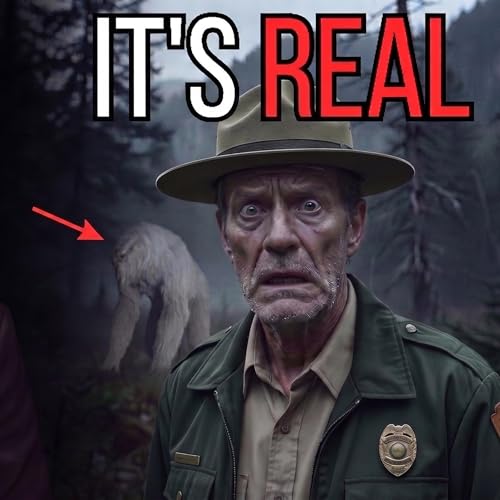
This is Why You NEVER Enter Mount Mitchell After Dark — and once you hear what the paramedics found on that eastern slope, you'll understand exactly why that warning exists. What Search and Rescue discovered in the early morning hours of March 15, 2019 wasn't just a ranger in distress. It was something that has quietly unsettled everyone who has read the incident report since.These are the kinds of Appalachian Mountains horror stories that don't make it onto the evening news — not because they aren't real, but because the people involved can't fully explain what happened to them. A fifteen-year park ranger. A decommissioned NOAA weather station near the summit of the highest peak east of the Mississippi. A fog that arrived with no weather system behind it. And a companion named Thomas who, according to every official record, was never on that mountain at all.Ranger Kester had made this particular run to Mount Mitchell seventy-three times. He knew the Black Mountains the way most people know their own neighborhood — the specific wind register in the upper spruce, the line where birdsong stops, the way the light goes gray before full dark sets in. He was not the kind of man who got turned around. He was not the kind of man who panicked. What happened to him in those twelve hours wasn't panic. It was something quieter and far more unsettling than that.The deep woods have a way of narrowing the distance between what you know and what you're willing to believe. Every serious hiker, every backcountry camper who has ever been above treeline in the dark, knows the particular quality of silence that settles in when the temperature drops faster than it should and the trail you've walked a dozen times suddenly doesn't feel like itself anymore. Kester knew that silence. He'd spent eleven years reading mountain situations for what they actually were. And still — still — by the time he understood what was happening, it was nearly too late to matter.The phenomenon Dr. Carl Webb eventually documented in Kester's case file has been reported by polar explorers, Himalayan climbers, and wilderness survival cases going back more than a century. Ernest Shackleton wrote about it. Amelia Earhart reported it. The brain, stripped down to its survival core, manufactures a presence — gives it weight and warmth and a voice you trust completely. It is the mind's last specific kindness. Its final negotiation with a body that is running out of time.What the medical explanation does not cover is the logbook.March 14, 2019. Written in Kester's handwriting, timestamped before the fog, before Thomas, before anything went wrong. Four lines. The last one: *No one should be up here.*That's what this story is about. Not a monster. Not something that reaches out of the dark to take you. Something older and quieter than that — the part of the mountain that has simply been there longer than any trail, any station, any map. The part that waits for you to get tired enough to stop moving.The Appalachian wilderness has produced accounts like this for generations — from park rangers and search and rescue teams, from experienced hikers and backcountry campers who went in prepared and came out changed. The mountains don't chase you. They don't need to. They just wait, patient and unhurried, in the dark between the trees. And sometimes the most dangerous thing on the trail isn't something you can see coming.If you've been out there after dark — if you've felt that specific wrongness settle into the trail around you, the cold arriving from a direction the forecast didn't predict, the sound of boots behind you that stops when you stop — then you already know what Kester knew, standing outside that station with the fog coming in and his headlamp beginning to fail.


 24 mins
 Jun 24 202624 mins
 Jun 23 202624 mins
 Jun 23 202624 mins
 24 mins
 24 mins
 24 mins