Episodes

  • Chapter 7 - Prevention and Handling of Military Crisis
    Mar 30 2026

    With the development and change of the international strategic situation and the security environment of our
    country, the factors of insecurity, instability and uncertainty facing our country have increased significantly.
    Crisis has gradually become the normal state of national security, and military crises have also shown an
    increasing trend. Military crises are the crossroads of war and peace. If they cannot be effectively prevented
    and dealt with, they may get out of control and escalate into war, which will have a major impact and
    interference on the peaceful development of our country, and even destroy the hard-won achievements of
    reform and opening up. Therefore, we should thoroughly study and explore the characteristics and laws of
    military crises, actively prevent crises, strive to manage crises, properly handle crises, control the impact
    and impact of military crises within a certain range, and create a peaceful and stable strategic environment
    for national development.


    Section One: The Connotation and Characteristics of Military crisis
    After the end of the Cold War, international military crises frequently occurred, and the incentives were
    complex and diverse. The prominent manifestations were the intensified competition for geopolitical and
    economic interests, the intensification of ethnic and religious contradictions, and the endless emergence of
    national unity and territorial disputes. Study the connotation of contemporary military crises, explore the
    characteristics and laws of the occurrence, development, and transformation of military crises, summarize
    the experience of crisis prevention and handling, and improve our country's ability to prevent and handle
    military crises, which has important practical significance for stopping wars, defending national interests, and
    maintaining regional stability and world peace .

    Show More Show Less
    54 mins
  • Chapter 3 - Strategic Decision
    Mar 28 2026

    Strategic decisions are decisions made on major issues regarding the use and construction of military forces
    from an overall perspective, and are the highest-level decisions in the military domain. Its main task is to
    stipulate the strategic objectives, tasks, and policies of military conflict and army building, and determine the
    method of military force utilization and construction methods in accordance with the characteristics of the
    strategic environment, national interest requirements and military strategic thinking. Strategic decision-
    making is the basic basis for strategic planning and implementation of strategic actions. It is directly related
    to the success or failure of military conflicts, and even affects the future and destiny of the country.

    Section One: The Main Characteristics of Strategic Decision-Making
    Strategic decision-making has a macro-oriented and leading role. Compared with decision-making in other
    fields, strategic decision-making has outstanding antagonism, risk, creativity, timeliness, and foresight.

    1. Stark confrontation
    Strategic decision-making is the decision made by the strategic instructor on the countermeasures we
    should take in response to the other's attempts, possible actions, and security threats to us. It is obviously
    antagonistic. It is not only a competition of the will and strength of the two parties, but also a game of
    strategy and art between the two parties. It requires that the strategic director must give full play to his
    subjective initiative on the basis of objective material.
    Strategic decision-making is also manifested in the process of intelligent confrontation between the opposing
    parties relying on and using military strength. It is a competition between the strategic directors of the two
    sides to compete for superiority and active subjective guidance.

    Show More Show Less
    39 mins
  • Chapter 6 - Strategic Evaluation
    Mar 27 2026

    With the continuous development of human military practice activities, strategic evaluation has become an
    indispensable and important link in military strategic guidance, and has a significant impact on the
    development process of strategic activities. Practice has proved that after entering the information age, the
    role of strategic evaluation has further risen, and strategic instructors must pay close attention to it.

    Section One: The meaning and role of strategic evaluation
    Strategic evaluation is produced in the long-term military conflict practice of mankind. It is an objective
    requirement for the implementation of scientific guidance on strategic activities. Its meaning and role
    continue to develop with the practice of military conflicts, and present the trend of the professionalization of
    evaluation of the main body and scientification of evaluation method, and diversification of evaluation
    content.
    1. The meaning of strategic evaluation
    Strategic evaluation refers to the process of using scientific methods to conduct qualitative and quantitative
    comprehensive evaluation of strategic activities, and make corresponding evaluation conclusions. It
    generally includes pre-evaluation, stage evaluation and effectiveness evaluation.
    In the military field, although strategic evaluation activities have long existed, they are mainly characterized
    by qualitative analysis. It was not until the 1980s that due to the development of computer technology,
    strategic evaluation began to move from static evaluation to dynamic simulation evaluation, and qualitative
    evaluation to qualitative evaluation. The combination of quantitative evaluation and development has
    resulted in the emergence of a strategic evaluation system that adapts to different evaluation tasks, and the
    evaluation theory has also been greatly developed. A professional evaluation agency and a special
    evaluation system have been established.

    Show More Show Less
    44 mins
  • Chapter 5 - Strategy Implementation
    Mar 20 2026

    Strategy implementation is a strategic practice activity that uses strategic means to achieve strategic goals,
    in accordance with the requirements of strategic guidelines and strategic planning, and the development and
    changes of the strategic situation. trategy implementation involves all aspects and each field of military work, and the content is very extensive, but it can be summed up mainly in two aspects: army building and preparation for military conflict; military conflict implementation.

    Army building and preparations for military conflict are both closely linked and have differences. From the
    perspective of the relationship between the two, the main aspects of army building and military conflict
    preparations are the same and consistent. Army building is the basis of military conflict preparations, and
    military conflict preparations for specific combat objects in a certain strategic direction are themselves. An
    important content of army building, at the same time it can lead and promote army building. Judging from the
    difference between the two, army building is a regular military activity, which is basic, comprehensive and
    long-term, and pays more attention to ability traction; while preparations for military conflict are often carried
    out in response to a certain actual security threat, and have a strong pertinence and phased nature, and put
    more emphasis on demand traction. It can be seen that both are important content of strategy
    implementation, and they can be planned and implemented as one at the same time.

    Show More Show Less
    1 hr and 5 mins
  • Chapter 4 - Strategic Planning
    Mar 20 2026

    Strategic planning is the overall arrangement of concretizing the content of strategic decision-making into
    strategic actions. It is a link connecting strategic decision-making and strategy implementation, and an
    important link of strategic guidance. Once the strategic plan is determined, it becomes a programmatic
    document for the overall planning and guidance of the use and construction of military forces to achieve certain strategic goals, with the allocation and control of strategic resources as the core..

    Show More Show Less
    32 mins
  • Chapter 2 - Strategic Judgements
    Feb 15 2026

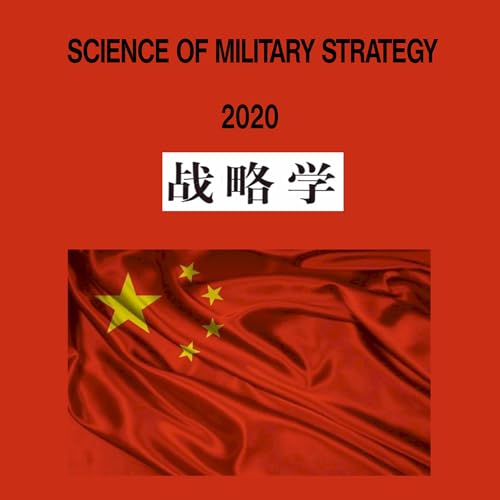
    Science of Military Strategy - 2020

    Section 1 Strategic Judgment Introduction
    Section 2 Requirements for Strategic Judgment

    The next Chapter will be released when someone buys a paperback copy of the book on Amazon.com. If you would like a CD of all Chapters, drop me a message at USGOVPUB.COM.

    Show More Show Less
    46 mins
  • Chapter 1 - Strategy
    Feb 15 2026

    PART 1

    To strengthen the country and the army, strategy is first. To study and research strategy, we must first clarify
    the basic concepts, study the basic theories, and master the basic principles. This Part is the basic theory of
    strategy, which aims to reveal the basic connotation, basic principles, and operating laws of strategy. On the
    basis of explaining the basic issues of strategy, the five links of strategic operation are discussed in detail,
    namely, strategic judgment, strategic decision-making, strategic planning, strategic implementation, and
    strategic evaluation. Among them, making correct strategic judgments on the security situation facing the
    country is the starting point for strategic operations. On the basis of strategic analysis and judgment,
    strategic directors make strategic decisions, identify threats, distinguish between enemies and friends, clarify
    goals and tasks, and make strategic deployments. In order to implement the various contents of the strategic
    decision, it is necessary to formulate a strategic plan, and then pay for the implementation of the strategy,
    and implement the content of the strategic decision and plan into all links and stages of military conflict and
    army building. Finally, there is an evaluation of the strategic operation process. This is the complete process
    and basic principle of strategic operation. By revealing this basic principle, this part provides theoretical
    support for the strategic guidance on the use and construction of military forces in later chapters.

    Show More Show Less
    1 hr and 31 mins
  • Introduction
    Feb 15 2026

    This is the introduction to the book. There are 25 Chapters. Each Chapter will be a separate podcast. new Chapter will be uploaded every time someone buys a paperback copy of the book on Amazon.com.

    Chapter/Podcast List:

    Introduction

    1 Strategic Theory

    2 Strategic Judgements

    3 Strategic Decisions

    4 Strategic Plans

    5 Strategy Implementation

    6 Strategy Evaluation

    7 Preventing and Managing Military Crises

    8 Strategic Deterrence

    9 Military Struggle in New Domains

    10 War Planning

    11 War Operations

    12 War Control

    13 Operational Guidance

    14 Military Operations Other Than War

    15 Use of Military Forces Overseas

    16 Strategic Guidance for Military Force Construction and Development

    17 Army Construction and Development

    18 Navy Construction and Development

    19 Air Force Construction and Development

    20 Rocket Force Construction and Development

    21 Space Force Construction and Development

    22 Cyber Force Construction and Development

    23 Joint Logistic Support Force Construction and Development

    24 Construction and Development of the Armed Police Force

    25 Construction and Development of Reserve Forces

    Show More Show Less
    28 mins