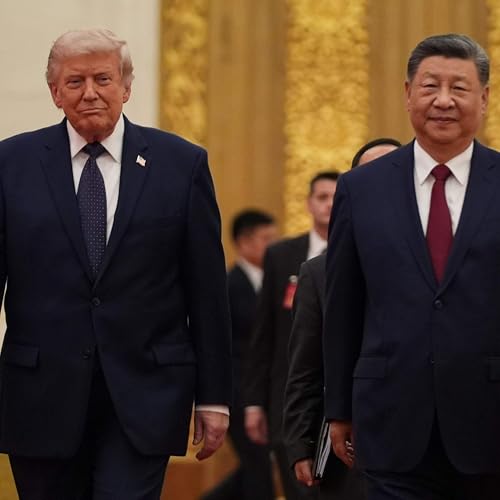
• Beijing Summit / Trump and Xi as allies, rivals and frenemies
    May 14 2026
    President Trump visits Chinese leader Xi Jinping for the first time since 2017. What’s changed? And what does each man want from this meeting?


    Host Mary Louise Kelly speaks with NPR White House Correspondent Franco Ordoñez and NPR China Correspondent Jennifer Pak about Trump's big summit with Chinese leaders in Beijing and how the U.S.-China relationship has evolved since their last meeting.

    Email the show at sourcesandmethods@npr.org

    NPR+ supporters hear every episode without sponsor messages and unlock access to our complete archive. Sign up at plus.npr.org.

    See pcm.adswizz.com for information about our collection and use of personal data for sponsorship and to manage your podcast sponsorship preferences.

    NPR Privacy Policy
    Show More Show Less
    31 mins
  • 2084: A cautionary tale about the future of war and a changing planet
    May 12 2026
    Laser weapons, advanced drone warfare, and nation states around the globe redefined by climate change: this is the world in 2084, envisioned by authors Jim Stavridis and Elliot Ackerman.

    Both are veterans -- Ackerman, a former Marine, did five tours in Iraq and Afghanistan; Stavridis is a retired four-star admiral and a former supreme allied commander of NATO. Their novel 2084 is the third in a trilogy. They compare their work to cold war fiction like Dr. Strangelove -- stories that imagined disasters specifically so society would work to avoid them. In this episode, they unpack what dangers they see on the distant horizon.

    Email the show at sourcesandmethods@npr.org

    NPR+ supporters hear every episode without sponsor messages and unlock access to our complete archive. Sign up at plus.npr.org.

    See pcm.adswizz.com for information about our collection and use of personal data for sponsorship and to manage your podcast sponsorship preferences.

    NPR Privacy Policy
    Show More Show Less
    24 mins
  • Hormuz whiplash / Russia, Ukraine shred ceasefires / Modern warfare
    May 7 2026
    We unpack a week of whiplash in the Iran war, with the President quickly calling off an effort to take control of the Strait of Hormuz, citing progress on talks. But a blockade remains.

    Pentagon correspondent Tom Bowman and Moscow correspondent Charles Maynes discuss the shifting messages and what's happening diplomatically behind the scenes. Plus -- why ceasefires between Moscow and Kiev fell apart, and how modern warfare and prior assumptions have made it possible for countries like Iran and Ukraine to take on larger, more powerful adversaries in the U.S. and Russia.

    Email the show at sourcesandmethods@npr.org

    NPR+ supporters hear every episode without sponsor messages and unlock access to our complete archive. Sign up at plus.npr.org.

    See pcm.adswizz.com for information about our collection and use of personal data for sponsorship and to manage your podcast sponsorship preferences.

    NPR Privacy Policy
    Show More Show Less
    30 mins
  • Who’s in Trump’s ear / Ceasefire extension / Life inside Iran
    Apr 23 2026
    The ceasefire between Iran and the U.S. has been extended, but the Strait of Hormuz is still closed and there’s still no deal on Iran’s nuclear program. Does President Trump know how to get the U.S. out of this conflict?


    Host Mary Louise Kelly speaks with National Security Correspondent Greg Myre and White House Correspondent Franco Ordoñez. They discuss how the conflict with Iran is at a standstill as Trump struggles to make a deal. Meanwhile, what is life like for Iranians?

    Email the show at sourcesandmethods@npr.org

    NPR+ supporters hear every episode without sponsor messages and unlock access to our complete archive. Sign up at plus.npr.org.

    See pcm.adswizz.com for information about our collection and use of personal data for sponsorship and to manage your podcast sponsorship preferences.

    NPR Privacy Policy
    Show More Show Less
    31 mins
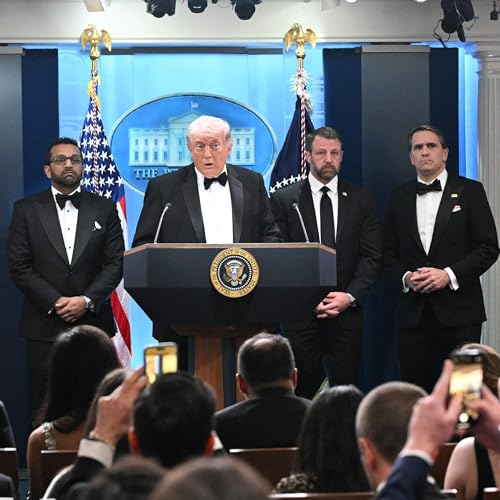
  • Press gala shooter / Political violence / Iran war price tag
    Apr 30 2026
    Saturday’s attack at the White House Correspondents' Association Dinner was the third assassination attempt on President Trump.


    Host Mary Louise Kelly speaks with NPR National Security Correspondent Greg Myre and NPR Justice Correspondent Ryan Lucas about what the attack says about the state of political violence in the U.S. and the debate over whether the Secret Service was ready to protect Trump and those around him.

    Email the show at sourcesandmethods@npr.org
    NPR+ supporters hear every episode without sponsor messages and unlock access to our complete archive. Sign up at plus.npr.org.

    See pcm.adswizz.com for information about our collection and use of personal data for sponsorship and to manage your podcast sponsorship preferences.

    NPR Privacy Policy
    Show More Show Less
    34 mins
  • Without a press corps, who holds the Pentagon to account?
    Sep 25 2025
    And the president designates Antifa as a domestic terrorist organization.


    This episode, we dig into the Pentagon's demand that reporters sign a pledge commiting not to gather any information -- including unclassified reports -- that hasn't been authorized for release, or lose their press credentials. Mary Louise Kelly talks with Pentagon correspondent Tom Bowman about how how it could change his reporting. And domestic extremism correspondent Odette Yousef clarifies what President Trump's executive order means in practice and what it signals.

    Email the show at sourcesandmethods@npr.org

    NPR+ supporters hear every episode without sponsor messages and unlock access to our complete archive. Sign up at plus.npr.org.

    Learn more about sponsor message choices: podcastchoices.com/adchoices

    NPR Privacy Policy
    Show More Show Less
    25 mins
  • Introducing Sources & Methods
    Aug 25 2025
    National security, unlocked. Each Thursday, host Mary Louise Kelly and a team of NPR correspondents discuss the biggest national security news of the week.


    With decades of reporting from battlefields and the halls of power, they bring you inside the Pentagon, State Department, and intelligence community to help you understand America's shifting role in the world, and how events in faraway places matter here at home. Additional episodes feature interviews with power players from the NatSec world -- current and former military officials, intelligence experts, diplomatic leaders, and more.


    Email the show at sourcesandmethods@npr.org.


    NPR+ supporters hear every episode sponsor-free and can access our complete archive. Learn more and support public media at plus.npr.org.

    See pcm.adswizz.com for information about our collection and use of personal data for sponsorship and to manage your podcast sponsorship preferences.

    NPR Privacy Policy
    Show More Show Less
    2 mins