• MLRE: Disguised Sales: How Refinances Can Trigger Unexpected Taxes in Syndications
    Apr 3 2026
    In this episode of the Major League Real Estate Podcast, Thomas Castelli and Nate Sosa break down one of the most misunderstood areas of partnership tax law: disguised sales. While many investors assume distributions and refinance proceeds are tax-free, the rules change when partnerships and contributed property are involved. Get it wrong, and what you thought was a tax-free event could actually be treated as a taxable sale. You’ll learn: - How partnership distributions actually work (and how they affect your basis) - What a disguised sale is and why the IRS cares - The 2-year rule that can trigger unexpected taxes If you’re a syndicator, GP, or investor contributing property into deals, this episode is a must-listen to avoid costly tax mistakes. Request a free discovery meeting: go.therealestatecpa.com/mlre Subscribe to the REI Daily Newsletter: go.therealestatecpa.com/mlresubscriber Get the Aircraft Acquisitions White Paper: www.therealestatecpa.com/aircraft-white-paper/ Get the Ultimate Guide for Real Estate Syndications: go.therealestatecpa.com/mlreultimateguide Submit your questions to: go.therealestatecpa.com/question The Major League Real Estate podcast is for general information purposes only and is not intended to provide, and should not be relied on for, tax, legal, investing, financial, or accounting advice. Information on the podcast may not constitute the most up-to-date legal or other information. No reader, user, or listener of this podcast should act or refrain from acting on the basis of information on this podcast without first seeking legal and tax advice from counsel in the relevant jurisdiction. Only your individual attorney and tax advisor can provide assurances that the information contained herein – and your interpretation of it – is applicable or appropriate to your particular situation. Use of, and access to, this podcast or any of the links or resources contained or mentioned within the podcast show and show notes do not create a relationship between the reader, user, or listener and podcast hosts, contributors, or guests. Any mention of third-party vendors, products, or services does not constitute an endorsement or recommendation. You should conduct your own due diligence before engaging with any vendor.
    Show More Show Less
    21 mins
  • 371. Why Your Tenants Leave (And How to Fix It Fast) with Ryan Barone
    Apr 1 2026
    In this episode of the Tax Smart REI Podcast, Thomas Castelli and Nate Sosa sit down with Ryan Barone, co-founder and CEO of RentRedi, to break down how real estate investors can simplify property management, reduce tenant turnover, and increase ROI using automation and data. You’ll learn practical strategies to improve tenant retention, including why speed of response (not resolution) is one of the biggest drivers of long-term tenants, how simple rent reminders can increase on-time payments by 27%, and why offering credit reporting can boost payment consistency. The conversation also dives into automation tools like auto-pay (with 99% on-time payments), maintenance coordination, AI-powered bookkeeping, and real-time portfolio tracking. To become a client, request a consultation from Hall CPA, PLLC at go.therealestatecpa.com/3KSEev6 Register for our FREE Tax Mistakes Webinar: go.therealestatecpa.com/3PpELKu Submit your question for Tom & Nathan: go.therealestatecpa.com/question The Tax Smart Real Estate Investors podcast is for general information purposes only and is not intended to provide, and should not be relied on for, tax, legal, or accounting advice. Information on the podcast may not constitute the most up-to-date legal or other information. No reader, user, or listener of this podcast should act or refrain from acting on the basis of information on this podcast without first seeking legal and tax advice from counsel in the relevant jurisdiction. Only your individual attorney and tax advisor can provide assurances that the information contained herein – and your interpretation of it – is applicable or appropriate to your particular situation. Use of, and access to, this podcast or any of the links or resources contained or mentioned within the podcast show and show notes do not create a relationship between the reader, user, or listener and podcast hosts, contributors, or guests. Any mention of third-party vendors, products, or services does not constitute an endorsement or recommendation. You should conduct your own due diligence before engaging with any vendor.
    Show More Show Less
    39 mins
  • MLRE: How He Built a $1B Multifamily Portfolio (Without Third-Party Managers) with Rob Beardsley
    Mar 27 2026
    In this episode of the Major League Real Estate Podcast, Thomas Castelli and Nate Sosa sit down with Rob Beardsley, founder and CEO of LSCRE, to break down what it really takes to scale a vertically integrated multifamily business in today’s market. Rob shares how his firm grew to nearly $1 billion in Texas multifamily assets, why vertical integration gives operators more control, and where many investors misunderstand underwriting. He also explains why AI may improve operational efficiency more than underwriting itself, how strong investor relationships are built over time, and why tax strategy remains one of real estate’s biggest advantages. The conversation also covers 1031 exchange structuring, current multifamily market conditions, and what Rob is seeing as the best opportunities moving forward. Request a free discovery meeting: go.therealestatecpa.com/mlre Subscribe to the REI Daily Newsletter: go.therealestatecpa.com/mlresubscriber Get the Aircraft Acquisitions White Paper: www.therealestatecpa.com/aircraft-white-paper/ Get the Ultimate Guide for Real Estate Syndications: go.therealestatecpa.com/mlreultimateguide Submit your questions to: go.therealestatecpa.com/question The Major League Real Estate podcast is for general information purposes only and is not intended to provide, and should not be relied on for, tax, legal, investing, financial, or accounting advice. Information on the podcast may not constitute the most up-to-date legal or other information. No reader, user, or listener of this podcast should act or refrain from acting on the basis of information on this podcast without first seeking legal and tax advice from counsel in the relevant jurisdiction. Only your individual attorney and tax advisor can provide assurances that the information contained herein – and your interpretation of it – is applicable or appropriate to your particular situation. Use of, and access to, this podcast or any of the links or resources contained or mentioned within the podcast show and show notes do not create a relationship between the reader, user, or listener and podcast hosts, contributors, or guests. Any mention of third-party vendors, products, or services does not constitute an endorsement or recommendation. You should conduct your own due diligence before engaging with any vendor.
    Show More Show Less
    40 mins
  • 370. Two Major Housing Changes Investors Need to Know: Senate Housing Bill + FinCEN Reporting
    Mar 25 2026
    Two major housing developments just hit real estate investors in a short window, and both could have a big impact on how you buy, hold, and scale residential real estate. In this episode of the TaxSmart REI Podcast, Thomas Castelli and Nate Sosa break down the Senate’s 21st Century Road to Housing Act and FinCEN’s new residential real estate reporting rule that went live on March 1. They cover what the proposed housing bill could mean for investors with large single-family portfolios, the key exceptions built into the legislation, and how forced exit rules could create major tax planning considerations. To become a client, request a consultation from Hall CPA, PLLC at go.therealestatecpa.com/3KSEev6 Register for our FREE Tax Mistakes Webinar: https://go.therealestatecpa.com/3PpELKu Submit your question for Tom & Nathan: go.therealestatecpa.com/question The Tax Smart Real Estate Investors podcast is for general information purposes only and is not intended to provide, and should not be relied on for, tax, legal, or accounting advice. Information on the podcast may not constitute the most up-to-date legal or other information. No reader, user, or listener of this podcast should act or refrain from acting on the basis of information on this podcast without first seeking legal and tax advice from counsel in the relevant jurisdiction. Only your individual attorney and tax advisor can provide assurances that the information contained herein – and your interpretation of it – is applicable or appropriate to your particular situation. Use of, and access to, this podcast or any of the links or resources contained or mentioned within the podcast show and show notes do not create a relationship between the reader, user, or listener and podcast hosts, contributors, or guests. Any mention of third-party vendors, products, or services does not constitute an endorsement or recommendation. You should conduct your own due diligence before engaging with any vendor.
    Show More Show Less
    35 mins
  • MLRE: Flying Private: What Syndicators Should Know About Deducting a Jet
    Mar 20 2026
    In this episode, Nate and Tom break down the truth behind private jet tax write-offs: what works, what doesn’t, and where investors get into trouble. They break down how bonus depreciation can create significant tax savings, why most jet structures default to passive losses, and how rules like material participation, business use, and grouping elections can make or break your strategy. Plus, they walk through real tax court cases where investors lost and what you can learn from them. Request a free discovery meeting: go.therealestatecpa.com/mlre Subscribe to the REI Daily Newsletter: go.therealestatecpa.com/mlresubscriber Get the Aircraft Acquisitions White Paper: www.therealestatecpa.com/aircraft-white-paper/ Get the Ultimate Guide for Real Estate Syndications: go.therealestatecpa.com/mlreultimateguide Submit your questions to: go.therealestatecpa.com/question The Major League Real Estate podcast is for general information purposes only and is not intended to provide, and should not be relied on for, tax, legal, investing, financial, or accounting advice. Information on the podcast may not constitute the most up-to-date legal or other information. No reader, user, or listener of this podcast should act or refrain from acting on the basis of information on this podcast without first seeking legal and tax advice from counsel in the relevant jurisdiction. Only your individual attorney and tax advisor can provide assurances that the information contained herein – and your interpretation of it – is applicable or appropriate to your particular situation. Use of, and access to, this podcast or any of the links or resources contained or mentioned within the podcast show and show notes do not create a relationship between the reader, user, or listener and podcast hosts, contributors, or guests. Any mention of third-party vendors, products, or services does not constitute an endorsement or recommendation. You should conduct your own due diligence before engaging with any vendor.
    Show More Show Less
    26 mins
  • 369. The NEW Rules for Profitable Airbnbs in 2026 with Taylor Jones
    Mar 18 2026
    In this episode of the Tax Smart REI Podcast, Thomas Castelli and Nate Sosa sit down with Taylor Jones of STR Search to break down the top five non-negotiables for profitable short-term rentals in 2026. What You’ll Learn: - Taylor’s 5 biggest STR non-negotiables for 2026 - Why revenue management can dramatically increase profitability - How one-bedroom couples retreats can outperform larger homes To become a client, request a consultation from Hall CPA, PLLC at go.therealestatecpa.com/3KSEev6 Subscribe to REI Daily & Enter to Win a FREE Strategy Call: go.therealestatecpa.com/41JuQBX Submit your question for Tom & Nathan: go.therealestatecpa.com/question The Tax Smart Real Estate Investors podcast is for general information purposes only and is not intended to provide, and should not be relied on for, tax, legal, or accounting advice. Information on the podcast may not constitute the most up-to-date legal or other information. No reader, user, or listener of this podcast should act or refrain from acting on the basis of information on this podcast without first seeking legal and tax advice from counsel in the relevant jurisdiction. Only your individual attorney and tax advisor can provide assurances that the information contained herein – and your interpretation of it – is applicable or appropriate to your particular situation. Use of, and access to, this podcast or any of the links or resources contained or mentioned within the podcast show and show notes do not create a relationship between the reader, user, or listener and podcast hosts, contributors, or guests. Any mention of third-party vendors, products, or services does not constitute an endorsement or recommendation. You should conduct your own due diligence before engaging with any vendor.
    Show More Show Less
    46 mins
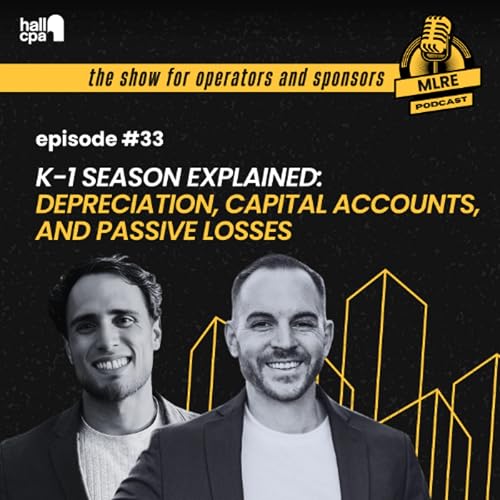
  • MLRE: K-1 Season Explained: Depreciation, Capital Accounts, and Passive Losses
    Mar 13 2026
    K-1 season can be confusing for real estate investors, especially when depreciation, passive losses, and capital accounts start showing up on your tax documents. In this episode, Nate and Tom break down the fundamentals of depreciation in real estate partnerships and how it impacts both general partners (GPs) and limited partners (LPs). They walk through how cost segregation studies accelerate deductions, why passive losses matter for investors, and how depreciation is allocated inside syndications. They also explain why capital accounts and outside basis determine whether investors can actually use the losses shown on their K-1 and why partnership operating agreements need to align with IRS rules like Section 704(b). Whether you're a syndicator structuring deals or an investor trying to understand your K-1, this episode provides a clear overview of how depreciation works inside real estate partnerships. Request a free discovery meeting: go.therealestatecpa.com/mlre Subscribe to the REI Daily Newsletter: go.therealestatecpa.com/mlresubscriber Get the Ultimate Guide for Real Estate Syndications: go.therealestatecpa.com/mlreultimateguide Submit your questions to: go.therealestatecpa.com/question The Major League Real Estate podcast is for general information purposes only and is not intended to provide, and should not be relied on for, tax, legal, investing, financial, or accounting advice. Information on the podcast may not constitute the most up-to-date legal or other information. No reader, user, or listener of this podcast should act or refrain from acting on the basis of information on this podcast without first seeking legal and tax advice from counsel in the relevant jurisdiction. Only your individual attorney and tax advisor can provide assurances that the information contained herein – and your interpretation of it – is applicable or appropriate to your particular situation. Use of, and access to, this podcast or any of the links or resources contained or mentioned within the podcast show and show notes do not create a relationship between the reader, user, or listener and podcast hosts, contributors, or guests. Any mention of third-party vendors, products, or services does not constitute an endorsement or recommendation. You should conduct your own due diligence before engaging with any vendor.
    Show More Show Less
    26 mins
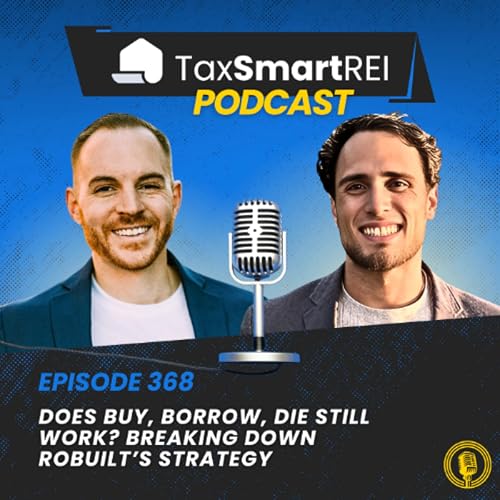
  • 368. Does Buy, Borrow, Die Still Work? Breaking Down Robuilt’s Strategy
    Mar 11 2026
    In this episode of the Tax Smart REI Podcast, Thomas Castelli and Nate Sosa react to Robuilt’s video on the buy, borrow, die strategy and the short-term rental loophole. They break down how wealthy investors use leverage to build tax-efficient wealth, why real estate can be the easiest entry point into this strategy, and how short-term rentals may help W-2 earners unlock major tax savings. Thomas and Nate also cover key concepts like cash-out refinances, step-up in basis, bonus depreciation, cost segregation, material participation, and the limitations investors need to understand before putting this strategy into action. If you’ve ever wondered how buy, borrow, die actually works and how the short-term rental loophole fits into the picture, this episode breaks it all down. To become a client, request a consultation from Hall CPA, PLLC at go.therealestatecpa.com/3KSEev6 Subscribe to REI Daily & Enter to Win a FREE Strategy Call: go.therealestatecpa.com/41JuQBX Submit your question for Tom & Nathan: go.therealestatecpa.com/question The Tax Smart Real Estate Investors podcast is for general information purposes only and is not intended to provide, and should not be relied on for, tax, legal, or accounting advice. Information on the podcast may not constitute the most up-to-date legal or other information. No reader, user, or listener of this podcast should act or refrain from acting on the basis of information on this podcast without first seeking legal and tax advice from counsel in the relevant jurisdiction. Only your individual attorney and tax advisor can provide assurances that the information contained herein – and your interpretation of it – is applicable or appropriate to your particular situation. Use of, and access to, this podcast or any of the links or resources contained or mentioned within the podcast show and show notes do not create a relationship between the reader, user, or listener and podcast hosts, contributors, or guests. Any mention of third-party vendors, products, or services does not constitute an endorsement or recommendation. You should conduct your own due diligence before engaging with any vendor.
    Show More Show Less
    38 mins