Terra Stories cover art

Terra Stories

Terra Stories

By: Giulia Gasparrini
Listen for free

About this listen

Terra Stories shares the stories that weave humanity into the natural world and ancestral wisdom. Here, you’ll hear about the power of storytelling, mythology, kinship with nature, eco-feminism and old, wise knowledge. This journey will empower you to use storytelling in your craft, reconnect to yourself and nature, helping you become an agent of change in tomorrow’s world. Cover: Beth Walrond Hosted on Ausha. See ausha.co/privacy-policy for more information.Giulia Gasparrini Biological Sciences Science Social Sciences
Episodes
  • (26) 'B r o k e n'
    Feb 20 2026

    Can what is broken be repaired?

    This episode comes after a life episode of burnout, a moment when nothing made sense. It unfolds like fragments, pieced together, tracing the feeling of being broken—and finding meaning within it.


    From fragmentation in landscapes, to the myth of Osiris in Ancient Egypt, to ancestral rites of dismemberment, to dreams, to repairing broken clay with golden dust—this podcast episode aims to show through storytelling how what is broken can be the beginning of something whole.

    How can we see the light among the fractures? How do myths guide us through the stages of human life, toward adulthood? How did our ancestors understand being broken, and what can we learn from them today?


    ⭐ If you liked the episode, please share it and rate it 5 stars on your favourite platform.


    Sources:

    • https://traditionalkyoto.com/culture/kintsugi/

    • https://www.britannica.com/topic/Osiris-Egyptian-god

    • https://gabrielamgutierrez.substack.com/p/the-ritual-of-dismemberment


    Cover: Narcissus by Caravaggio, c.1597–c.1599


    Hosted on Ausha. See ausha.co/privacy-policy for more information.

    Show More Show Less
    14 mins
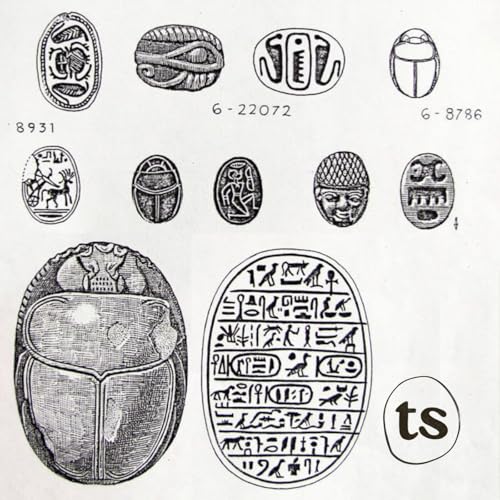
  • (25) 'The Scarab’s Chronicle'
    Sep 25 2025

    How much can a tiny insect tell us about our relationship with nature?


    This podcast episode unfolds as a chronicle—tracing one insect, the scarab, across time and place.


    From the banks of the Nile in Ancient Egypt, to the French Alps twenty years ago, to today’s Mediterranean shores, and even millions of years back, when a scarab’s body lay buried until archaeologists uncovered it.


    Why has an insect once worshipped as a god by our ancestors lost its place in our modern cities?


    What made it so important that our ancestors kept it so close? What wisdom does it hold? And how can we rebuild this relationship—not only with it, but with other living beings?


    ⭐ If you liked the episode, please share it and rate it 5 stars on your favourite platform.


    Sources:

    • https://ancientegyptonline.co.uk/khepri/

    • https://www.naturalhistorycuriosities.com/insects/scarab-beetles-and-their-meaning-in-the-ancient-egyptian-history/


    Cover: Illustration of Egyptian scarabs (public domain, from an early archaeological catalogue)


    Hosted on Ausha. See ausha.co/privacy-policy for more information.

    Show More Show Less
    16 mins
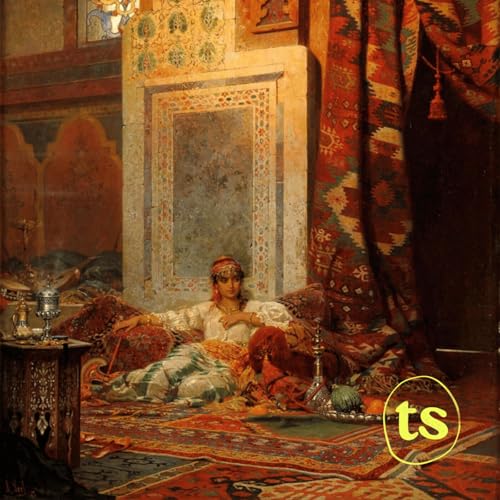
  • (24) 'Tell a Story or Die'
    Jul 23 2025

    We are in a world of mad kings. The ones that destroy life, extract more and more, leaving Earth empty.


    Lately, I keep asking: What shall we do? What are we doing wrong?


    If I had asked that question in the medieval Arab world, they might have said: Tell them a story. And they might have told me the story of Shahrazad, the woman who changed the mind of a mad king by telling him a thousand stories.


    Stories can change minds, worldviews. And worldviews shape our actions: toward care, kinship, and love for the natural world, or toward detachment, conquest, and destruction.


    So, what are the stories that could save humanity? And most of all, how do we shape them, as the storytellers we are? Why was the medieval Arab world, like many ancient cultures, so devoted to storytelling? And how did they understand the precious power it held?


    ⭐ If you liked the episode, please share it and rate it 5 stars on your favourite platform.


    Sources:

    • The Arabian Nights, translation by Malcolm C. Lyons

    • Ocean Vuong, 'A Life Worthy of Our Breath' On Being Podcast


    Cover: Die Favontin by Adolf Seel, 1883


    Hosted on Ausha. See ausha.co/privacy-policy for more information.

    Show More Show Less
    21 mins
No reviews yet