The Black Studies Podcast cover art

The Black Studies Podcast

The Black Studies Podcast

By: Ashley Newby and John E. Drabinski
Listen for free

About this listen

The Black Studies Podcast is a Mellon grant sponsored series of conversations examining the history of the field. Our conversations engage with a wide range of activists and scholars - senior figures in the field, late doctoral students, and everyone in between, culture workers, and political organizers - in order to explore the cultural and political meaning of Black Studies as an area of inquiry and its critical methods.@TheBlackStudiesPodcast Art Literary History & Criticism
Episodes
  • Tikia Hamilton - Department of History, Loyola University of Chicago
    Mar 27 2026

    This is John Drabinski and you’re listening to The Black Studies podcast, a series of conversations examining the history of the field. Our conversations engage with a wide range of activists and scholars - senior figures in the field, graduate students, and everyone in between, culture workers, and political organizers - in order to explore the cultural and political meaning of Black Studies as an area of inquiry and its critical methods.


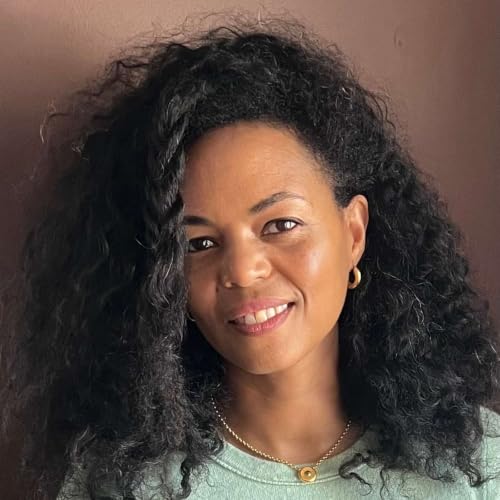
    Today’s conversation is with Tikia Hamilton, who teaches in the Department of History at Loyola University of Chicago. Along with a number of scholarly and public facing essays, she is the author of Nothing Less Than Equality: The Battle Over Segregated Education in the Nation's Capital, published in March 2026. In this conversation, we discuss the importance of writing the history of Black life, the centrality of questions of education in Black study, and how Black Studies informs her research questions, sources, and approach to writing.

    Show More Show Less
    50 mins
  • Sam Tecle - Department of Sociology, Toronto Metropolitan University
    Mar 25 2026

    This is John Drabinski and you’re listening to The Black Studies podcast, a series of conversations examining the history of the field. Our conversations engage with a wide range of activists and scholars - senior figures in the field, graduate students, and everyone in between, culture workers, and political organizers - in order to explore the cultural and political meaning of Black Studies as an area of inquiry and its critical methods.


    Today’s conversation is with Sam Tecle, who teaches in the Department of Sociology at Toronto Metropolitan University. His research engages with Black and diaspora studies, Urban studies, and sociology of education with particular focus on the analysis of diverse experiences, trajectories and expressions of Blackness grounded in particular histories of racialization, colonialism, community formation and resistance. In this conversation, we discuss the early formative history of Black Studies in Canada, the roots of Black study epistemologies in everyday practice, and the complexity of diverse stories of blackness for the Black Studies imagination.

    Show More Show Less
    55 mins
  • John E. Drabinski - Department of Africana Studies, University of Maryland (book podcast collaboration)
    Mar 24 2026

    Along with dozens of scholarly articles and a handful of edited books and journal issues, he is the author of seven books: Sensibility and Singularity (2001), Godard Between Identity and Difference (2008), Levinas and the Postcolonial (2012), Glissant and the Middle Passage (2019), and three recent books that are the occasion for our conversation, Atlantic Theory (2025), So Unimaginable a Price (2026) and At the Margins of Nihilism (2026). He is also the co-editor with Michael Sawyer of Journal of French and Francophone Philosophy and co-host of both The Black Studies Podcast and Conversations in Atlantic Theory.

    In today’s conversation, we explore John Drabinski’s three latest monographs. In Atlantic Theory, he traces the enduring legacies of slavery and colonialism while offering a comparative account of critical thought across the Atlantic world. In So Unimaginable a Price, he turns to James Baldwin, situating his work within a broader mid-century Atlantic context and placing it in dialogue with thinkers across the Caribbean and Africa.
    Finally, in At the Margins of Nihilism, he develops a theoretical framework through a comparative reading of Jacques Derrida and Orlando Patterson, drawing on figures such as Richard Wright, Frantz Fanon, and Baldwin to examine how different forms of nihilism operate as closed systems, and how they are unsettled through vernacular practices of life and refusal.

    Show More Show Less
    1 hr and 2 mins
No reviews yet