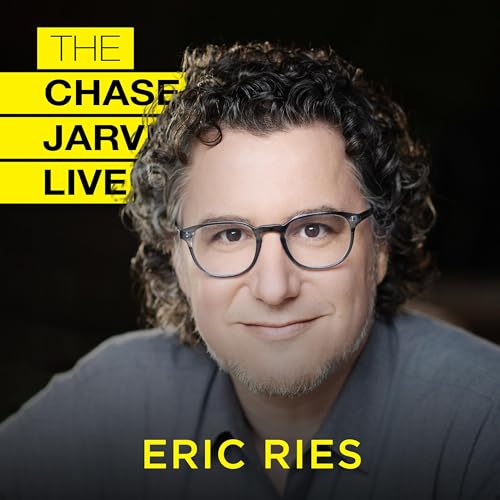
Hey friends, Chase here Eric Ries is back on the show, and this conversation goes far beyond startups, venture capital, or the mechanics of building a company. You probably know Eric as the author of The Lean Startup, the book that changed how founders, creators, entrepreneurs, and teams think about building something new. His work helped popularize ideas like continuous innovation, validated learning, experimentation, and staying close to the customer instead of getting lost in theory, ego, or endless planning. But this episode is not just about how to start something. It's about how to protect the thing you've built once it starts working. Eric's new book, Incorruptible: Why Good Companies Go Bad…and How Great Companies Stay Great, asks a question that feels especially urgent for creators, entrepreneurs, founders, and leaders right now: How do you build something that can grow without being captured, corrupted, or hollowed out? That question matters whether you're running a company, building a personal brand, growing a creative practice, launching a product, choosing clients, working with sponsors, or trying to do work that actually reflects your values. Because success is not neutral. Success brings attention, opportunity, money, investors, partners, platforms, algorithms, expectations, incentives, shortcuts, and people who may not share the reason you started in the first place. One of Eric's most powerful lines in this conversation is this: "Success is not a source of strength. It is a liability, because success attracts predators." That idea is the center of this episode. If you've ever built something that started to work, you know exactly what he means. The thing that made your work powerful can become the thing other people want to capture. The trust you built can become something others want to monetize. The values that made your community believe in you can suddenly feel inconvenient when there's more money on the table. This conversation is about how to stay awake in the middle of that pressure. We talk about defining what you stand for, making decisions before the pressure arrives, treating trust as an asset, saying no to misaligned opportunities, and building something that can grow without losing its soul. Why This Conversation Matters Right Now We are living in a strange moment for creators and entrepreneurs. On one hand, there has never been more opportunity. An individual with a laptop, a camera, a newsletter, a product, an idea, or a point of view can reach people directly. You can build an audience, launch a business, compete with massive companies, and create a brand around your name, your work, your taste, your values, and your trust. That is extraordinary, but it also comes with a real cost. The forces shaping our work have never been more intense. Platforms reward outrage. Algorithms reward simplification. Investors reward speed. Markets reward extraction. The pressure to be louder, faster, more polarizing, more optimized, and more "growth-minded" is everywhere. Eric describes this pressure as a kind of gravity. It is the gravity of platforms, incentives, success, and other people's definitions of winning. If we are not conscious of those forces, they shape us without our permission. That is one of the biggest themes in this episode: you are always being shaped by the systems you participate in. The question is whether you are awake enough to notice, honest enough to name it, and disciplined enough to choose a different path when the incentives start pulling you away from who you actually want to be. What We Explore in This Episode Why success can become a liability when it attracts people, money, platforms, and incentives that want to capture what you've built.How creators get shaped by platforms and why the algorithm can quietly tune your voice, values, and identity toward whatever gets the most engagement.Why trust may be the most valuable asset in business and why it is so easy to destroy with one short-term decision.How to define an ethos before outside pressure, money, growth, or status starts making decisions for you.Why "harder is easier" when your principles are clear enough to remove debate from the moments that matter.How companies, creators, and brands slowly trade away their soul through small compromises that seem harmless in the moment.Why alignment matters more than scale when choosing clients, customers, sponsors, platforms, partners, and investors.How to build something durable without losing the trust, purpose, and values that made it worth building in the first place. The Core Idea: Growth Without Betrayal The real test of success is whether you can grow without betraying what made you worth trusting. It is easy to talk about values when nothing is on the line. It is easy to say you care about quality, access, creativity, service, truth, community, or long-term thinking when the stakes are low. But values only become real when they cost you something. ...
Show More
Show Less


 53 mins
 May 20 202622 mins
 15 mins
 May 6 202620 mins
 Apr 29 202612 mins
 Apr 22 202613 mins
 Apr 15 20268 mins
 Apr 8 202612 mins