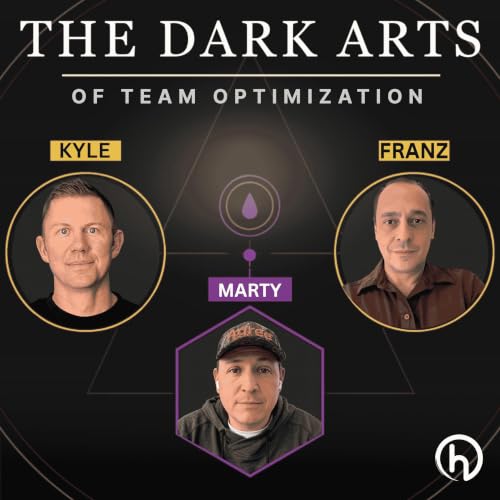
The Dark Arts of Software Engineering Team Optimization cover art

The Dark Arts of Software Engineering Team Optimization

The Dark Arts of Software Engineering Team Optimization

By: Kyle Johnson Franz Aliquo
Listen for free

About this listen

Join hosts Kyle Johnson, the expert in scaling engineering teams with precision, and Franz Aliquo, the cultural architect behind viral campaigns and Fortune 50 strategy, as they reveal the "dark arts" of elite software engineering team optimization. From Holonic, this podcast invites top minds and successful leaders to dissect the science of creating Product-Oriented Development (POD) teams. We dive into the proprietary curriculum - informed by cutting-edge team science - that builds self-contained, high-velocity units designed for resilience. Learn the secrets to achieving unparalleled agility, lowering churn, and integrating cross-functional collaborators who drive business value immediately. Don't just hire talent. Architect success.Copyright 2026 Kyle Johnson, Franz Aliquo Economics Management Management & Leadership
Episodes
  • The Remote Team Blueprint for Startup Founders to Build Engineering Culture that Scales - Ariel Ades
    Mar 27 2026
    In this episode of The Dark Arts of Team Optimization, hosts Kyle Johnson and Franz Aliquo talk with Ariel Ades, former Co-founder and CTO of TBM Labs and previously Senior Engineering Manager at iConnections and Holonic. The conversation explores how culture, hiring philosophy, and resilience shape successful teams from the ground up. Ariel Ades shares lessons from scaling engineering teams across fintech and healthcare, with a focus on nearshore talent, remote leadership, and navigating failure as a core part of innovation.Ariel Ades is an experienced engineering leader with over 25 years in the tech industry. He has played a pivotal role in building and scaling teams in fintech and healthcare, including serving as the first engineer at a startup where he shaped both the technical architecture and company culture. Ariel specializes in nearshore team building, distributed systems, and leadership strategies that blend technical excellence with human-centered thinking.Expect to Learn- How to build strong engineering culture from day one- Why understanding the “why” behind a product drives team performance- The real advantages of nearshore teams beyond cost savings- How to use failure as a strategic learning tool in startups- Why hiring for mindset and passion beats hiring for resumeEpisode Breakdown with Timestamps[00:00:00] – Teaser[00:01:20] – Introduction [00:02:57] – Building Culture as the First Engineer[00:06:02] – Early Hiring Mistakes & Team Growth[00:07:48] – Learning Through Failure[00:10:53] – The Problem with “Routine” Post-Mortems[00:13:57] – The First User Failure Story[00:18:38] – Nearshore Teams: Myth vs Reality[00:24:44] – Trust vs Control in Remote Leadership[00:37:40] – Common Mistakes in Remote Engineering Management[00:41:46] – AI vs Human Engineers[01:00:00] – Closing Thoughts & Where to Find Ariel📱 Follow the Guest Ariel Ades:👉 LinkedIn: https://www.linkedin.com/in/ariel-ades/👉 Facebook: https://www.facebook.com/ariel.ades/👉Instagram: https://www.instagram.com/ariel.ades/👉Company LinkedIn: https://www.linkedin.com/company/tbm-labs/👉Company Website: https://tbmlabs.com/📱 Follow the Hosts Kyle Johnson and Franz Aliquo:👉 Kyle’s LinkedIn: https://www.linkedin.com/in/kyleclaytonjohnson/👉 Franz’s LinkedIn: https://www.linkedin.com/in/franz-aliquo/ 📱 Follow Holonic:👉 Website: https://www.becomeholonic.com/👉 LinkedIn: https://www.linkedin.com/company/becomeholonic/
    Show More Show Less
    1 hr and 1 min
  • The Truth About Scaling Dev Teams Without Funding in a World of AI and Mistrust with Sol Nasisi
    Mar 13 2026
    In this episode of The Dark Arts of Team Optimization, hosts Kyle Johnson and Franz Aliquo talk with Sol Nasisi is an Executive Director of Digital Marketing at Bentley University, also Co-founder of Chainletter Labs and Founder of Booksie. He is an entrepreneur who has built several companies with intentionally small engineering teams. Together, they talk about the philosophy behind running lean, agile teams, the challenges of scaling without compromising speed, and how blockchain can help solve the pressing issue of authenticity in the age of AI-generated content.Sol’s journey spans startups like Bentley Bookie and Chain Letter, where he focused on making sure documents and data are verifiable in a world where everything can be manipulated. If you’re curious about building efficient teams, scaling trust, and exploring blockchain solutions to verify digital assets, this episode is for you. With years of experience working with small, agile teams, Sol shares his insights on optimizing team dynamics and navigating the challenges of growing a business without losing momentum.What You’ll Learn:- Building Efficient Teams: Why keeping engineering teams small can lead to faster innovation and more flexibility.- Challenges of Scaling: How to know when it’s time to grow your team and the factors to consider when expanding.- Blockchain for Authenticity: How blockchain can ensure that documents and content haven’t been altered, especially in the age of AI manipulation.- Trust and Transparency: Why trust is crucial in both teams and products, and how it can be scaled through technology.- Bootstrapping vs. Raising Capital: Sol’s personal philosophy on growing a business without relying on outside investment.Timestamps:[00:00] – Teaser[00:59] – Introduction of Sol Nasisi[07:24] – The Balance of Scaling the Team[09:55] – The Decision Not to Raise Venture Capital[11:53] – The Importance of Dependability in Hiring[16:04] – Trust and Philosophies in Development[24:26] – Tackling the Question of Trust in AI-Generated Content[26:39] – Blockchain’s Role in Establishing Truth[34:55] – Future Applications & Chain Letter’s Upcoming Developments[37:01] – Closing Thoughts📱 Follow the Guest Sol Nasisi:👉 LinkedIn: https://www.linkedin.com/in/solnasisi/ 👉 Facebook: https://www.facebook.com/sol.nasisi/ 📱 Follow Guest Companies:👉 Bentley University LinkedIn: https://www.linkedin.com/school/bentley-university/ 👉 Bentley University Website: https://www.bentley.edu/ 👉 Bentley University Instagram: https://www.instagram.com/bentleyu/?hl=en 👉 Chainletter Labs LinkedIn: https://www.linkedin.com/company/chainletter-labs/ 👉 Chainletter Labs Website: https://chainletterlabs.com/ 👉 Booksie LinkedIn: https://www.linkedin.com/company/booksie-thenextbigwriter-llc/ 👉 Booksie Website: https://www.booksie.com/ 👉 Booksie Facebook: https://www.facebook.com/booksiewriting/mentions/ 📱 Follow the Hosts Kyle Johnson and Franz Aliquo:👉 Kyle’s LinkedIn: https://www.linkedin.com/in/kyleclaytonjohnson/ 👉 Franz’s LinkedIn: https://www.linkedin.com/in/franz-aliquo/📱 Follow Holonic:👉 Website: https://www.becomeholonic.com/ 👉 LinkedIn: https://www.linkedin.com/company/becomeholonic/
    Show More Show Less
    38 mins
  • How Startup Founders Can Avoid MVP Failure and Build Validated Products Using AI with Tom Green
    Mar 6 2026
    In this episode of The Dark Arts of Team Optimization, hosts Kyle Johnson and Franz Aliquo talk with Tom Green, Co-founder and CEO of Verticode where he breaks down how early-stage founders especially non-technical ones, can move from idea to market faster by working backward from value, validating before building, and using tight feedback loops to avoid expensive mistakes.Verticode, a product studio that helps founders launch MVPs quickly while reducing risk and avoiding the typical sunk-cost trap of early product development. He’s worked hands-on with early-stage startups many led by non-technical founders and draws on experience from corporate product environments and startup building in the Bay Area.Expect to Learn- Why MVP success starts before a single line of code through validation and clarity- How Verti Code’s two-week sprint model differs from traditional dev agencies- Where AI helps founders most and where it can quietly hurt them- What “good vs. bad” scaling looks like after early traction especially with dev teams- Why Tom believes founders should prioritize sales over fundraisingEpisode Breakdown with Timestamps[00:00:00] - Teaser[00:01:21] - Introduction to Tom Green[00:02:27] - Tom’s “MVP pain” realization: corporate vs startup MVP reality[00:04:02] - Tom’s path: Amex → first startup attempt → Berkeley → founder lessons[00:08:33] - What makes Verti Code different: speed, transparency, productized sprints, AI guardrails[00:13:01] - Common founder mistake: thinking validation starts after building[00:19:15] - MVP risk + funding: why pre-seed is tough + “skin in the game”[00:22:09] - AI shortcuts: what they help with vs what founders must still own[00:26:58] - After MVP: avoiding vendor lock-in, iterating well, and scaling safely[00:34:27] - The “silver bullet”: prioritize sales over fundraising[00:37:42] - What’s next: building a founder community across regions[00:39:11] - Conclusion📱 Follow the Guest Tom Green :👉 LinkedIn: https://www.linkedin.com/in/tom-green-vtcd/👉 Company LinkedIn: https://www.linkedin.com/company/verticodevb/👉 Company Website: https://www.verticode.co.uk/👉 Company Instagram: https://www.instagram.com/_verticode_👉 Company Facebook: https://www.facebook.com/verticode/mentions/📱 Follow the Hosts Kyle Johnson and Franz Aliquo:👉 Kyle’s LinkedIn: https://www.linkedin.com/in/kyleclaytonjohnson/👉 Franz’s LinkedIn: https://www.linkedin.com/in/franz-aliquo/📱 Follow Holonic:👉 Website: https://www.becomeholonic.com/👉 LinkedIn: https://www.linkedin.com/company/becomeholonic/
    Show More Show Less
    41 mins
No reviews yet