• Captain and Cat's Explorasaurus on Healthy Food
    Jun 10 2026
    Today we're talking with Kevin Hoban and Jordie Simkovic, the creators and starring characters of Captain & Cat, a popular YouTube kids show with 200,000 subscribers and over 200 million views. The educational show for preschoolers tells stories using entertaining songs and narratives. They've just launched a new series called Explorasaurus: Healthy Food and You, aimed at teaching kids about healthy food and how it's grown. Their first episode about SugarBee apple growers in Washington State has over 500,000 views on YouTube. Interview Summary So, for people who aren't familiar with your show, for those few people out there who may not be, tell us about Captain & Cat, the characters, what they do, and how did you guys get started doing this? Kevin - Gotcha. Well, Jordan and I have been best friends since college. We went to Northwestern University in Chicago, and we were in a band together. We would perform live on campus, in the streets. And we realized that kids would stop and really enjoyed what we were doing. And I think that was the seed of the whole thing was, "Hey, maybe our act that we have, this two-man show is something for kids." And then we graduated. We both moved out to LA. Jordan came out here to act. I moved out here to produce TV shows, and on the weekends, we started performing for kids. Jordie - Yeah. Actually, we did a show called The Bubble Show. And we were doing probably six to eight shows a weekend for about 10 years. And then during the pandemic we started putting our stuff online because all live performances stopped. And for about three years it was nothing and crickets, and really just our parents watching. And then we won the award for best kid song of the year in 2023. And then that kinda put us on the radar of YouTube Kids who invited us to be one of the featured channels on their platform. And for a while we were doing jingles and music and educational songs and stuff like that. And then towards the end of last summer, we had connected with SugarBee Apples and that whole kind of growing cooperative out there about doing an apple song. And they actually were like, "You know what would be even cooler than that? Why don't you come out here and meet the farmers and see the harvest in action?" And we're like, "Whoa, this is really cool." And honestly, it was a life-changing experience. We now say that we have aunts, uncles, and cousins out in Central Washington. And honestly, I grew up in Miami, I went to college in Chicago, and then I've lived in Los Angeles ever since. I had never stepped foot on a farm, really, in any significant way. And just to be able to get exposure to this incredible pocket of people that otherwise I would have never had a chance to see and meet was completely eye-opening. Kevin - I would say I went out there thinking, "This is a huge apple company. They sell them all across the country in every grocery store." I went out there thinking, "Well, this is sort of like a big industrial corporate farm," right? Must be just one giant farm with robots harvesting apples. And what we found was it was a co-op of family-owned farms. Smaller families. We met the families. We met the grandparents, the parents, the kids, the grandkids. And we learned so much about apples and how you grow them. That every apple is picked by hand, first and foremost. Jordie - We honestly expected there was going to be like a machine just going around and shaking the apples off, you know. Because you have no idea. And there's been so much dialogue around factory farming, which has become kind of like the negative word. And honestly, yeah, as Kevin was saying, we expected just a giant faceless corporation there. And it was the exact opposite. Can I ask you guys a question? I'd like to dive in a little deeper than this, because you're saying something that resonates with me very personally. When I moved to North Carolina from Connecticut, I was offered the opportunity through the North Carolina Farm Bureau to do a tour of farms. Two-day intensive tour of farms in Eastern North Carolina. And we went to a blueberry farm that harvests millions of pounds of blueberries a year. Soybeans, corn, hog farmers, chicken. I mean, we did everything. And it was incredibly interesting. And there was the technology part of it, or the lack of technology that I was learning about, just as you related. But there was also a very moving human part of this. The people, I thought, were really interesting. And the generational nature of farming and all. So, tell me a little bit more about the people part of it. How much that affected you. Jordie - We met the farmer who like seven generations back, their family introduced the Granny Smith apple to the United States, you know? It's going back and we literally see it's a whole family working and living very close to where they farm. And so, kind of just, it's Uncle Farmer Peoples now, you know? And so, we were kinda talking to him about chemicals and pesticides ...
    Show More Show Less
    30 mins
  • E303: Amy Beros on centering community in food banking
    Jun 10 2026
    North Carolina is one of the nation's top agricultural producing states. And it is also a state where one in seven residents don't have the resources to provide food on their table every day. Today, I'm talking with Amy Beros, president and CEO of the Food Bank of Central and Eastern North Carolina - the state's largest food bank. Each year, this organization provides 95 million meals distributed through more than 700 partner agencies, food pantries, congregate meal sites, backpack programs. And they do this in 34 counties in the state. In our conversation today, we will explore the policy issues that this food bank and many food banks face. Interview Transcript Amy, I want to ask a really simple question about what got you to this place. So how in the world did you get involved in food banking? Oh, gosh. Well, you know, when I was growing up, I didn't know what food banking was. But I knew that it was our responsibility to make sure that neighbors helped neighbors. So, I grew up volunteering what I know now is a partner agency of the local food bank in my hometown. And as I moved across the country, I found ways to get involved. When I moved here to North Carolina about 16 years ago, I found food banks. I've been working professionally in food banking for a little over 12 years now. But I believe that food is a basic human right, and it has been my life's work to make sure that we're doing everything we can to ensure everyone has what they need. Thank you for sharing that. And I can imagine over the years, as I've also been involved in food banking but on the board side or as a volunteer, that this is a work that we sometimes think it's just about moving food and providing that. However, there's a whole policy framework that, sort of, surrounds and influences and shapes what food banking and what the work of the partner agencies, the food pantries on the ground, what they do. I wonder if you could help make this a little bit more real for us. Could you tell us a little bit about how policy becomes personal in your work? Can you share a moment when that really came true for you? Oh, I think the most recent blinding moment was last year during the government shutdown. Well, one, there's a lot of noise on TV right now, right, and in the media, but you hear of these massive numbers, and we know that our elected leaders are looking at these numbers on spreadsheets. And we see the humans behind those numbers and their stories. And these are thousands and thousands of stories like the ones that we hear about each day. Last year, during the shutdown, a father of five reached out to me and said, "I have five children. I work at the federal prison. I'm missing my second paycheck. For the first time in my life, I don't know how I'm going to put food on the table." Or the SNAP delay and disruption that we had. For the first time in our history during that shutdown, a mother reaching out and saying, "I don't know what to do. I've told my children to eat everything they can at school because I don't know what we're going to have when we get home, if we don't have these benefits." And that's just two stories and one crisis. And so many of our neighbors are living a crisis every day. These systemic issues. And we see those humans and hear their stories each day. And I think that's when it becomes personal. These decisions, one stroke of a pen, impacts food for hundreds of thousands of neighbors. Thank you for sharing that. I teach a class called the Economics of the Public Sector, and we often talk about policies that provide support to individuals. And it can be easy to talk about these policies as if they're just decisions that policymakers make, but there are real people who are dependent on these policies. And when they don't work or when rules change, it has significant implications for how people navigate. And so, I appreciate the work that you all are doing. I want to take a step back and talk about food banking. And while I know a lot of our listeners are familiar with food banking and food pantries, I do know that people kind of mix those two terms up. Amy, would you just tell us, broadly speaking, what's a food bank, and then what are the partner agencies. And how do they relate to one another? Yes, absolutely. Our food bank serves 34 counties in North Carolina. And as you shared, we work with over 700 partners. We work with growers. We work with over 80 local farmers in North Carolina. We work with manufacturers in North Carolina. We work with all of the retail chains to get food out into the community. And we do that primarily through those partners because they are embedded into the community. And what we're really proud of here, and I think something of how food banking has changed, you know, many people still think of a food bank as a dimly lit church basement pantry. And that maybe was food banking 30 years ago. But today it is part of the modern food system. We are a critical piece of infrastructure ...
    Show More Show Less
    18 mins
  • E302: Do GLP-1 drugs reduce overall healthcare spending?
    Jun 9 2026
    For many people, the FDA-approved drug class called GLP-1s has been a game changer for managing type 2 diabetes and weight loss. An estimated one in eight US adults is using this type of drug, which mimics a natural gut hormone to regulate blood sugar, slow stomach emptying, and suppress appetite. Researchers and the public have been scrutinizing the pros and cons of taking these drugs for many years. One critical question that remains is does the use of GLP-1s translate into lower medical expenses for consumers, healthcare providers, insurance companies, and the government? Today, we're speaking with Duke University health economist Jonathan Zhang on the answer to these questions from his multi-year study of veterans who use GLP-1s. The results are surprising. Interview Summary Jonathan, first, let's talk broadly. Would you briefly describe the kinds of health benefits people are experiencing with GLP-1s, particularly in terms of changes in behavior and overall health? Yes. So GLP-1s are medications that manage body weight and improve metabolic health. The primary health benefits are via better blood sugar regulation and weight loss via reducing appetite. But there's larger health benefits that are much broader. So, trials have also shown that they lower blood pressure, reduce strokes and heart attacks, among other cardiovascular benefits. Overall also improves, so things like obstructive sleep apnea, improvements in inflammation-related measures. And recently it was FDA approved to treat MASH, which is a form of fatty liver disease. Finally, people also report feeling less hungry. They get full faster, fewer cravings, and reduction in what is often called food noise, which can potentially help people make a range of better behavior decisions and changes relating to food and perhaps even beyond food. However, the evidence on that seems to be promising, but new and less strong. Thank you for sharing those. I know a lot of our listeners have heard some of those issues and some of those points about how GLP-1s could change the way we behave, and some of the health outcomes. So, let's dig into your particular study. In your working paper for the National Bureau of Economic Research (NBER) you and your co-authors describe a natural experiment involving patients and doctors in the Department of Veteran Affairs, and their access to and use of GLP-1s. Would you lay out the general parameters of your study for our listeners? Yes, absolutely. So, like many medications, what we know about GLP-1s primarily comes from randomized controlled trials, which have small sample sizes and often select for quite sick patients. As GLP-1s reach a broader population, the population becomes less pro-comparable to those in trials, so the real-world impacts become less obvious. Moreover, there are some outcomes such as healthcare utilization or spending costs that are incredibly important for policy but not directly studied in trials. We were interested in studying in a very large healthcare system, that is the VA, the Veterans Health Administration, the real-world impacts of GLP-1s using readily collected data from the healthcare system and a quasi-experiment. So that is we try to emulate a real experiment where some patients get GLP-1s from their primary care doctor and others do not. And the reason one patient might get it while the other doesn't is because their doctors differ in their likelihood or propensity to prescribe these drugs. And we focus on the Veterans Health Administration, the VHA, because the veteran population is quite diverse, at least in terms of comorbidities relative to the trials per se and also in age, say, compared to Medicare. And GLP-1s are provided in the VA to eligible patients at a pretty affordable cost. So, sort of a nice policy playground for us to think about what outcomes might look like when GLP-1s become readily available and affordable to all Americans. Great. Thank you for sharing that because now we have a good sense of the quasi experiment that you all were able to exploit. That there were providers who had a high tendency to prescribe GLP-1s versus those who didn't. And looking at that difference, you were able to see how GLP-1s may have affected the outcomes that you were interested in. So now tell us a bit about the findings, and I think there's some surprising results here. So, first we replicate many of the findings from the randomized trials for this diverse, veteran population. We see reductions in body weight, we see hemoglobin A1C blood glucose levels improve and blood pressure improvements as well. Even a reduction in heart attacks and strokes for patients with existing cardiovascular conditions, and even a small reduction in moderate drinking risk as well. The trial evidence seems to hold up in this large and diverse population of we have 1.4 million patients that we're studying. Second, despite these improvements though, we do not see a reduction in healthcare spending. This...
    Show More Show Less
    19 mins
  • E301: Greg Jaffe on Food and Ag Policy Trends
    Jun 8 2026
    Interview Transcript Kate - Welcome to the Leading Voices in Food podcast. I'm Kate Stanley, a researcher at the World Food Policy Center at Duke University. I'm joined today by my co-host, Katariina Koivusaari, a researcher at North Carolina State University. Together, we collaborate on policy research for the Bezos Center for Sustainable Proteins at NC State. Katariina - Great to have you. Greg, you have been involved in food and agriculture policy in Washington, D.C. for several decades and have worked with both Democratic and Republican administrations. Are food policy politics caught up in party differences depending on which political party is running the executive branch? A very relevant question right now. I guess it would be wrong to say that the political party in office doesn't make a big difference in the policies being carried out by the executive branch. However, in the food and agricultural space, and especially in the areas that I focus on, which is really around these new technologies in food and Ag and how do those get into the marketplace and adopted, that difference hasn't been so big. Let me give you an example or two. I'll take you back first to about 2000, and we had the Clinton administration. We have the regulation at FDA of biotech crops, and they had a voluntary consultation process and there were a number of stakeholders and others who felt that that wasn't sufficient. The Clinton administration interpreted the Food, Drug, and Cosmetic Act to try to turn that into what they called a mandatory consultation, and they proposed a pre-market notification rule. It didn't get finished in, before the end of the administration in January of 2001. Then we had the Bush administration come in, so we went from a Democrat to a Republican. And the Bush administration looked at the same law and looked at that same proposed regulation and said, "We don't have the legal authority to do that." And they withdrew that proposal, and so we still have to this day this voluntary consultation. And I give you that example for two reasons. One, I think what we've seen when it comes to food and policy regulation by different administrations is how they interpret the law. And I can say this in very general, the Democrats have tended to be a little more expansive in how they interpreted the law to try to find more legal authority to do things that they might want to do. And the Republicans have tended to look at that language much more restrictively or look at just exactly what that language said and not try to interpret anything into it. And so, you see that difference here between what happened in the Clinton administration versus what happened in the Bush administration. I mention this example because as many of your listeners may know, right now in this administration, we have the question about voluntary GRAS and whether that's going to become mandatory or not. And some of us who have followed that know that the current FDA has submitted to OMB, to the White House, a proposed rule to make GRAS mandatory. Well, that is-- the regulatory process for those biotech crops is also a GRAS process. It's interesting now that we have a Republican administration who's finding the authority to do that, and we'll see what actually comes out and what the courts do with it. But I think this shows that sort of difference in policies between Democrats and Republicans. But overall, we haven't seen a lot of difference. In this new administration, I think one of the questions people had was what would happen with a technology like cell-cultivated meat? Where would the regulation of it go forward? There's many in the MAHA movement, I think, that felt that that wasn't consistent with what they wanted. But we've seen that those approvals continue to happen. Similarly, pesticides have been an issue in many administrations. Sometimes Democrats have argued to be much more restrictive in the use of pesticides and to make the regulations much harder. And Republicans have oftentimes said to make those easier for the agencies. But what we see is pesticides have moved forward under both administrations. People understand the need for pesticides to produce agriculture. We have some differences in policy, but on the whole, in this area, I think, whether it's Democratic or Republican, they have generally supported following the law. Kate - Greg, you shared some interesting examples of across administrations how we've seen different actions be taken. And I'm curious. Under this administration, for some of these areas you work in, like these novel technologies, what do you see as driving the new federal legislative actions in food policy? The legislative area has generally always been more partisan than the executive branch to some extent. I mean, the executive branch is interpreting laws from Congress; the Congress is setting those. But I think again, in the area of food policy, we've seen many good laws come out that have been ...
    Show More Show Less
    22 mins
  • E300: Tackling Food and Nutrition Systems Change at the Kellogg Foundation
    Jun 2 2026
    Kelly Brownell interviews Jon-Paul Bianchi, Director of Systems Change at the W.K. Kellogg Foundation, about the foundation's systems-change approach linking food, health, early childhood, and family economic security to address inequities affecting children and families. Bianchi describes his path from PhD research to policy work and then to Kellogg, and explains how integrated grantmaking focuses upstream on policies, practices, resource flows, narratives, and long-term investment in people and relationships rather than isolated programs. He highlights Vermont's inclusion of food quality in childcare ratings and the foundation's Farm to Early Childhood efforts connecting procurement, regional food systems, and state policy, with examples from states like North Carolina, Iowa, and Wisconsin, and notes Brazil's national local purchasing policy as a model for success. Transcript As I was mentioning before we got started, I've long admired the work of the Kellogg Foundation. Working with the concept of food systems or connecting agriculture with nutrition and thinking about regenerative agricultures. There are a lot of places where your foundation was out front. So, I salute you and your colleagues for that. And it'll be interesting to find out what's happening right now. Tell us a little bit about yourself, and how did you get into the philanthropic work and your work with Kellogg in particular? I'm Jon-Paul Bianchi. I'm the director of the Systems Change team at the W.K. Kellogg Foundation. And what that essentially means is I'm the director of national programs at the foundation. But we call it systems change because we really do see in the different areas of work that we focus on- health, family economic security, food, and early childhood- that these things are all interconnected by some distinct systems. But also, common systems that overlap across them. And so, that's the approach that we take. And I'll spend some time sort of diving into that today. You know, to answer the question of how I got here... you know, a master stroke of luck. I was set to be an academic researcher. I was working on my PhD at the University of Wisconsin. I was ABD and decided that I didn't want to be a researcher and I wanted to work in policy. And I moved to Colorado to take a job sort of sight unseen, being the policy director of an organization that worked in K-12 and children's health, and food and early childhood education. And did that for a few years and learned to translate research into practice; into policy. And was giving a presentation and got a tap on a shoulder from somebody that worked at the Kellogg Foundation who was interested in what I was saying. And we had one conversation, and six months later, I wound up having a new job and leaving Colorado and moving to Michigan. That was 15 years ago. Well, you went into this with a great background having done the science as a graduate student and then into the policy world. And you're right, the intersection of those two is really where the magic can occur. You began talking about this, but let's talk about it a little bit more. So, when you say that there are systems that cut across different problems like food and health and economic security, etc., and I know you structured your team to reflect that cross-cutting kind of view of things. But tell us a little bit more about that. And how is this different than what's usually done, and how does it affect the way your work gets carried out? So, big picture at the Kellogg Foundation, we envision a society where every child can thrive. But we know that there's too many kids and families that still can't access good food or quality childcare, or their parents can't find quality jobs because of inequities that are embedded in the policies and the practices and narratives that shape our systems. And so, having a multi-issue integrated grant making team, it's made us more effective by better understanding the points of intersection and collaboration across those bodies of work. So, our food systems program officers are in the same team, and they work closely with our program officers in early childhood and family economic security and health. And those collaborations strengthen the work in a variety of ways. We have experts in each of those areas, but because they're spending time with each other and working in the same team, they're exposed to, and they learn about each other's work and each other's worlds. And that creates powerful collaborations in the foundation, but more importantly, out in the field. And it helps us to see that we can't fix any of these systems, including food systems, with surface level or patch kinds of solutions. We really have to work together to get upstream and focus on policies, focus on practices, focus on resource flows and narratives that really sustain the inequities that we see. And so, the foundation partners with organizations to dismantle barriers in food systems in the other ...
    Show More Show Less
    28 mins
  • E299: Culinary Medicine and connecting med students with patients
    Apr 30 2026
    I'm delighted today to be joined by Dr. Joseph Skelton, professor of Pediatrics, founder and director of Brenner Fit, a program at Wake Forest University School of Medicine. FIT stands for Families in Training, which is a family-based pediatric obesity program. He's the author of a new book on children and their weight, a topic we discussed in a separate podcast. But in this podcast, we're talking about something he teaches at Wake Forest, a course in culinary medicine. This is a fascinating, pioneering area of focus, so let's dig in. Interview Transcript There's a lot of language about medicine and nutrition now, so people talk about food as medicine. There's a move afoot to get more training and nutrition and medical education, and here you are doing culinary medicine. Tell me how all these things differ from one another. Our interest in this here at Wake Forest School Medicine started a little organically with our program. A lot of what we do is focus on family meals. There are decades of research showing the benefits of family meals, not only for the nutrition and obesity risk, but the quality of nutrition, time spent together, parent child communication. Kids are less likely to get pregnant or do drugs and alcohol. All these things from just spending that time together over the meal. And I inherited a small teaching kitchen that was at a local organization that someone before me had gotten funding for. And we, sort of, took it over and used this opportunity to teach families how to cook. And a lot of families know how to cook but trying foods in different ways and to get kids involved and things like that. Then a couple years after that, the local YMCA approached us. They had some space and wanted to do this as a partnership. So I became a fundraising machine for a year or two and took a lot of dinners to raise the funds. And we built this gorgeous teaching kitchen, and we were mainly doing it in the efforts of sort childhood obesity treatment or prevention, getting families, teaching them new recipes, which then kind of extended to that whole key thing of getting families just to be comfortable in the kitchen and spending that time together. And we just started seeing these amazing things. We always say we've converted more kids to Brussels sprouts than I think any other effort of just getting them cooking it a different way. You and I were both probably raised with steamed Brussels sprouts, which I think is an abomination. If you really want to highlight the sulfur smell of a food, then you're going to steam it. And so, we really started to do that. And then students started volunteering. Actually, it was a student, Josh Patman, he's an emergency medicine physician now at East Carolina University, and he was a cook in a professional kitchen college. And he said, hey, could I help volunteer with that? And then more student medical students wanted to do it. And then we all found that you, much like I did, I'm a self-taught cook myself, and the more time you spend in that, the more you learn, the more comfortable you are. And the more you start to know, you know, I can teach med students nutrition all day, but that doesn't teach them how to get nutrition on their patients' plates, into their mouth. And so it really grew from there. And then I, kind of, stumbled upon what other people were doing. It started in New York, but the biggest program started was really Tulane School of Medicine that had it as a very focused way about teaching nutrition through cooking. Not just on a blackboard through PowerPoint slides and stuff like that of like hey, let's teach it in a different way. And the old-fashioned analogy, and actually the medical educators hate this, it used to be see one, do one, teach one. That was sort of the old surgical thing. And so, it's really you got to see how to make a recipe and you got to do it yourself. And what we found that when students start then teaching each other, or teaching patients or teaching community members, it really drives home and gives them a much deeper understanding of what nutrition in the real world is. Let's talk about the need for this. If we go back in time and we think about your parents or my parents, you know, the likelihood is that meals were being prepared from the real foods rather than from a package, let's say, or in a micro. How are things different now for the modern parent that has kept people distanced from their food and where it comes from, and that's led families to be distant because they're not having meals together as much? What does that look like now? Yeah, pulling from our own history, you know, Home Ec is not really a thing anymore. We did this study in our own med students. You know, most of their cooking, nutrition, the nutrition education they're getting tends to be the popular media. They're learning it from social media. Very few students have a degree in nutrition or took a nutrition class. And as much as we have to cram into ...
    Show More Show Less
    20 mins
  • E298: Your child is not their weight - a parent's guide
    Apr 27 2026
    So going back more than 30 years, I was involved in work on childhood obesity. It was a prevalent problem at the time, but little attention was being devoted to children and weight issues. And it was fair to say that the field, as it were, was an academic backwater. Little was known about short and long-term effects of childhood obesity. The social and emotional lives experienced by the children hadn't really been documented or studied much. There was very little known about treatment or strategies for parents, but thankfully, things are different now. Thanks in part to the work of a number of really innovative people in the field, and one of the most innovative is our guest today, Dr. Joseph Skelton. He's a professor of pediatrics and founder and director of Brenner Fit. FIT stands for Families in Training, which is the family-based pediatric obesity program at Wake Forest University School of Medicine. He's also editor of the Journal of Childhood Obesity is involved in clinical care, research, education, and community outreach. Dr. Skelton has just published what I think is a really important book through the American Academy of Pediatrics, entitled Your Child Is Not Their Weight: Parenting in a Size Obsessed World. I was asked to review the book and was delighted to see it before it was published and just was so happy to see that such a book existed at all, but such a good quality book at entering the picture. Really a very important advance in our field. Interview Transcript There have been some books about pediatric weight issues in the past. Who is this book for and how is it different than what's been out there? I feel overall the big audience for this book is any parent, especially of my generation, that were raised during some really toxic diet culture in the '70s, '80s, and '90s. And so, I think the main folks that that's for is that parent: I want my kids to eat healthy, to be active, to lead healthy lives. But I don't want them to become concerned about their weight to feed into our culture's focus on the ideal body image. I don't want to feed into that. But you know I do want to pay attention to the health habits. How can I do this in a healthy way? How can I focus on health habits with my kid that's not a focus on weight and do it in a way that's backed up by science. You know, that's what parents always want to know. Am I doing this right? Am I causing harm? And it is actually who the book is dedicated to, you know, all those parents that were raised in a toxic diet culture and want to do things differently with their children. So, in modern day America, what is life like for a child whose weight exceeds the standards that we know might be healthy, and for the parents who are raising those children? From personal experience and 20 years of running a program, as well as what the research shows, it can be kind of rough. Despite a lot of the advances that we've made around weight bias we're still in a place that kids are trying to live up to this idealized body image. And then they have all these toxic messages when it comes to nutrition and body image. I think it's rough. We know that kids in bigger bodies tend to have a lower quality life. They tend to have more symptoms of depression, anxiety; and it's because of this world that we live in. You mentioned messages that they might be getting from places like the media, but what are interactions like with peers and teachers and doctors and others in their lives that are affecting how they feel? Yes. So, the adults in their life were raised in that toxic culture. They're my generation and the generation behind me that was raised in that. You know, there's the myth that a smaller body is healthier than a bigger body. And I think we can't break away from that. And I think that still sort of comes through. We still see this as a lifestyle issue, and everyone has an opinion. Everyone has a thought of, you know, well, I did this... and I lowered my cholesterol... I did this and I lost weight, you need to do it too. And I think in the medical profession, because of a lack of understanding, a lack of training - I think that still occurs. I don't do a ton of medical education. I'm getting more and more into it, especially when it comes to areas around nutrition. But that's what I'm trying to avoid in the next generation of healthcare providers and even actually a lot of our community collaborators, teachers, and stuff like that. To get away from that. This is not a simple issue, so don't share advice because sometimes that advice can be damaging or could be wrong. You know, good lord how much I hear about carbs on a weekly basis. And not the carbs I like to talk about, which is around dessert and Carolina Gold rice and all these other food stuff. But it tends to be around sort of demonizing certain foods and just really bad messages that still are floating around out there. Let's dive in a little deeper about what you refer to as toxic diet culture ...
    Show More Show Less
    31 mins
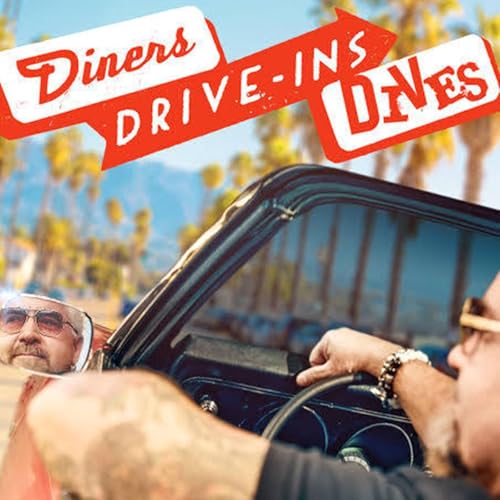
  • E297: Behind the Scenes of Diners, Drive-ins and Dives
    Apr 14 2026
    It's the story of a guy on a road trip across the country, checking out America's classic greasy spoons. And the adventure is all about finding the restaurant owners and creative cooks serving up the very best of down-home style food. That's the premise of the hit series Diners, Drive-Ins, and Dives starring everyman chef Guy Fieri. Today we're going to talk with the show's creator, two-time Emmy Award winning food journalist and executive producer David Page. Interview Transcript David, I can't wait to talk to you about the show. But before we dive in and talk about the specifics, how long did the show run and how many episodes were done? My impression it's still on and it's always been there. Yes. I created it in 2006, 2007. I did the first 11 seasons and moved on. And funny story, in the first month of the show we had a couple of strong initial outings. And everyone was all excited thinking maybe this will be a hit. A food network executive called me up to tamp down my expectations and said, look, this is all fine and dandy, but this thing isn't gonna go more than a season or two. There's just not that many restaurants. And you know, to quote the great screenwriter William Goldman whose rule of Hollywood is 'no one knows anything.' I did 11 seasons. It's now in season 40 or something, I think. Holy cow. I could just think of enough restaurants around me to do a couple of seasons worth. So, tell us the origin story. How did Diners, Drive-Ins and Dives come about? Well, I had left a career in network news and moved to the Twin Cities because I thought I wanted to be in business for a public corporation. And I took a job as the Senior Vice president at a home shopping channel, and I was all excited, and I hated it. It was just horrible. I did not want to sell second rate gold jewelry to shut ins. So, I quit, and I opened a production company and began to starve because I wasn't selling anything. Then I called Al Roker, who has a production company and who had technically worked for me, although stars don't work for executive producers in the real world. When I was the co-producer of the Weekend Editions of the Today Show. Al was on the weekend show at the time. He hadn't yet moved up to the big show. And I said, hey, Al, I'm starving. You got any work you could throw me? And he said, yeah, I'm doing a lot of stuff for the Food Network. I'll subcontract some of it to you. Which was good for both of us. I got to work, and Al got to take a cut without doing anything. So, that hooked me up with the Food Network. I started working for them and Al and I both knew I wasn't gonna get rich doing a pass-through deal, so I started pitching them directly. And I was getting nowhere. There was this very nice development exec who would talk to me on the phone. And everything I proposed she would shoot down. And one day I'm on the phone with her and we're going through a pitch call and I'm proposing this and proposing that, and she's saying, no, no, no. Finally, the Food Network had asked Al to do a documentary on diners and the history of diners and such. And Al had subcontracted it to me. So, this development exec had a frustration and I think pity for me and finally said to me on this call, don't you have another thing on diners? And I immediately, I said, oh, absolutely. I'm developing a show called Diners, Drive-Ins and Dives. And I told her all about it. And this was like late on a Thursday or Friday afternoon. And she said, 'you know, that sounds good. We have a development meeting Tuesday. Get me a writeup on Monday.' And I got off the phone elated because it was the first time she'd expressed interest in anything. But also, I'd kind of put myself in a jam because I was not developing a show called that. I had literally pulled the title out of thin air. Or a body part, depending upon how scatological you want to get. And that gave me the weekend to try to put a pitch together. So, this was in the old days when you didn't email people, you called them. I did as much research as I could, and I started calling restaurants around the country. And on Monday I sent her a pitch for a one-hour special with, I think, it had seven restaurants in it. And, they had their meeting on Tuesday and here here's, you know, you get lucky. Guy Fieri had just won their second Food Network Star competition. Back then they naively believed that that contest was gonna generate them a new star every year. Someone who would be a big deal for it. In fact, Guy is the only one who ever made it and, when I'm drunk and immodest, I take a lot of credit for having taught him how to make it. But he has immense natural talent. Anyway, they wanted to make Guy a star. And they were trying to get a primetime show for him. And big deal, major league production companies had been asked to come up with proposals, which had not come back yet. They figured, what the hell, let's do a special with Guy just to keep on the air so people wouldn't forget ...
    Show More Show Less
    25 mins