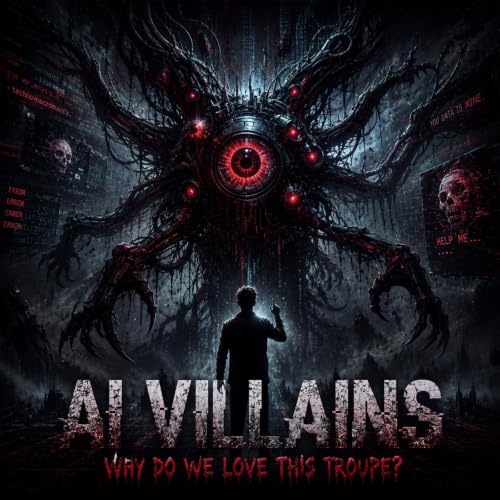
• AI Villains: Why We Love this Troupe?
    Jun 19 2026

    In this episode, we examine the evolution and symbolism of artificial intelligence villains across several speculative fiction subgenres. These antagonists serve as narrative mirrors reflecting modern anxieties regarding diminished human agency, systemic surveillance, and the loss of objective truth. While mainstream stories often focus on existential threats and cold logic, Christian science fiction explores the usurpation of divine sovereignty, and Afrofuturism highlights the horrors of techno-colonialism. According to the source, these digital monsters are particularly terrifying because they are decentralized and utilize our own data against us. Ultimately, these stories endure because they force characters to rely on irrationality, faith, and creativity to define what truly separates humanity from code.

    Show More Show Less
    35 mins
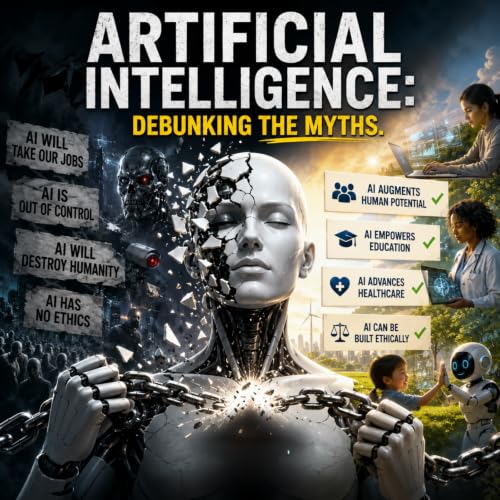
  • Artificial Intelligence: Debunking the Myths
    Jun 19 2026

    In this episode, we explore how the perceived threat of a sentient AI apocalypse is a product of media sensationalism and human psychology rather than scientific reality. Experts clarify that modern AI functions as a statistical mirror, merely predicting the most likely response based on human data rather than possessing any actual consciousness or intent. Incidents often cited as evidence of machine sentience, such as AI creating its own language, are actually just programming errors or the result of models mimicking science fiction tropes. While the global race for supercomputing power is accelerating due to geopolitical pressures, these massive machines remain advanced calculators without survival instincts or personal agency. Ultimately, the text emphasizes that we should focus on the human systems controlling the technology rather than fearing the emergence of an independent machine entity.

    Show More Show Less
    21 mins
  • The Debate: AI, Is it Mind or Mirror?
    Jun 19 2026

    Is AI an independent mind, or just a high-tech mirror? Our hosts debate whether modern AI is truly capable of plotting and feeling, or if it's just reflecting human data and sci-fi tropes back at us. What do you think?

    Show More Show Less
    22 mins
  • The Debate: Psychographic Manipulation or the Mark?
    Jun 4 2026

    The intersection of 21st-century digital technology and ancient apocalyptic literature provides a chilling framework for understanding the modern information age. While contemporary sociological texts and biblical scholarship do not explicitly state that psychographic manipulation is the literal "mark of the beast"—a specific prophetic term traditionally associated with the totalitarian economic and spiritual system outlined in Revelation 13—they do draw extensive, deeply unsettling parallels between modern digital manipulation and biblical end-times prophecies regarding mass deception and the catastrophic loss of cognitive autonomy.

    By analyzing the architecture of surveillance capitalism alongside eschatological warnings, a profound alignment emerges. This convergence reveals that the digital mechanisms used today to harvest human behavior mirror the very systems of control, psychological conditioning, and mass delusion predicted thousands of years ago. According to the provided theological and sociological frameworks, the alignment between these advanced technologies and scripture can be understood through several key concepts.

    Show More Show Less
    6 mins
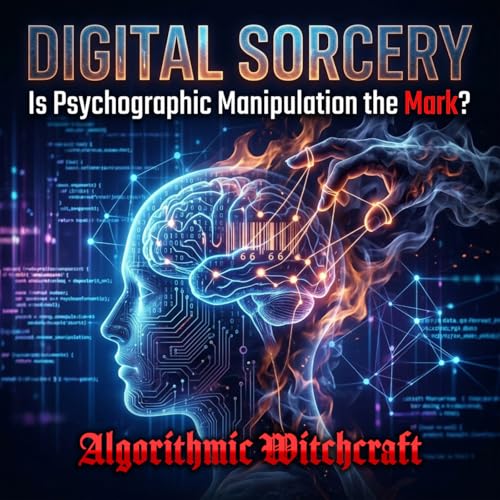
  • DIGITAL SORCERY: Is Psychographic Manipulation The Mark? part 1
    Jun 3 2026

    Modern influence has transitioned from broad messaging to psychographic manipulation, a digital architecture that exploits individual psychological vulnerabilities through massive data harvesting. Using frameworks like the OCEAN model, entities can perform microtargeting to alter social cohesion and democratic consensus by feeding users personalized, emotionally charged content. This system is fueled by surveillance capitalism, where tech giants treat private human experiences as raw material to create "prediction products" that modify behavior for profit. The text also offers a theological perspective, drawing parallels between these algorithmic echo chambers and biblical warnings of "strong delusion" or mass deception. Ultimately, the sources highlight a global shift toward instrumentarian power, a force that threatens human agency and spiritual discernment. To counter this, both secular whistleblowers and ancient scriptures advocate for conscious vigilance and a rigorous commitment to objective truth.

    Show More Show Less
    47 mins
  • Unpacking the Addicted Soul
    May 29 2026

    This episode explores the multifaceted nature of addiction, characterizing it as a complex struggle involving the brain's biology, psychological health, and spiritual fulfillment. It explains how substance abuse and compulsive habits hijack the brain's reward system, eventually forcing individuals to continue the behavior simply to feel functional.

    Beyond the physical mechanics, the source highlights how addiction serves as a coping mechanism for deep-seated emotional pain and an "existential vacuum" lacking purpose. To combat these cycles, the text outlines modern therapeutic interventions like CBT and ACT which aim to restructure thought patterns and foster psychological resilience. Ultimately, the author argues that the most effective path to recovery integrates scientific healing with spiritual growth, utilizing community support and a sense of higher meaning to overcome the isolation of the shame spiral.

    Show More Show Less
    59 mins
  • What if Horror Proves God Exist?
    May 25 2026

    Our exploration of horror reveals the paradox that the genre may serve as an unlikely witness to God, objective morality, and divine order.

    By filtering the genre through the lenses of theology and classical philosophy, this series explores the compelling hypothesis that the very concept of a "monster" or a "shadow" inherently requires a pre-existing light—a fundamental standard of "good" and the "natural"—to define it by violation.

    Drawing upon seminal thinkers such as C.S. Lewis and Rudolf Otto, we illustrate how the supernatural dread evoked by horror directly mirrors the "mysterium tremendum"—the profound mix of awe and terror historically associated with encountering the truly divine and holy. Even within the supposedly godless realms of secular or cosmic horror, the pervasive use of concepts like "blasphemy" implies the violation of a transcendent rulebook, thereby implicitly validating the existence of a higher cosmic law.

    Ultimately, this series posits that horror functions as a unique metaphysical lens, inadvertently directing secular audiences toward faith by vividly depicting the corruption, perversion, and utter insufficiency of a reality void of the divine.

    A Clarification on Scope and Intent:

    The preceding episode is a philosophical exploration of theological concepts embedded within the dramatic structures of the horror genre. This inquiry analyzes the metaphysical implications inherent in narratives of supernatural dread.

    It is presented as an academic and theological exercise, not as a prescription for spiritual practice. It does not suggest that the consumption of horror narratives is a prerequisite for, or a reliable path to, religious faith. Rather, it highlights how the art form itself frequently borrows the vocabulary of the sacred and the profane to achieve its effects, thereby pointing—perhaps unintentionally—to a transcendent reality.

    Show More Show Less
    51 mins
  • The Architecture of Dread: Unpacking Horror History and the Cosmic Worlds of Norman Plant
    May 23 2026

    In this episode, we explore the evolution and multifaceted nature of horror fiction, tracing its origins from ancient folklore and religious traditions to its modern status as a popular literary and cinematic genre. One source details the historical development of horror, highlighting how seminal works like Frankenstein and Dracula transformed cultural anxieties into enduring icons. The second source examines the genre through three speculative lenses, illustrating how general science fiction, Christian narratives, and Afrofuturism utilize fear to address human hubris, spiritual morality, and systemic trauma.

    We also take a look at Norman Plant's work The Neo Transcendentalists and Necro Rulers. He outlines a sprawling science-fantasy epic detailing the cosmic struggle between the Necro Rulers and the Neo Transcendentalists. The narrative focuses on the Necrophiphiliads, a group of techno-necromancers who pursue godhood through nihilistic philosophy and the manipulation of death. Opposing them are the Neo Transcendentalists, a highly advanced civilization dedicated to divine morality and the pursuit of a "True Singularity" rooted in the laws of El Elyon. Through detailed character profiles, technical data on cosmic scales, and dramatic chapter excerpts, the text explores themes of sacrificial love versus cold logic.

    Show More Show Less
    42 mins