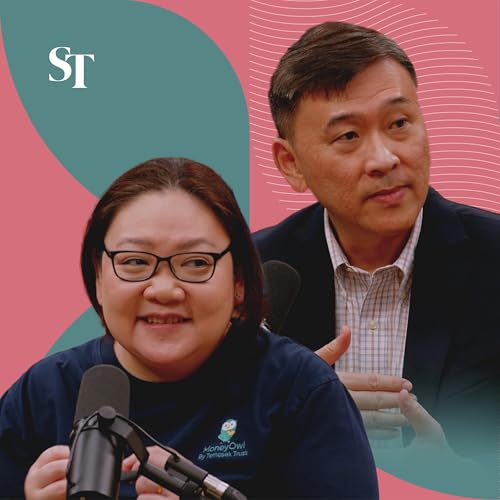
• S1E95: Is caning an appropriate way to discipline school bullies?
    May 14 2026

    By 2027, every school will have to follow standard disciplinary measures such as detention and conduct grade adjustment for different types of misbehaviour.

    But the measure that divided parents, teachers and parliamentarians was that bullies can get up to three strokes of the cane.

    Caning in schools is not new, so why were so many people upset that school bullies will be caned?

    In this episode of The Usual Place, I speak with ST education correspondent and former secondary school teacher Elisha Tushara, and chief executive officer of the Singapore Children’s Society Ang Boon Min, about what caused the scrutiny over caning for bullies.

    At a time when bullying cases are increasing - albeit by a small number - will caning change behaviour among recalcitrant students? Also, if parents step in to take on their child’s bullies, will it make things worse?

    Highlights (click/tap above):

    1:35 Does caning students work?

    4:55 Do children learn from being caned?

    8:22 Creative ways students try to escape caning

    11:20 How do children become bullies?

    13:34 Reframe the language around bullying

    16:35 Most children don’t want their bully punished

    19:11 Natural for parents to “feel an ache”

    20:42 What is restorative justice?

    22:35 Will teachers be stretched further?

    26:45 How to help bullied children feel safe?

    29:35 Parents involvement can be “unproductive”

    Host: Natasha Ann Zachariah (natashaz@sph.com.sg)

    Read Natasha’s articles: https://str.sg/iSXm

    Follow The Usual Place podcast on IG: https://str.sg/8KNT

    Follow Natasha on LinkedIn: https://str.sg/v6DN

    Filmed by: Studio+65

    Edited by: Eden Soh & Natasha Liew

    Executive producer: Danson Cheong

    Producers: Natasha Ann Zachariah and Elizabeth Law

    Assistant producer: Stacey Ngiam

    Follow The Usual Place Podcast and get notified for new episode drops every Thursday:

    Channel: https://str.sg/5nfm

    Apple Podcasts: https://str.sg/9ijX

    Spotify: https://str.sg/cd2P

    YouTube: https://str.sg/theusualplacepodcast

    Feedback to: podcast@sph.com.sg

    ---

    Follow more ST podcast channels:

    All-in-one ST Podcasts channel: https://str.sg/wvz7

    Get more updates: http://str.sg/stpodcasts

    ---

    Get The Straits Times app, which has a dedicated podcast player section:

    The App Store: https://str.sg/icyB

    Google Play: https://str.sg/icyX

    --

    #tup #tuptrf

    See omnystudio.com/listener for privacy information.

    Show More Show Less
    34 mins
  • S1E74: 12-year-olds in therapy - the silent rise in youth porn addiction
    May 13 2026

    The dopamine trap: Is Asia’s conservative culture driving a porn addiction crisis?

    Synopsis: On Wednesdays, The Straits Times takes a hard look at Singapore's social issues of the day with guests.

    Asia holds the highest rate of problematic pornography use in the world at nearly one in five people, according to a study which researchers term 'Asian Paradox'. While casual viewing can be healthy for adults in some instances, this taboo weaponises the dopamine hit for tech-savvy youths.

    In this episode, assistant podcast editor Lynda Hong sits down with Dr Peter Chew, Associate Professor of Psychology at James Cook University Singapore, to unpack this silent epidemic.
    They explore the neuroscience behind the digital dopamine trap, why a teenager's developing brain is vulnerable, and why symbolic website bans are failing.

    Dr Chew also dismantles common misconceptions, explaining the crucial difference between clinical addiction and religious guilt; how sex education should change; and why abstinence-only programmers cause higher unwanted pregnancies.

    Highlights (click/tap above):

    4:25 Why is porn so devastating to a teenager?

    6:40 Does porn addiction lead to sex crimes?

    10:05 What does treatment entail?

    12:38 Approaching the topic of sex and pornography with youths

    16:24 Moral implications towards sex education

    Read ST’s Opinion section: https://str.sg/w7sH

    Follow Lynda Hong on LinkedIn: https://str.sg/Gm2v

    Host: Lynda Hong (lyndahong@sph.com.sg)

    Produced and edited by: Teo Tong Kai

    Executive producers: Danson Cheong and Lynda Hong

    Follow In Your Opinion Podcast here and get notified for new episode drops:

    Channel: https://str.sg/w7Qt

    Apple Podcasts: https://str.sg/wukb

    Spotify: https://str.sg/w7sV

    Feedback to: podcast@sph.com.sg

    ---

    Follow more ST podcast channels:

    All-in-one ST Podcasts channel: https://str.sg/wvz7

    Get more updates: http://str.sg/stpodcasts

    The Usual Place Podcast YouTube: https://str.sg/theusualplacepodcast

    ---

    Get The Straits Times app, which has a dedicated podcast player section:

    The App Store: https://str.sg/icyB

    Google Play: https://str.sg/icyX

    ---

    #inyouropinion

    See omnystudio.com/listener for privacy information.

    Show More Show Less
    21 mins
  • S2E73: US-China Summit - No big, fat hugs: Trump, Xi will have a summit of careful smiles
    May 12 2026

    A banquet in Beijing does not alter US-China rivalry but both leaders could sell modest outcomes as wins, says analyst.

    Synopsis: Every third Friday of the month, The Straits Times gets its US Bureau Chief to analyse the hottest political and trending talking points.

    In this episode, US Bureau Chief Bhagyashree Garekar chats with Han Shen Lin, the China Managing Director for The Asia Group, a strategic advisory firm based in Washington DC. Mr Lin leads the firm’s China operations from its Shanghai office.

    Concurrently, as an Associate Professor of Practice in Finance at NYU Shanghai, he teaches courses in global finance and markets.

    Mr Lin also serves as Chair of the Financial Services Committee at the American Chamber of Commerce in Shanghai.

    He is a US Marine Corps veteran (Indo-Pacific) and Returned Peace Corps Volunteer (Ukraine).

    Highlights (click/tap above):

    1:31 Is the summit happening for sure?

    3:12 China could get Tehran's attention on a ceasefire, but will they?

    5:39 Why has Trump been so keen to go to China?

    7:28 What might be President Xi's top asks?

    9:18 Will they talk about AI?

    11:24 Trump often trolls foreign leaders but treats Xi respectfully. What does Beijing make of this?

    13:54 Will this summit improve ties?

    Read Bhagyashree Garekar’s articles: https://str.sg/whNo

    Bhagyashree Garekar’s LinkedIn: https://str.sg/gD6E

    Sign up for ST’s weekly Asian Insider newsletter: https://str.sg/sfpz

    Host: Bhagyashree Garekar (bhagya@sph.com.sg)

    Produced and edited by: Fa’izah Sani

    Executive producer: Ernest Luis

    Follow Asian Insider Podcast on Fridays here:

    Channel: https://str.sg/JWa7

    Apple Podcasts: https://str.sg/JWa8

    Spotify: https://str.sg/JWaX

    Feedback to: podcast@sph.com.sg

    ---

    Follow more ST podcast channels:

    All-in-one ST Podcasts channel: https://str.sg/wvz7

    Get more updates: http://str.sg/stpodcasts

    The Usual Place Podcast YouTube: https://str.sg/theusualplacepodcast

    ---

    Get The Straits Times app, which has a dedicated podcast player section:

    The App Store: https://str.sg/icyB

    Google Play: https://str.sg/icyX

    ---

    #STAsianInsider

    See omnystudio.com/listener for privacy information.

    Show More Show Less
    18 mins
  • S1E149: Slow ageing with exercise and diet: Geriatrician's tips
    May 11 2026

    We are living longer, but are we living healthier?

    Synopsis: Every month, The Straits Times helps you make sense of health matters that affect you.

    Singapore is one of the fastest-ageing nations in the world. By 2030, one in four Singaporeans will be aged 65 and above. There are also more Singaporeans living past 100 today. We are living longer, but are we living healthier? And, what does "ageing well" actually look like in our concrete jungle?

    In this episode, host Joyce Teo hosts a senior geriatrician to talk about the unique landscape of ageing in Singapore, how to tell if someone is ageing faster than before and what one can do to "age healthier".

    She is Adjunct Assistant Professor Noorhazlina Ali, a senior consultant and the head of the department of geriatric medicine at Tan Tock Seng Hospital (TTSH). She’s also a dementia specialist.

    Highlights (click/tap above):

    3:39 Tell-tale signs that you’re ageing faster than others

    4:45 Hear about the chair-to-stand test

    6:32 How to tell if your memory issues are not part of normal ageing

    10:18 Sarcopenia can happen as early as age 40

    12:54 Make sure your protein intake is sufficient

    16:32 Dr Noorhazlina’s grandfather kept fit with long walks past 90

    18:06 Determining the intensity of your elderly workouts

    20:07 Are you too old to learn new things?

    22:13 Dr Noorhazlina’s personal strategies

    Host: Joyce Teo (joyceteo@sph.com.sg)

    Produced and edited by: Amirul Karim

    Executive producers: Ernest Luis and Lynda Hong

    Follow Health Check Podcast here and get notified for new episode drops:

    Channel: https://str.sg/JWaN

    Apple Podcasts: https://str.sg/JWRX

    Spotify: https://str.sg/JWaQ

    Feedback to: podcast@sph.com.sg

    ---

    Follow more ST podcast channels:

    All-in-one ST Podcasts channel: https://str.sg/wvz7

    Get more updates: http://str.sg/stpodcasts

    The Usual Place Podcast YouTube: https://str.sg/theusualplacepodcast

    ---

    Get The Straits Times app, which has a dedicated podcast player section:

    The App Store: https://str.sg/icyB

    Google Play: https://str.sg/icyX

    ---

    #healthcheck

    See omnystudio.com/listener for privacy information.

    Show More Show Less
    28 mins
  • S2E72: What cues India can take from China to fix its foul air and water
    May 7 2026

    India’s poor air is driving much needed investment away from the country.

    Synopsis: The Straits Times’ senior columnist Ravi Velloor distils 45 years of experience covering the Asian continent, with expert guests.

    There was a time when China was thought to have the world’s most polluted cities. However, Beijing’s sustained efforts have overturned that situation. Instead, when the question of polluted cities comes up, eyes turn to India now.

    According to the noted Harvard economist Gita Gopinath, a former top IMF official, poor air quality is driving investment away from India and is causing more damage to its economy than US President Donald Trump’s tariffs.

    There is enough policy experience, and scientific knowledge, to mitigate the situation. Indeed, India has within itself some of the world’s best scientific brains. The question is whether it has the political will to take the right measures, including pricing essential services such as water appropriately to curb overuse and wastage.

    In this wide-ranging conversation, host Ravi Velloor speaks with Chandran Nair, the Malaysian-born, founder and CEO of Hongkong-based Global Institute for Tomorrow on how India could take cues from China to fix its foul air and water.

    Mr Nair, a biochemical engineer who in 1994, set up the first foreign environment consultancy in China. He is also a frequent traveller to China and India. He is also a sceptic of the consumption-based growth model that he says is causing irreparable damage to the environment.

    Highlights (click/tap above)

    3:42 China’s journey from ‘most polluted’ nation

    10:52 India’s dismal environmental situation

    14:26 Faulty growth models

    17:37 Democratic non-dividend: India cannot do a China

    22:42 Why utilities like water need to be priced right

    Read Ravi's columns: https://str.sg/3xRP

    Follow Ravi on X: https://twitter.com/RaviVelloor

    Sign up for ST’s weekly Asian Insider newsletter: https://str.sg/sfpz

    Host: Ravi Velloor (velloor@sph.com.sg)

    Produced and edited by: Fa’izah Sani

    Executive producer: Ernest Luis

    Follow Asian Insider Podcast on Fridays here:

    Channel: https://str.sg/JWa7

    Apple Podcasts: https://str.sg/JWa8

    Spotify: https://str.sg/JWaX

    Feedback to: podcast@sph.com.sg

    ---

    Follow more ST podcast channels:

    All-in-one ST Podcasts channel: https://str.sg/wvz7

    Get more updates: http://str.sg/stpodcasts

    The Usual Place Podcast YouTube: https://str.sg/4Vwsa

    ---

    Get The Straits Times app, which has a dedicated podcast player section:

    The App Store: https://str.sg/icyB

    Google Play: https://str.sg/icyX

    ---

    #STAsianInsider

    See omnystudio.com/listener for privacy information.

    Show More Show Less
    30 mins
  • S1E94: Sky high condo prices: are sales being funded by parents' retirement savings?
    May 7 2026

    Never mind that it’s way out west - Tengah’s first private condominium development sold out almost all its units over its launch weekend at the end of April.

    At an average price of $2,120 per sq ft and a location that’s under the Outside Central Region (OCR) classification, the affordable suburban condominium is starting to feel more expensive.

    But despite all our complaints about high property prices and the uncertain global outlook, these sales show that Singaporeans are still willing to fork out serious money for new, unsubsidised private residential properties.

    Is this the new normal buyers have to get used to?

    In this episode of The Usual Place, Natasha speaks with veteran property analyst and chief research officer at MOGUL.sg Nicholas Mak, and CEO and Chief Investment Officer at financial advisory firm MoneyOwl Chuin Ting Weber.

    We chat about who are the buyers driving the sales of these properties, and what’s driving these record new launch condo prices?

    Highlights (click/tap above):

    1:20 What's driving up condo prices?

    4:55 FOMO in buyers driven by agents

    7:25 HDB upgraders not main condo buyers

    9:56 Who's renting if everyone's buying?

    15:28 The myth of constantly rising prices

    19:28 Making compromises to make mortgage

    31:40 Good debt and what you can afford

    37:22 Parents digging into retirement funds for kids

    48:00 Why isn't the government stepping in more?

    51:36 The similarities between healthcare and property

    Host: Natasha Ann Zachariah (natashaz@sph.com.sg)

    Read Natasha’s articles: https://str.sg/iSXm

    Follow The Usual Place podcast on IG: https://str.sg/8KNT

    Follow Natasha on LinkedIn: https://str.sg/v6DN

    Filmed by: Studio+65

    Edited by: Eden Soh, Fa’izah Sani & Natasha Liew

    Executive producer: Danson Cheong

    Producers: Natasha Ann Zachariah and Elizabeth Law

    Follow The Usual Place Podcast and get notified for new episode drops every Thursday:

    Channel: https://str.sg/5nfm

    Apple Podcasts: https://str.sg/9ijX

    Spotify: https://str.sg/cd2P

    YouTube: https://str.sg/theusualplacepodcast

    Feedback to: podcast@sph.com.sg

    ---

    Follow more ST podcast channels:

    All-in-one ST Podcasts channel: https://str.sg/wvz7

    Get more updates: http://str.sg/stpodcasts

    ---

    Get The Straits Times app, which has a dedicated podcast player section:

    The App Store: https://str.sg/icyB

    Google Play: https://str.sg/icyX

    --

    #tup #tuptrf

    See omnystudio.com/listener for privacy information.

    Show More Show Less
    55 mins
  • S1E73: What's the property agent's role in this age of AI?
    May 5 2026

    As AI changes everything, can the property agents’ most valuable asset - trust - keep them relevant?

    Synopsis: On Wednesdays, The Straits Times takes a hard look at key issues of the day with newsmakers.

    Singapore's property market has transformed over the last few decades. From an opaque, relationship-driven industry, it has evolved into one reshaped by online listings, price transparency, and regulatory tightening. Yet the ethical tensions have endured, with commission conflicts, trust gaps, information asymmetry still persisting. And as property prices have climbed, so have agent commissions.

    With the advent of AI and digitalisation, some sharper questions have surfaced. As technology changes or replaces roles across industries, can it do the same for the property sector and finally resolve the conflicts and contradictions that have been constant bugbears? Will buyers and sellers still need to depend on an agent? How will the role of the property agent change?

    In this episode, opinion deputy editor Mubin Saadat speaks to real estate agency ERA’s CEO Marcus Chu.

    Highlights (click/tap above):

    2:05 What’s fundamentally changed about the agent’s role?

    7:06 Are property agents earning more now than they ever did?

    10:36 Should we rethink agents’ commissions?

    20:42 Should property agents be giving financial advice?

    23:40 Will AI replace property agents?

    30:40 Preparing property agents for AI

    33:28 The important conversation the industry should be having

    Read ST’s Opinion section: https://str.sg/w7sH

    Host: Mubin Saadat (mubin@sph.com.sg)

    Produced and edited by: Amirul Karim

    Executive producers: Danson Cheong and Lynda Hong

    Follow In Your Opinion Podcast here and get notified for new episode drops:

    Channel: https://str.sg/w7Qt

    Apple Podcasts: https://str.sg/wukb

    Spotify: https://str.sg/w7sV

    Feedback to: podcast@sph.com.sg

    ---

    Follow more ST podcast channels:

    All-in-one ST Podcasts channel: https://str.sg/wvz7

    Get more updates: http://str.sg/stpodcasts

    The Usual Place Podcast YouTube: https://str.sg/theusualplacepodcast

    ---

    Get The Straits Times app, which has a dedicated podcast player section:

    The App Store: https://str.sg/icyB

    Google Play: https://str.sg/icyX

    ---

    #inyouropinion

    See omnystudio.com/listener for privacy information.

    Show More Show Less
    37 mins
  • S2E41: Singapore's Les Miserables star Nathania Ong on what it cost to chase her dreams
    May 3 2026

    Surviving on vibes and hard work? What it's like working as a freelance artist overseas.

    Synopsis: Every first and third Monday of the month, get a head start in your personal finance, career and life with The Straits Times.

    How does a Singaporean make her way onto London’s glittering West End?

    Nathania Ong made her mark by playing well-loved characters like Eponine in Les Miserables and Eliza Hamilton in Hamilton, putting Singapore on the world theatre map.

    But how did it happen and what does the life of a freelance artist overseas look like?

    In this episode, ST business correspondent Sue-Ann Tan looks at the realities and joys of working in the arts.

    Her guest is musical theatre actress Nathania Ong.

    Highlights (click/tap above):

    3:12 Being initially rejected from every drama school

    6:39 Nathania’s West End debut

    10:54 Deciding to be an actress

    18:00 Realities of working in London

    22:13 Advice to anyone aspiring to be an actor

    26:23 What’s next for Nathania

    Read Sue-Ann Tan's articles: https://str.sg/mvSa

    Follow Sue-Ann Tan on LinkedIn: https://str.sg/A86X

    Host: Sue-Ann Tan (suetan@sph.com.sg)

    Produced & edited by: Amirul Karim

    Executive producers: Joanna Seow and Elizabeth Law

    Follow Headstart On Record Podcast channel here:

    Channel: https://str.sg/wB2m

    Apple Podcasts: https://str.sg/wuN3

    Spotify: https://str.sg/wBr9

    Feedback to: podcast@sph.com.sg

    Get business/career tips in ST's Headstart newsletter: https://str.sg/headstart-nl

    ---

    Follow more ST podcast channels:

    All-in-one ST Podcasts channel: https://str.sg/wvz7

    Get more updates: http://str.sg/stpodcasts

    The Usual Place Podcast YouTube: https://str.sg/theusualplacepodcast

    ---

    Get The Straits Times app, which has a dedicated podcast player section:

    The App Store: https://str.sg/icyB

    Google Play: https://str.sg/icyX

    ---

    Do note: All analyses, opinions, recommendations and other information in this podcast are for your general information only. You should not rely on them in making any decision. Please consult a fully qualified financial adviser or professional expert for independent advice and verification. To the fullest extent permitted by law, SPH Media shall not be liable for any loss arising from the use of or reliance on any analyses, opinions, recommendations and other information in this podcast. SPH Media accepts no responsibility or liability whatsoever that may result or arise from the products, services or information of any third parties.

    ---

    #headstart

    See omnystudio.com/listener for privacy information.

    Show More Show Less
    32 mins