
Showing results by narrator "Macat" in All Categories
-

-
A Macat Analysis of Christopher Hill's The World Turned Upside Down: Radical Ideas During the English Revolution
- By: Harman Bhoghal, Liam Haydon
- Narrated by: Macat.com
- Length: 1 hr and 43 mins
- Unabridged
-
Overall1
-
Performance1
-
Story1
English historian Christopher Hill turned thinking about the English Civil Wars (1642-51) on its head when he published The World Turned Upside Down in 1972. Instead of focusing on power struggles in the upper echelons of English society - on the battle between the monarchy and would-be republicans - Hill looked to develop "history from below", investigating the lives of ordinary people, the way they saw society, and their political hopes for the future.
Preview -
A Macat Analysis of Christopher Hill's The World Turned Upside Down: Radical Ideas During the English Revolution
- Narrated by: Macat.com
- Length: 1 hr and 43 mins
- Release date: 30-06-16
- Language: English
Failed to add items
Sorry, we are unable to add the item because your shopping cart is already at capacity.Add to basket failed.
Please try again laterAdd to wishlist failed.
Please try again laterRemove from wishlist failed.
Please try again laterAdding to library failed
Please try againFollow podcast failed
Unfollow podcast failed
£6.57 or free with trial. Auto-renews at £5.99/month after trial. See eligibility.
-
-
-
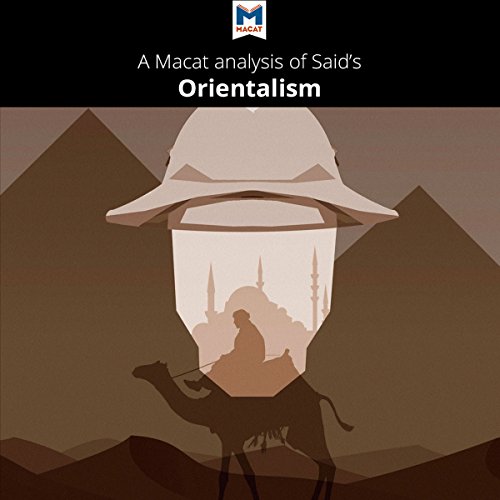
Analysis: A Macat Analysis of Edward Said's Orientalism
- By: Riley Quinn
- Narrated by: Macat.com
- Length: 2 hrs and 3 mins
- Unabridged
-
Overall9
-
Performance8
-
Story8
Western thinking about the Middle and Far East has been distorted by stereotype and inaccuracy. This argument lies at the center of Palestinian-American literary theorist Edward Said's groundbreaking book, Orientalism. Originally published in 1978, it cemented Said's reputation as the father of postcolonial studies.
Preview -
Analysis: A Macat Analysis of Edward Said's Orientalism
- Narrated by: Macat.com
- Length: 2 hrs and 3 mins
- Release date: 09-06-16
- Language: English
Failed to add items
Sorry, we are unable to add the item because your shopping cart is already at capacity.Add to basket failed.
Please try again laterAdd to wishlist failed.
Please try again laterRemove from wishlist failed.
Please try again laterAdding to library failed
Please try againFollow podcast failed
Unfollow podcast failed
£7.75 or free with trial. Auto-renews at £5.99/month after trial. See eligibility.
-
-
-
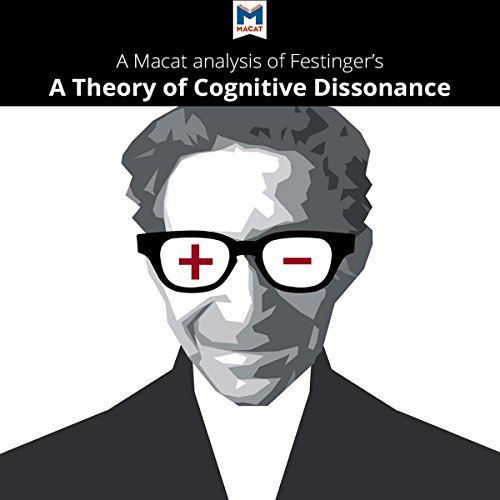
A Macat Analysis of Leon Festinger's A Theory of Cognitive Dissonance
- By: Camille Morvan, Alexander J. O'Connor
- Narrated by: Macat.com
- Length: 1 hr and 38 mins
- Unabridged
-
Overall0
-
Performance0
-
Story0
Why do we want to justify our decisions, even if they appear to be irrational? The answer lies in cognitive dissonance, the mental discomfort we experience when we hold two contradictory beliefs at the same time. In A Theory of Cognitive Dissonance, first published in 1957, American social psychologist Leon Festinger investigates the problem. Festinger puts forward the idea that we have developed mechanisms to try to deal with the stress brought on by cognitive dissonance.
Preview -
A Macat Analysis of Leon Festinger's A Theory of Cognitive Dissonance
- Narrated by: Macat.com
- Length: 1 hr and 38 mins
- Release date: 30-06-16
- Language: English
Failed to add items
Sorry, we are unable to add the item because your shopping cart is already at capacity.Add to basket failed.
Please try again laterAdd to wishlist failed.
Please try again laterRemove from wishlist failed.
Please try again laterAdding to library failed
Please try againFollow podcast failed
Unfollow podcast failed
£6.57 or free with trial. Auto-renews at £5.99/month after trial. See eligibility.
-
-
-
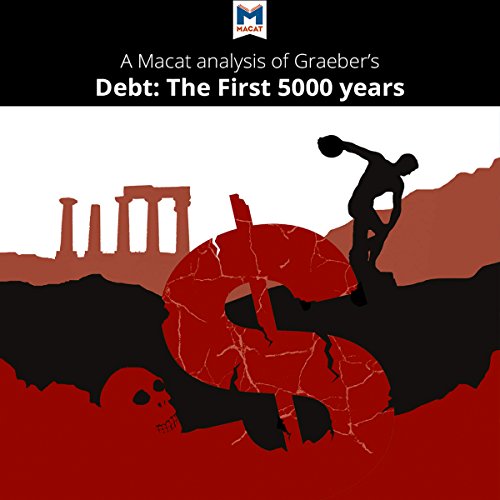
A Macat Analysis of David Graeber's Debt: The First 5,000 Years
- By: Sulaiman Hakemy
- Narrated by: Macat.com
- Length: 1 hr and 33 mins
- Unabridged
-
Overall1
-
Performance1
-
Story1
David Graeber's 2011 book, Debt: The First 5,000 Years, seeks to overturn hundreds of years of economic theory, specifically the idea that people have a natural inclination to trade with each other and that the concept of money developed spontaneously to overcome the inefficiencies of a bartering system. The US-born social activist uses his training as an anthropologist to trace the histories of money and of debt and reaches the conclusion that money was in fact created by the state as a means of exploiting the poor.
Preview -
A Macat Analysis of David Graeber's Debt: The First 5,000 Years
- Narrated by: Macat.com
- Length: 1 hr and 33 mins
- Release date: 27-07-16
- Language: English
Failed to add items
Sorry, we are unable to add the item because your shopping cart is already at capacity.Add to basket failed.
Please try again laterAdd to wishlist failed.
Please try again laterRemove from wishlist failed.
Please try again laterAdding to library failed
Please try againFollow podcast failed
Unfollow podcast failed
£6.57 or free with trial. Auto-renews at £5.99/month after trial. See eligibility.
-
-

-
A Macat Analysis of Frantz Fanon's Black Skin, White Masks
- By: Rachele Dini
- Narrated by: Macat.com
- Length: 1 hr and 47 mins
- Unabridged
-
Overall4
-
Performance2
-
Story2
Frantz Fanon's Black Skin, White Masks offers a radical analysis of the psychological effects of colonization on the colonized. Born in 1925 on the island of Martinique - at the time a French colony - Fanon witnessed firsthand the abuses of white colonizers and the system's effects on his country. His revulsion was only confirmed later in life when he worked as a psychiatrist in Algeria, another French colony. Fanon's work played a pivotal role in the civil rights movements of the 1960s and was later taken up by scholars of postcolonialist studies.
-
-
Good enough to go!
- By Pèche on 21-08-23
Preview -
A Macat Analysis of Frantz Fanon's Black Skin, White Masks
- Narrated by: Macat.com
- Length: 1 hr and 47 mins
- Release date: 27-07-16
- Language: English
Failed to add items
Sorry, we are unable to add the item because your shopping cart is already at capacity.Add to basket failed.
Please try again laterAdd to wishlist failed.
Please try again laterRemove from wishlist failed.
Please try again laterAdding to library failed
Please try againFollow podcast failed
Unfollow podcast failed
£6.57 or free with trial. Auto-renews at £5.99/month after trial. See eligibility.
-
-
-
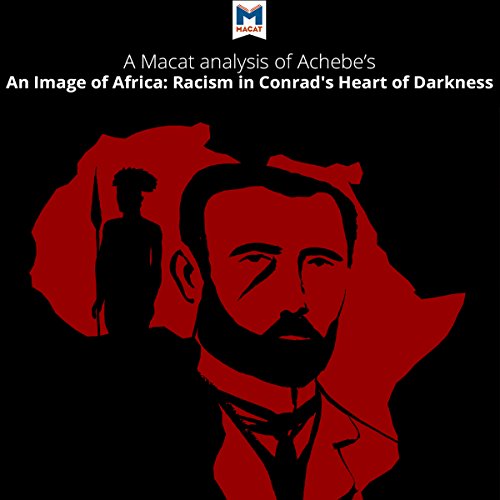
Analysis: A Macat Analysis of Chinua Achebe's An Image of Africa: Racism in Conrad's Heart of Darkness
- By: Lindsay Scorgie-Porter
- Narrated by: Macat.com
- Length: 1 hr and 40 mins
- Unabridged
-
Overall2
-
Performance2
-
Story2
Nigerian novelist and professor Chinua Achebe was acutely conscious that Western views of Africa were inevitably the views of a culture that assumed itself superior. When confronted by what it took to be an inferior culture, the West identified itself as better - materially, intellectually, even spiritually. Achebe believed that even as original and subtle a work as Joseph Conrad's Heart of Darkness - a novel seen by many as a criticism of colonialism and one that Achebe admired stylistically - reflected these assumptions.
-
-
Achebe. Will always remain one of the legends of rational thinking and literature
- By Solomon on 14-03-19
Preview -
Analysis: A Macat Analysis of Chinua Achebe's An Image of Africa: Racism in Conrad's Heart of Darkness
- Narrated by: Macat.com
- Length: 1 hr and 40 mins
- Release date: 06-06-16
- Language: English
Failed to add items
Sorry, we are unable to add the item because your shopping cart is already at capacity.Add to basket failed.
Please try again laterAdd to wishlist failed.
Please try again laterRemove from wishlist failed.
Please try again laterAdding to library failed
Please try againFollow podcast failed
Unfollow podcast failed
£6.57 or free with trial. Auto-renews at £5.99/month after trial. See eligibility.
-
-
-
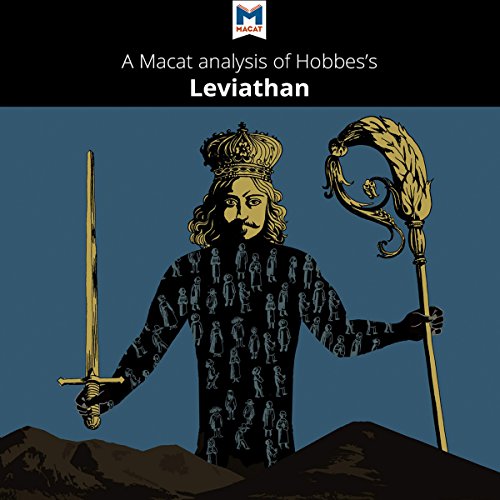
Analysis: A Macat Analysis of Thomas Hobbes' Leviathan
- By: Jeremy Kleidosty, Ian Jackson
- Narrated by: Macat.com
- Length: 1 hr and 39 mins
- Unabridged
-
Overall6
-
Performance5
-
Story5
First published in 1651, Leviathan drove important discussions about where kings get their authority to rule and what those kings must, in turn, do for their people. This is known as the "social contract". Thomas Hobbes wrote the book while exiled from his native England following the English Civil War that unseated King Charles I. In the face of England's radical - if temporary - rejection of its monarchy, Hobbes wanted to explain why it was important to have a strong central government, which in his time meant having a sovereign at its head.
Preview -
Analysis: A Macat Analysis of Thomas Hobbes' Leviathan
- Narrated by: Macat.com
- Length: 1 hr and 39 mins
- Release date: 06-06-16
- Language: English
Failed to add items
Sorry, we are unable to add the item because your shopping cart is already at capacity.Add to basket failed.
Please try again laterAdd to wishlist failed.
Please try again laterRemove from wishlist failed.
Please try again laterAdding to library failed
Please try againFollow podcast failed
Unfollow podcast failed
£6.57 or free with trial. Auto-renews at £5.99/month after trial. See eligibility.
-
-

-
Analysis: A Macat Analysis of Benedict Anderson's Imagined Communities
- By: Jason Xidias
- Narrated by: Macat.com
- Length: 2 hrs and 8 mins
- Unabridged
-
Overall4
-
Performance2
-
Story2
Some people think nationhood is as old as civilization itself. But for anthropologist, historian, and political scientist Benedict Anderson, nation and nationalism are products of the communication technology of the era known as the modern age, which began in 1500. After the invention of the printing press around 1440, common local languages gradually replaced Latin as the language of print. Ordinary people could now share ideas of their own.
Preview -
Analysis: A Macat Analysis of Benedict Anderson's Imagined Communities
- Narrated by: Macat.com
- Length: 2 hrs and 8 mins
- Release date: 19-07-16
- Language: English
Failed to add items
Sorry, we are unable to add the item because your shopping cart is already at capacity.Add to basket failed.
Please try again laterAdd to wishlist failed.
Please try again laterRemove from wishlist failed.
Please try again laterAdding to library failed
Please try againFollow podcast failed
Unfollow podcast failed
£7.75 or free with trial. Auto-renews at £5.99/month after trial. See eligibility.
-
-

-
Analysis: A Macat Analysis of Jared M. Diamond's Collapse: How Societies Choose to Fail or Survive
- By: Rodolfo Maggio
- Narrated by: Macat.com
- Length: 2 hrs and 8 mins
- Unabridged
-
Overall2
-
Performance1
-
Story1
In his 2005 book Collapse: How Societies Choose to Fail or Succeed (also subtitled How Societies Choose to Fail or Survive), author and multifaceted US scholar Jared M. Diamond clearly identifies five major factors that he says determine the success or failure of all human societies in all periods of history. Having first asked why societies collapse, Diamond explores various examples of failed societies, from the Norsemen of Scandinavia, who colonized Greenland in the early 10th century, to the 18th-century inhabitants of Easter Island.
Preview -
Analysis: A Macat Analysis of Jared M. Diamond's Collapse: How Societies Choose to Fail or Survive
- Narrated by: Macat.com
- Length: 2 hrs and 8 mins
- Release date: 19-07-16
- Language: English
Failed to add items
Sorry, we are unable to add the item because your shopping cart is already at capacity.Add to basket failed.
Please try again laterAdd to wishlist failed.
Please try again laterRemove from wishlist failed.
Please try again laterAdding to library failed
Please try againFollow podcast failed
Unfollow podcast failed
£7.75 or free with trial. Auto-renews at £5.99/month after trial. See eligibility.
-
-

-
Analysis: A Macat Analysis of Mahmood Mamdani's Citizen and Subject
- By: Meike de Goede
- Narrated by: Macat.com
- Length: 1 hr and 58 mins
- Unabridged
-
Overall1
-
Performance0
-
Story0
In Citizen and Subject, Ugandan academic and author Mahmood Mamdani challenges dominant views about the crisis of postcolonial Africa. Many studies emphasize that the problems the continent faces are homegrown - the consequence of poor government, widespread corruption, and other local factors. Citizen and Subject challenged these ideas. It argues that the current crisis has come about because of the institutional legacy of colonialism.
Preview -
Analysis: A Macat Analysis of Mahmood Mamdani's Citizen and Subject
- Narrated by: Macat.com
- Length: 1 hr and 58 mins
- Release date: 06-06-16
- Language: English
Failed to add items
Sorry, we are unable to add the item because your shopping cart is already at capacity.Add to basket failed.
Please try again laterAdd to wishlist failed.
Please try again laterRemove from wishlist failed.
Please try again laterAdding to library failed
Please try againFollow podcast failed
Unfollow podcast failed
£6.57 or free with trial. Auto-renews at £5.99/month after trial. See eligibility.
-
-
-

-
Analysis: A Macat Analysis of Max Weber's The Protestant Ethic and the Spirit of Capitalism
- By: Sebastián G Guzmán, James Hill
- Narrated by: Macat.com
- Length: 1 hr and 45 mins
- Unabridged
-
Overall5
-
Performance4
-
Story4
Max Weber was the first to identify beliefs and practices that influenced economic behavior. He found Catholics generally less motivated to succeed in business than Protestants because of their religious belief that everyone could achieve salvation. The branch of Protestants known as Calvinists, on the other hand, believed God determined everyone's salvation status before birth. Nothing a person might do on earth could save a soul marked for damnation.
-
-
Straightforward and gets you thinking
- By Dave Cook on 22-07-17
Preview -
Analysis: A Macat Analysis of Max Weber's The Protestant Ethic and the Spirit of Capitalism
- Narrated by: Macat.com
- Length: 1 hr and 45 mins
- Release date: 20-07-16
- Language: English
Failed to add items
Sorry, we are unable to add the item because your shopping cart is already at capacity.Add to basket failed.
Please try again laterAdd to wishlist failed.
Please try again laterRemove from wishlist failed.
Please try again laterAdding to library failed
Please try againFollow podcast failed
Unfollow podcast failed
£6.57 or free with trial. Auto-renews at £5.99/month after trial. See eligibility.
-
-

-
An Analysis of Robert O. Keohane's After Hegemony
- By: Ramon Pacheco Pardo
- Narrated by: Macat.com
- Length: 1 hr and 43 mins
- Unabridged
-
Overall1
-
Performance1
-
Story1
The ideas set out by American international relations expert Robert O. Keohane in 1984's After Hegemony have had a huge impact on policy debates over the last three decades, both in political circles and in academia. Hegemony means the social, cultural, ideological or economic influence of one dominant group. Contemplating a post-Cold War world half a decade before the Berlin Wall fell, Keohane asks if international cooperation can survive in the absence of a single superpower.
-
-
Very bad analysis
- By ayman on 22-09-17
Preview -
An Analysis of Robert O. Keohane's After Hegemony
- Narrated by: Macat.com
- Length: 1 hr and 43 mins
- Release date: 06-06-16
- Language: English
Failed to add items
Sorry, we are unable to add the item because your shopping cart is already at capacity.Add to basket failed.
Please try again laterAdd to wishlist failed.
Please try again laterRemove from wishlist failed.
Please try again laterAdding to library failed
Please try againFollow podcast failed
Unfollow podcast failed
£6.57 or free with trial. Auto-renews at £5.99/month after trial. See eligibility.
-
-

-
A Macat Analysis of Alexis De Tocqueville's Democracy in America
- By: Elizabeth Morrow
- Narrated by: Macat.com
- Length: 1 hr and 29 mins
- Unabridged
-
Overall1
-
Performance1
-
Story1
Having witnessed some negative effects of democratic revolutions in his native France, Tocqueville visited America in 1831 to see what a functioning republic looked like. His main concerns were that democracy could make people too dependent on the state and that minority voices might not be heard - a problem he termed "The Tyranny of the Majority." By examining America thoroughly, Tocqueville hoped to show how a democratic system could avoid these pitfalls.
Preview -
A Macat Analysis of Alexis De Tocqueville's Democracy in America
- Narrated by: Macat.com
- Length: 1 hr and 29 mins
- Release date: 22-06-16
- Language: English
Failed to add items
Sorry, we are unable to add the item because your shopping cart is already at capacity.Add to basket failed.
Please try again laterAdd to wishlist failed.
Please try again laterRemove from wishlist failed.
Please try again laterAdding to library failed
Please try againFollow podcast failed
Unfollow podcast failed
£5.98 or free with trial. Auto-renews at £5.99/month after trial. See eligibility.
-
-

-
A Macat Analysis of Elizabeth F. Loftus's Eyewitness Testimony
- By: William J. Jenkins
- Narrated by: Macat.com
- Length: 1 hr and 25 mins
- Unabridged
-
Overall1
-
Performance1
-
Story1
Elizabeth Loftus's 1979 work, Eyewitness Testimony, explains why people sometimes remember events inaccurately, and how this simple fact has a profound impact on the criminal justice system. Eyewitness accounts, which are often used in criminal trials, can be very persuasive to both judges and juries. Yet these accounts are based on memories that are not always reliable, meaning that suspects may be misidentified or wrongfully convicted.
Preview -
A Macat Analysis of Elizabeth F. Loftus's Eyewitness Testimony
- Narrated by: Macat.com
- Length: 1 hr and 25 mins
- Release date: 27-06-16
- Language: English
Failed to add items
Sorry, we are unable to add the item because your shopping cart is already at capacity.Add to basket failed.
Please try again laterAdd to wishlist failed.
Please try again laterRemove from wishlist failed.
Please try again laterAdding to library failed
Please try againFollow podcast failed
Unfollow podcast failed
£5.98 or free with trial. Auto-renews at £5.99/month after trial. See eligibility.
-
-

-
Analysis: A Macat Analysis of G. E. M. Anscombe's "Modern Moral Philosophy"
- By: Jonny Blamey, Jon Thompson
- Narrated by: Macat.com
- Length: 1 hr and 36 mins
- Unabridged
-
Overall0
-
Performance0
-
Story0
In her 1958 article "Modern Moral Philosophy", British philosopher Elizabeth (G. E. M.) Anscombe does nothing less than challenge the very foundations of moral philosophy, the discipline that tries to understand right and wrong action. The article sets out three main ideas. First, that moral philosophy should not be explored until a philosophy of psychology is already in place. Second, that philosophers who do not believe in God should not use ideas about "obligation" and "duty".
Preview -
Analysis: A Macat Analysis of G. E. M. Anscombe's "Modern Moral Philosophy"
- Narrated by: Macat.com
- Length: 1 hr and 36 mins
- Release date: 30-06-16
- Language: English
Failed to add items
Sorry, we are unable to add the item because your shopping cart is already at capacity.Add to basket failed.
Please try again laterAdd to wishlist failed.
Please try again laterRemove from wishlist failed.
Please try again laterAdding to library failed
Please try againFollow podcast failed
Unfollow podcast failed
£6.57 or free with trial. Auto-renews at £5.99/month after trial. See eligibility.
-
-

-
Analysis: A Macat Analysis of Kenneth Waltz's Theory of International Politics
- By: Macat. .com
- Narrated by: Macat.com
- Length: 1 hr and 56 mins
- Unabridged
-
Overall1
-
Performance1
-
Story1
Kenneth Waltz's Theory of International Politics created a "scientific revolution" in international relations, starting two major debates. In the 1980s it defined the controversy between the neorealists, who believed that competition between states was inevitable, and the neoliberals, who believed that states could cooperate with each other. As the debate wound down with the end of the Cold War in the 1990s, a second more fundamental debate began.
Preview -
Analysis: A Macat Analysis of Kenneth Waltz's Theory of International Politics
- Narrated by: Macat.com
- Length: 1 hr and 56 mins
- Release date: 06-06-16
- Language: English
Failed to add items
Sorry, we are unable to add the item because your shopping cart is already at capacity.Add to basket failed.
Please try again laterAdd to wishlist failed.
Please try again laterRemove from wishlist failed.
Please try again laterAdding to library failed
Please try againFollow podcast failed
Unfollow podcast failed
£6.57 or free with trial. Auto-renews at £5.99/month after trial. See eligibility.
-
-

-
Analysis: A Macat Analysis of Max Weber's Politics as a Vocation
- By: Macat.com
- Narrated by: Macat.com
- Length: 1 hr and 48 mins
- Unabridged
-
Overall1
-
Performance1
-
Story0
Politics as a Vocation examines what makes good political leaders and explores the effects of political action on modern societies. On one level it summarizes the political scholarship of one of the founding fathers of social science. On another it reflects a leading German academic and political activist's practical concerns about the future at a time of great volatility following defeat in World War I.
Preview -
Analysis: A Macat Analysis of Max Weber's Politics as a Vocation
- Narrated by: Macat.com
- Length: 1 hr and 48 mins
- Release date: 06-06-16
- Language: English
Failed to add items
Sorry, we are unable to add the item because your shopping cart is already at capacity.Add to basket failed.
Please try again laterAdd to wishlist failed.
Please try again laterRemove from wishlist failed.
Please try again laterAdding to library failed
Please try againFollow podcast failed
Unfollow podcast failed
£6.57 or free with trial. Auto-renews at £5.99/month after trial. See eligibility.
-
-

-
A Macat Analysis of Burton G. Malkiel's A Random Walk Down Wall Street: The Time-Tested Strategy for Successful Investing
- By: Nick Burton
- Narrated by: Macat.com
- Length: 1 hr and 55 mins
- Unabridged
-
Overall0
-
Performance0
-
Story0
Since it was first published in 1973, A Random Walk Down Wall Street has been a highly influential best seller. Burton G. Malkiel demolishes the idea that investment "experts" can predict stock price changes and thereby "beat the market." With all available information that could affect the value of a company's shares known almost instantly to all investors, Malkiel says, shares quickly find the price that reflects that information. This is known as the efficient market hypothesis.
Preview -
A Macat Analysis of Burton G. Malkiel's A Random Walk Down Wall Street: The Time-Tested Strategy for Successful Investing
- Narrated by: Macat.com
- Length: 1 hr and 55 mins
- Release date: 26-07-16
- Language: English
Failed to add items
Sorry, we are unable to add the item because your shopping cart is already at capacity.Add to basket failed.
Please try again laterAdd to wishlist failed.
Please try again laterRemove from wishlist failed.
Please try again laterAdding to library failed
Please try againFollow podcast failed
Unfollow podcast failed
£6.57 or free with trial. Auto-renews at £5.99/month after trial. See eligibility.
-
-

-
Analysis: A Macat Analysis of Ferdinand de Saussure's Course in General Linguistics
- By: Laura E. B. Key, Brittany Pheiffer Noble
- Narrated by: Macat.com
- Length: 1 hr and 52 mins
- Unabridged
-
Overall1
-
Performance1
-
Story1
Ferdinand de Saussure's Course in General Linguistics was first published in 1916, three years after his death. The book aims to explain Saussure's theory that all languages share an underlying structure, and that this underlying structure is the same, regardless of historical or cultural context. Although the book marked a break with the traditional, history-focused study of linguistics of the time, Saussure still uses examples based on more traditional studies.
Preview -
Analysis: A Macat Analysis of Ferdinand de Saussure's Course in General Linguistics
- Narrated by: Macat.com
- Length: 1 hr and 52 mins
- Release date: 21-07-16
- Language: English
Failed to add items
Sorry, we are unable to add the item because your shopping cart is already at capacity.Add to basket failed.
Please try again laterAdd to wishlist failed.
Please try again laterRemove from wishlist failed.
Please try again laterAdding to library failed
Please try againFollow podcast failed
Unfollow podcast failed
£6.57 or free with trial. Auto-renews at £5.99/month after trial. See eligibility.
-
-
-
A Macat Analysis of Richard J. Evans's In Defense of History
- By: Nicholas Piercey, Tom Stammers
- Narrated by: Macat.com
- Length: 2 hrs and 2 mins
- Unabridged
-
Overall1
-
Performance1
-
Story1
What is history? In his 2001 book In Defence of History, British historian Richard J. Evans debates the very nature of the subject. Certain thinkers known as postmodernists consider history to be not very far removed from a work of fiction, something based on a scholar's own interpretation of the past. Evans, however, argues that historians do not have free reign. Rather, they are constrained and enabled by the nature of the surviving evidence.
Preview -
A Macat Analysis of Richard J. Evans's In Defense of History
- Narrated by: Macat.com
- Length: 2 hrs and 2 mins
- Release date: 01-07-16
- Language: English
Failed to add items
Sorry, we are unable to add the item because your shopping cart is already at capacity.Add to basket failed.
Please try again laterAdd to wishlist failed.
Please try again laterRemove from wishlist failed.
Please try again laterAdding to library failed
Please try againFollow podcast failed
Unfollow podcast failed
£7.75 or free with trial. Auto-renews at £5.99/month after trial. See eligibility.
-