• Jannik Sinner and the Problem the ATP Has Not Solved
    May 7 2026

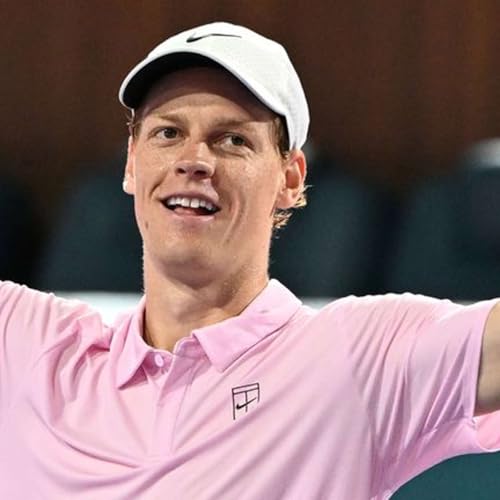
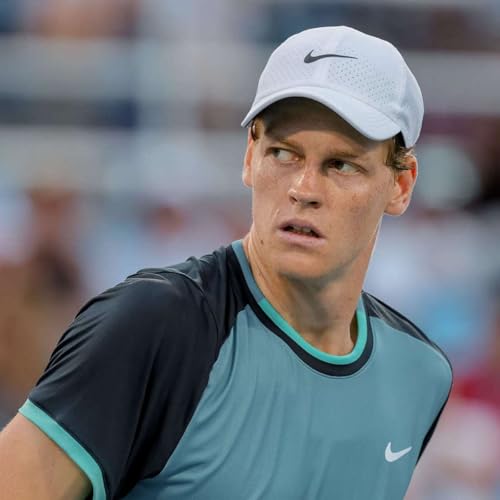
    Jannik Sinner’s height is part of the story, but it is not the explanation. In this episode, Alvin and Torrey look at why Sinner has become such a difficult structural problem for the ATP: he combines elite movement, early ball-striking, return pressure, improved serving, and pattern discipline in a way that takes away an opponent’s preferred solutions.

    The central tactical breakdown focuses on Alexander Zverev. Sinner does not simply overpower Zverev; he attacks the movement relationship between Zverev’s backhand, forehand recovery, and court position. Once Zverev is forced into defensive open-stance backhands, Sinner can go behind him, change line, drop, or move forward before Zverev ever gets back into his preferred rhythm.

    The episode also looks ahead to Roland Garros and the profile of player who may eventually trouble Sinner: big enough to serve and hit through him, quick enough to move with him, and convicted enough to play first-strike tennis before Sinner starts solving the match. The final section turns to Hailey Baptiste’s Madrid win over Aryna Sabalenka, highlighting why Baptiste’s craft, touch, forehand shape, and clay-court comfort make the result more meaningful than a one-off upset.

    Send us Fan Mail

    Show More Show Less
    1 hr and 23 mins
  • Rafael Jódar and the ATP’s Next Tactical Separator
    May 2 2026

    Rafael Jódar has quickly moved from interesting young player to serious ATP prospect, but the reason is not simply his size or power. Alvin and Patrick break down why Jódar’s game already looks unusually mature: a clean backhand return, controlled rally shape, natural movement, and the ability to build points without redlining.


    The discussion compares Jódar with João Fonseca, Jakub Mensik, and Arthur Fils, focusing on the difference between raw shot-making and repeatable point construction. Patrick makes the strongest case for Jódar as a future top-tier ATP force, while Alvin keeps the projection grounded: Jódar belongs in the future-facing group, but Grand Slam relevance still depends on durability, adaptation, and best-of-five stamina.


    The episode also places Jódar within the larger Sinner-Alcaraz evolution. The next wave of players grew up watching that model, and Jódar may be one of the first prospects whose game reflects it with enough tactical clarity to eventually challenge it.

    Send us Fan Mail

    Show More Show Less
    1 hr and 5 mins
  • Chris Eubanks Explains What Tennis Fans Get Wrong About the Pro Level
    Apr 24 2026

    This is how pro tennis actually works.

    Former ATP Top 30 player Chris Eubanks breaks down:

    • Why players don’t “just play bad”
    • What separates Top 10 from Top 50
    • How scouting reports actually work on tour
    • Why fans misunderstand players like Medvedev and Ben Shelton

    If you’ve ever watched tennis and felt like you were missing something—this is the explanation.

    Send us Fan Mail

    Show More Show Less
    1 hr and 12 mins
  • Ben Shelton’s Clay Evolution and Arthur Fils’ Pattern Identity
    Apr 20 2026

    This episode examines a significant developmental moment for two of the ATP Tour’s emerging contenders: Ben Shelton and Arthur Fils. Shelton’s title in Munich represents more than a milestone—it reflects meaningful progress in his ability to construct points on clay. The discussion focuses on his improved backhand stability, more disciplined rally tolerance, and the emergence of repeatable serve-plus-one patterns that translate beyond faster surfaces.


    Arthur Fils’ performance in Barcelona is framed as confirmation rather than breakthrough. His willingness to engage in forehand-to-forehand exchanges, even against the pace of Andrey Rublev, highlights a growing sense of pattern ownership. This is positioned as a critical step in developing a sustainable identity on clay, where point construction and shot tolerance are essential.


    The episode also contextualizes the broader developmental landscape, including younger players such as João Fonseca and Rafael Jodar, emphasizing the physical and structural demands of consistency at the tour level. On the WTA side, Elena Rybakina’s Stuttgart title reinforces the effectiveness of first-strike tennis, particularly in navigating matchup dynamics against elite defenders.

    Send us Fan Mail

    Show More Show Less
    1 hr and 23 mins
  • Jannik Sinner vs Carlos Alcaraz: Execution, Margin, and the Next Phase of a Rivalry
    Apr 13 2026

    This episode examines the latest installment in the evolving rivalry between Jannik Sinner and Carlos Alcaraz following Sinner’s straight-sets win in Monte Carlo. Rather than isolating the result, the discussion frames the matchup as part of a broader tactical progression—one defined by incremental adaptation, tightening margins, and increasing familiarity between two elite players.

    At the center of the analysis is the contrast between Sinner’s consistency and Alcaraz’s variability. Sinner’s baseline “floor” continues to apply sustained pressure, particularly through second-serve returns and disciplined court positioning. Alcaraz, while still generating more explosive opportunities, struggled to consistently complete attacking patterns, leaving openings for Sinner’s counterpunching. Over time, these small inefficiencies compound.

    Looking ahead, the episode positions the remainder of the clay season as a critical testing ground. For Alcaraz, the adjustments are clear: improve first-serve management, finish patterns with greater clarity, and redistribute risk within rallies. With Roland Garros approaching, the rivalry is entering a phase where execution—not talent—is becoming the deciding factor.

    Send us Fan Mail

    Show More Show Less
    44 mins
  • Belinda Bencic’s Backhand and the Real Demands of Clay Court Tennis
    Apr 6 2026

    Clay court tennis is often described as slower, but that simplification misses the deeper reality: the surface fundamentally reshapes how players manage space, construct points, and move through contact. In this episode, we break down the technical and tactical adjustments required to transition effectively from hard courts to clay.

    A central focus is movement—specifically the difference between sliding into the ball versus sliding after contact—and how this distinction impacts balance, recovery, and court positioning. Using Charleston as a reference point, we analyze players like Jessica Pegula and Madison Keys, whose games highlight the challenges of adapting to clay’s spatial demands.

    The episode also features a detailed examination of Belinda Bencic’s backhand. While biomechanically unconventional, her open-stance execution demonstrates how timing, efficiency, and discipline can outweigh traditional technique. We close by discussing Iga Świątek’s coaching change and what it could signal for the evolution of her already dominant clay-court identity.

    Send us Fan Mail

    Show More Show Less
    1 hr and 15 mins
  • Jannik Sinner and the New Tactical Standard in Men’s Tennis
    Mar 30 2026

    Jannik Sinner’s Miami title completes a dominant Sunshine Double and reinforces his position—alongside Carlos Alcaraz—as one of the defining forces in men’s tennis. This episode examines not just the results, but the underlying mechanics of Sinner’s success: a blend of precise ball striking, improved serve efficiency, and real-time tactical adaptability that is reshaping what it takes to compete at the top level.

    The discussion centers on the increasing difficulty of constructing points against Sinner. Beating him now requires a layered approach—early redirection, controlled variation of pace, and well-timed net pressure. Even then, success depends on executing all three simultaneously. This framework helps explain why players like Alexander Zverev, with their physical durability and completeness, are among the few credible challengers.

    Beyond the top tier, the episode situates Sinner within a broader tour structure. A clear hierarchy is emerging: two front-runners, a veteran group still capable of disruption, and a tightening middle tier led by rising players like Arthur Fils. Looking ahead to clay, the conversation highlights the pressure dynamics shaping the next phase of the season.

    Send us Fan Mail

    Show More Show Less
    1 hr and 20 mins
  • Coco Gauff, Aryna Sabalenka, and the Pressure of First-Strike Tennis
    Mar 29 2026

    This episode examines the evolving matchup between Coco Gauff and Aryna Sabalenka following Sabalenka’s Miami Open victory, using it as a lens to understand broader trends in the women’s game. Rather than framing Gauff as a player limited by technical inconsistencies, we position her as a uniquely constructed elite—an “overachieving counterpuncher” whose competitive resilience and adaptability allow her to consistently outperform the sum of her individual tools.

    In contrast, Sabalenka’s early-season form establishes her as the clear No. 1 force, defined by power, consistency, and improved composure. Yet this matchup reveals an asymmetric dynamic: Sabalenka must dictate and finish points, while Gauff thrives by extending rallies and creating discomfort. This places a subtle but meaningful psychological burden on Sabalenka, particularly in high-pressure moments.

    The conversation also explores the increasing depth of the WTA field, the instability beneath the top tier, and the tactical evolution of the modern game—especially the growing importance of return quality and the challenges of building reliable serve-plus-one patterns.

    Send us Fan Mail

    Show More Show Less
    1 hr and 15 mins