• E24 - Beyond the 90-Day Myth: Navigating Systemic Leadership Transitions with Kevin Baker
    Jun 11 2026
    Transforming International School Leadership: Insights from Kevin Baker’s White Paper on TransitionsExplore innovative strategies to improve leadership transitions in international schools. Kevin Baker, an esteemed education leader, shares his research-backed insights, practical frameworks, and the importance of a systemic approach to leadership change—a critical conversation for educators committed to continuity, stability, and growth.Main Topics:The white paper on leadership transitions and key findingsDesigning effective transition protocols and policiesThe systemic nature of transition issues and overcoming the mythsThe importance of long-term, year-two support for leadersPractical tools: 90-day and two-year transition modelsThe role of boards, school policies, and culture in successful transitionsThe power of coaching and tailored support for leadersLatest research, global replication efforts, and future initiativesIn this episode:Kevin Baker details his extensive research, including a validated global instrument on leadership transitions, involving over 200 leaders across 74 schoolsDiscussions on how systemic issues, not individual failures, often cause transition challengesThe myth of short 90-day transitions and the proposed two-year modelThe alarming statistic that over 80% of international school headships end prematurelyPractical steps for schools, boards, and leadership teams to prioritize transition planningKevin’s upcoming presentations and collaborative efforts for a global understanding of leadership continuityTimestamps:00:00 - Introduction to leadership transitions and their overlooked importance02:19 - Kevin Baker’s background and the significance of his white paper 03:36 - The future of international schools: vision and global themes 05:08 - Kevin’s leadership journey and lessons learned 07:35 - How leadership approaches have shifted from technical to relational and authentic 10:18 - The AAIE International Leaders and Transition Study: methodology and insights 14:24 - Key findings: the paradox of transitions exposing underlying systemic issues 17:56 - The critical importance of systemic design over individual leader blame 20:21 - Why the 90-day transition model falls short; advocating for a two-year approach 22:06 - The vital role of communication, policies, and culture in transitions 24:46 - Creating a culture of support: the impact on school stability and reputation 29:37 - The next steps: global studies, board engagement, and policy development 34:03 - Practical tools for leaders: the 30-60-90 day plan and expectations setting 38:23 - Coaching and tailored support: Kevin’s offerings and success stories 43:39 - The human and organizational costs of poor transitions 45:36 - Why this research is a “white space” and how schools can implement change 48:19 - The importance of year-two support and ongoing evaluation 54:48 - Final thoughts: collaborative efforts to raise the standard in leadership transitionsResources & Links:White Paper: Leadership Transitions in International SchoolsWilliam Bridges’ “Managing Transitions”Kevin Baker on LinkedInAmerican International School of GuangzhouConnect with Kevin Baker:LinkedInEmail: kbaker@aisgz.orgAdditional notes:Kevin emphasizes that leadership transition is a systemic rather than an individual issueThe importance of school policies, culture, and long-term planning cannot be overstatedThe upcoming global study aims to understand regional differences and promote best practices worldwideSchools are encouraged to view leadership transition as a strategic process, not merely an operational lapseThis episode underscores the urgent need for deliberate, research-informed transition practices in international schools to safeguard leadership stability, maximize impact, and elevate the sector overall.
    Show More Show Less
    40 mins
  • E23 - The X Factor - What Matters Most in Learning & Leading - Dr. Tim Stuart
    May 21 2026

    In this episode, Dr. Tim Stuart shares his visionary insights on the future of international education, emphasizing the importance of global mindset, personalized learning, and the role of AI. We explore his thoughts on leadership, school innovation, and the essential qualities that make a great school in today's ever-changing landscape.

    Main Points

    • Tim's blue sky vision for international schools focusing on global citizenship, compassion, and relevance by 2030

    • The importance of helping students understand their place in the world and fostering a global mindset

    • How international schools can be at the forefront of educational innovation by rethinking traditional models

    • The role of AI in personalized learning and its potential to revolutionize education

    • The critical qualities of effective schools: high-quality teachers over flashy infrastructure

    • The evolving diversity in international schools, moving towards more inclusivity and local integration

    • Search Associates' initiatives to diversify staffing and leadership to reflect changing student demographics

    • The "X factor" in hiring: identifying candidates with hidden potential and the ability to believe in students and staff

    • Leadership qualities needed today: vision, courage, humility, and strong communication skills

    • The significance of building trust and relationships, especially in crisis situations

    • Personal joy and challenges in educational leadership: making a difference vs. safeguarding children

    • Strategies for internal career advancement and attracting diverse talent to leadership roles

    • Upcoming travel and conferences, highlighting the importance of staying connected and informed in global education

    Timestamps:

    03:00 - Dr. Tim Stuart's visionary outlook for international schools

    05:50 - Rethinking education to prepare children for a changing world

    07:32 - The transformative potential of AI in personalized learning

    11:07 - Can great schools exist without expensive infrastructure?

    14:15 - The importance of hiring high-quality teachers and the "X factor" in candidates

    19:44 - Essential qualities of effective leadership today: vision, courage, humility, communication

    24:08 - Personal joys and challenges faced in educational roles

    27:18 - The importance of fostering confidence and belief in prospective educators

    29:25 - The shift towards diversity and inclusion in international schools

    32:58 - Upcoming commitments, conferences, and staying engaged in global education

    34:07 - How to connect with Tim Stuart and stay updated on leadership opportunities

    Resources & Links:

    • Search Associates

    • AI in Education: Opportunities and Challenges

    • LinkedIn - Tim Stuart

    • AAIE 2020 Conference

    • ECIS Conference Lisbon

    Closing

    This conversation with Dr. Tim Stuart offers a compelling glimpse into the future of international education—highlighting the importance of innovation, leadership, and inclusivity. Whether you're an educator, leader, or passionate stakeholder in global schooling, there's valuable insight here to inspire your practice and mindset.


    Show More Show Less
    36 mins
  • E21 - Unlocking Leadership: Insights from Nick Haywood on Change, Connection, and Growth
    May 13 2026

    In this episode, international school leader and change expert Nick Haywood shares his innovative frameworks and personal habits that foster strong relationships, resilience, and effective leadership in complex environments. Tune in to explore practical strategies for cultivating connection before content and leading through change.

    Key Topics

    • The importance of relationships and connection in leadership across education, sports, and business.
    • The "five pillar" framework for leadership: The Vibe, Brave Space, Collaboration, Next, and Balance.
    • Developing habits for effective leadership: morning routines, connection practices, and self-audits.
    • The significance of managing energy over time management, especially in a VUCA world.
    • Strategies for creating horizontal relationships to build trust and engagement with students and teams.
    • Practical tools like the "8 Before 8" morning routine and "Triple S" (See, Smile, Spud) relationship-building technique.
    • Insights into Nick’s entrepreneurial journey with his Change Consultancy and upcoming projects, including a co-authored book "Wolf Logic".
    • The power of vulnerability, authenticity, and accountability in leadership.

    Timestamps

    (00:00) - Introduction to Nick Haywood and episode overview

    (02:24) - Nick’s perspective on blue sky vision of international schools

    (04:37) - Creating a growth mindset through conditions and environment

    (05:07) - The origin and evolution of Nick's Change Consultancy

    (09:32) - Core themes: Relationship building, curiosity, and the five pillar framework

    (11:30) - Examples of diverse clients and industries

    (14:07) - The influence of positive psychology and research in leadership frameworks

    (16:17) - Connection before content: Why relationships matter with students and teams

    (18:56) - Habits for leaders: The importance of routines around presence, connection, and self-awareness

    (20:58) - Managing energy vs. managing time in leadership

    (23:40) - Future trends: process vs. results, leaning into strengths, and the importance of trust

    (25:49) - Practical routines: The "8 Before 8" morning habits

    (30:22) - Developing personalized routines: BMW (Breathing, Movement, Water)

    (36:37) - Building trust through simple rituals: "See, Smile, Spud" and horizontal relationships

    (39:29) - The "3 H's": Help, Hug, and Hear for genuine connection

    (41:17) - Nick's upcoming projects: Ironman, travelling, and co-authoring "Wolf Logic"

    (44:13) - How to connect with Nick Haywood directly

    Resources & Links

    Nick Haywood's Website

    Email Nick Haywood

    Wolf Logic Book (Upcoming)

    LinkedIn


    Show More Show Less
    29 mins
  • E22 - How Leadership Turns Chaos into Coherence During International Crises - Iran War Update
    Apr 30 2026

    In this episode, Daniel Mendes shares firsthand leadership lessons learned during an urgent evacuation amid conflict in the Middle East. Discover how crises impact leadership decisions, the importance of relationships and communication, and practical tips for leading with coherence in turbulent times.

    Main topics:

    • The importance of coherence and consistency in leadership during crises

    • Building and maintaining trust through relationships and communication

    • Practical leadership moves under pressure: decision-making, routines, and frameworks

    • The power of belonging and emotional regulation as resilience tools

    • Ethical considerations with technology and assessment during disruptions

    In this episode:

    • Daniel Mendes recounts the moment of evacuation during bombings and how leadership shifted in real time

    • Insights on how international schools manage uncertain environments and support communities

    • Strategies for replacing certainty with coherence and creating a scalable rhythm for emotional regulation

    • The role of relationships and belonging as leadership infrastructure in crisis

    • Lessons learned about communication, trust, and organizational resilience under fire

    Timestamps:

    00:00 - Welcome and episode overview: leadership in crisis during war in the Middle East

    00:17 - The importance of emotional decision-making in emergencies

    01:36 - Real-world example: evacuation from Doha amidst bombs

    02:34 - How leadership maintained calm and coherence during chaos

    03:39 - Acknowledging key team members and community support

    04:20 - Crisis leadership: maintaining relationships, clear communication, and consistency

    05:13 - The human side of crisis: supporting families and community networks

    06:21 - Transitioning from anxiety to safety: sensing when the crisis stabilizes

    07:46 - The role of asynchronous learning and flexibility during evacuation

    08:26 - Building resilience through relationships: lessons from Devin Pratt’s episode

    09:09 - Core leadership moves: replacing certainty with coherence, establishing routines

    10:28 - The importance of flexible frameworks and avoiding chaos or control

    12:11 - Communication as a mirror: clarity, emotion, and the impact of messages during attacks

    13:06 - Continuing leadership amidst danger: faculty meetings during bomb threats

    14:28 - The ethics of technology and assessment during crisis conditions

    15:24 - Redesigning evidence of learning, emphasizing performance, and trust

    16:57 - Key leadership takeaways: trust, coherence, and belonging in unstable contexts

    17:51 - Gratitude and reflections: community support, trust investment, and moving forward

    19:10 - Personal reflections: navigating ongoing uncertainty with family

    19:59 - Final thoughts: the podcast as a tool for connection, resilience, and professional growth

    20:28 - Closing: humanity in leadership, gratitude, and community care

    This episode illustrates that strong leadership in crisis is rooted in trust, coherence, and the capacity to adapt swiftly. Whether navigating war, natural disasters, or organizational upheaval, these lessons highlight the human side of leadership and the importance of community support.


    Show More Show Less
    21 mins
  • E20 - Best FOR the world: Leading Schools in a Liminal Time - Tim Carr
    Feb 16 2026

    In this episode, hosts, Daniel Mendes and Dan Kerr, celebrate the 20th episode of their podcast, reflecting on their journey and the insights gained from various educational leaders. They discuss the evolving purpose of education, emphasizing the importance of community enrichment and personalizing the educational experience. Tim Carr, a seasoned international education leader, shares his vision for schools as places of safety and self-discovery, advocating for a shift from traditional factory-like models to more humane learning environments. The conversation also touches on the balance of courage and humility in leadership, the significance of coaching, and the trends shaping the future of international education, including the need for collaboration and community engagement.

    Takeaways

    • Education should enrich both the school community and the wider community.
    • Celebrating milestones helps reflect on growth and progress.
    • Building relationships is at the heart of effective education.
    • Schools should be places where everyone feels embraced and valued.
    • The phrase 'best for the world' personalizes the educational mission.
    • Courage and humility are essential qualities for effective leadership.
    • Coaching can lead to significant personal and professional growth.
    • International schools have the freedom to innovate and collaborate.
    • Education should focus on addressing global challenges and community needs.
    • Seeing others thrive is the ultimate reward for educators.

    Sound Bites

    "We're in 88 different countries."

    "It's all about relationships."

    "A place where everyone feels embraced."

    Chapters

    00:00 The Purpose of Education: Enriching Communities

    02:56 Celebrating Milestones: Reflections on the Podcast Journey

    05:52 Blue Sky Vision: Rethinking the Role of Schools

    09:01 Best for the World: Personalizing Education

    12:08 Courage and Humility: Leading Through Challenges

    14:59 The Role of Leadership Coaching in Education

    18:00 Trends Shaping International Education

    21:08 Collaboration and Community: The Future of Schools

    23:46 Leadership Lessons: Adapting to Change

    27:04 The Impact of Education: Flourishing Communities

    30:08 Looking Ahead: Future Aspirations and Goals

    TitlesBest FOR the World: Redefining the Purpose of SchoolThe Courage-Humility Polarity: Leading in a Liminal TimeBeyond the Assembly Line: Designing More Humane Learning EnvironmentsIslands of Sanity: Finding Joy in the Future of EducationThe Learning Commons: Reciprocity as a Leadership Edge


    education, leadership, international schools, community, coaching, trends, collaboration, courage, humility, future of education


    Show More Show Less
    39 mins
  • E19 - The Science of Belonging: Moving Beyond Polarity to Safeguard Dignity-Dr. Derrick Gay
    Jan 23 2026

    In our first repeat guest on the show, Dr. Derrick Gay discusses intercultural competency—the knowledge, skills, and capacity to communicate and interact across difference with empathy and respect—as a core professional practice in international education to deepen belonging, He examines common misconceptions that reduce culture to surface-level traits, and offers a more nuanced framework for understanding how values, norms, and power operate beneath the surface, including through the cultural iceberg metaphor. The conversation also explores how schools can build staff capacity across age groups and roles, strengthen collaboration among local and international colleagues, and design structures (such as effective committees, shared language, and clear norms) that support adaptive change while sustaining dignity and respect across the community.


    Takeaways

    • Belonging is a fundamental human need that is scientifically grounded.

    • Dignity and respect should be the core values in educational organizations.

    • Intercultural competency is not just about exposure but requires understanding and adaptability.

    • Effective belonging committees should include wide range of different backgrounds, voices and perspectives..

    • The cultural iceberg metaphor helps in understanding deeper cultural norms and values.

    • Empathy should be scaffolded in educational conversations to promote understanding.

    • Professional learning should involve both local and foreign staff to enhance belonging.

    • Children are motivated to be kind and empathic; we should tap into that.

    • It's essential to create spaces for courageous conversations about cultural clashes.

    • The work of belonging is ongoing and requires commitment from all stakeholders.

    Sound bites

    • "You're wired to have this sense of belonging."
    • "Exposure is not the same as competency."
    • "My passion and my vocation are the same."

    Chapters

    00:00 The Importance of Belonging

    05:01 Navigating Change and Dignity in Education

    09:45 Adapting Approaches for Different Age Groups

    16:09 Intercultural Competency and Its Misconceptions

    22:00 Building Effective Belonging Committees

    26:00 Understanding the Cultural Iceberg

    30:02 Bridging Gaps Between Local and Foreign Staff

    35:08 Looking Ahead: Future of Belonging in Education

    Keywords

    belonging, education, intercultural competency, dignity, change management, international schools, community, belonging committees, cultural iceberg, professional learning


    Show More Show Less
    44 mins
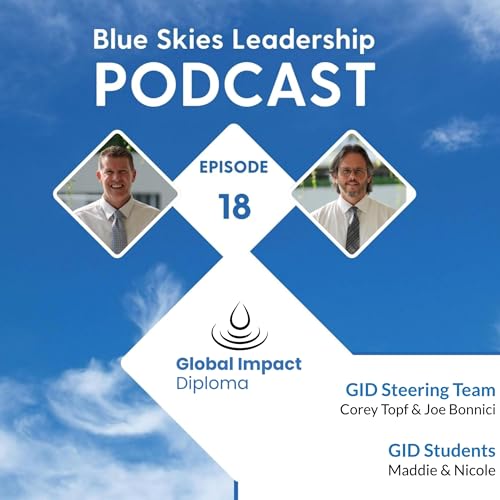
  • E18 - Beyond the Transcript - Global Impact Diploma: Designing Diplomas for Real-World Impact - Blue Skies Leadership
    Nov 10 2025

    Summary

    Our Blue Skies Leadership conversation emphasizes the urgent need for education to adapt to the pressing global challenges faced by the next generation. This episode highlights the Global Impact Diploma and the importance of equipping young people with not only theoretical knowledge but also practical skills and a problem-solving mindset to address issues like climate change, inequality, and economic uncertainty.


    How to Connect

    https://www.linkedin.com/company/global-impact-diploma/

    https://www.linkedin.com/in/corey-topf-0a062464/

    https://www.linkedin.com/in/joe-bonnici-ba894b86/

    https://www.linkedin.com/in/mendesd/

    https://www.linkedin.com/in/dan-kerr-b0a82520/


    Takeaways

    • Young people must act now, not just after school.

    • Education needs to adapt to current global challenges.

    • Addressing climate change with urgency is critical.

    • Rising inequality demands immediate attention.

    • Wars and conflicts are shaping the educational landscape.

    • A problem-solving mindset is essential for youth.

    • The next generation should feel a sense of agency.

    • Leadership skills are crucial for young people today.

    • Global economic uncertainty requires innovative solutions.

    • Education should empower youth to lead change.

    Sound bites

    • "The world feels like it's at a point where young people can't just wait."
    • "Education has to follow this shift because there's too much urgency."

    Chapters

    00:00 Introduction to the Global Impact Diploma

    00:32 Getting Involved with the Global Impact Diploma


    Show More Show Less
    39 mins
  • E17 - Empathy in Action: Dr. Dan Long on Service, Wellness, and the Heart of International Education - Blue Skies Leadership
    Oct 10 2025

    Summary

    This episode explores the vital role of international schools in fostering community engagement, service learning, and empathy among students. Dr. Dan Long discusses the importance of understanding cultural complexities, building meaningful partnerships, and prioritizing student wellness. This episode emphasizes a holistic approach to education, focusing on the development of well-rounded individuals who can contribute positively to their communities.

    Takeaways

    • We are guests in this country, and understanding our role is crucial.

    • Community engagement is a two-way street that benefits both sides.

    • Education should focus on preparing students to be effective and impactful.

    • Service learning fosters empathy and heart change in students.

    • Building meaningful partnerships with local organizations is essential.

    • Cultural complexities present both challenges and opportunities in education.

    • Prioritizing student wellness is key to their success.

    • A holistic view of education includes emotional and social development.

    • Programs must be supported by people who genuinely care about students.

      • Future initiatives should focus on community-building events and service opportunities.

      Chapters

      00:00 Understanding Our Role as Guests

      02:43 The Importance of Community Engagement

      05:33 Service and Action: Fostering Empathy

      08:19 Building Meaningful Partnerships

      11:16 Navigating Cultural Complexities

      16:04 Prioritizing Student Wellness

      19:18 Holistic Success in Education

      22:07 Looking Ahead: Future Initiatives

      Important Links

      https://www.linkedin.com/in/mendesd/ (LinkedIn Daniel Mendes)

      https://www.linkedin.com/in/dan-kerr-b0a82520/overlay/photo/ (LinkedIn Dan Kerr)

      https://www.linkedin.com/in/dan-long-8047b429/ (LinkedIn Dan Long)


    Show More Show Less
    28 mins