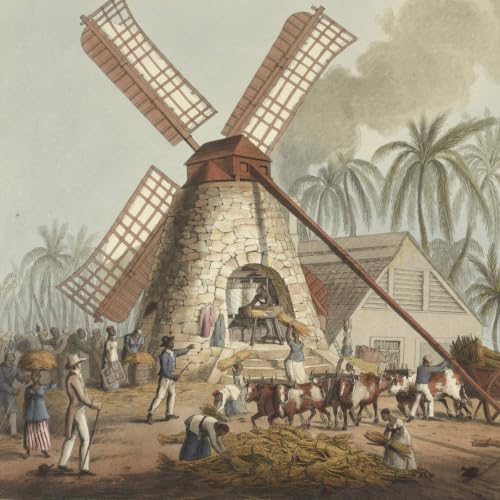
Life, Liberty, and the Pursuit of Happiness: 250 Years of the Declaration of Independence cover art

Life, Liberty, and the Pursuit of Happiness: 250 Years of the Declaration of Independence

Life, Liberty, and the Pursuit of Happiness: 250 Years of the Declaration of Independence

By: Andrew Sola and Amerikazentrum-Hamburg
Listen for free

Learn more about the Declaration of Independence for the 250-year anniversary with this interdisciplinary podcast, featuring experts from the USA and around the world. The series is produced and hosted by Dr. Andrew Sola and the Amerikazentrum, Hamburg.Andrew Sola & Amerikazentrum Social Sciences World
Episodes
  • How Did Rum Influence the Declaration of Independence?
    Jun 18 2026
    In this episode, we discuss the rum industry in connection with grievances #16 and #17 in the Declaration of Independence: "For cutting off our Trade with all parts of the world" "For imposing Taxes on us without our Consent" Topics include the following: -an explanation of rum production, from sugarcane to the finished product -the origins of sugarcane and rum production in Barbados in the early 1600s -the development of distilleries in the Colonies, particularly Massachusetts, in the late 1600s -rum consumption in the Colonies by people in cities, slave traders, fishermen, and native Americans -the use of rum as a form of payment in the triangular slave trade -the imperial mercantilist competition between British rum and French brandy -the moral and religious history of rum and alcohol consumption -the Colonial activist movements that aimed to create political change, for example, by refusing to consume products made by enslaved people or by boycotting tea -the Molasses Act of 1733 and the Sugar Act of 1763 -the rise of rum smuggling and the association between rum and piracy -the deleted passage in the Declaration condemning slavery and its connection to the rum industry -the state of the rum industry, slavery, and the abolition movement after the formation of the United States -the development of the maple syrup industry as a moral alternative to the sugar and rum industry, which was driven by the immoral institution of slavery Prof. Smith's book can be found here: [The Invention of Rum: Creating the Quintessential Atlantic Commodity](https://www.pennpress.org/9781512828184/the-invention-of-rum/) His article in Commonplace can be found here: [Where's the Pirate?](https://commonplace.online/article/wheres-the-pirate/) The cover image features a sugarcane plantation with a mill and enslaved people in Antigua.
    Show More Show Less
    1 hr and 3 mins
  • Why Did Americans Remain Loyal to King George? Revolutionary Politics in New York City
    Jun 4 2026
    "He has abdicated Government here, by declaring us out of his Protection and waging War against us." In this episodes, we explore the many faces of Loyalism in the Colonies, particularly the Loyalist stronghold of New York City. Of course, Loyalists remained under the King's protection during the war, contrary to Grievance #23 of the Declaration of Independence. Topics include the following: -a description of the different Loyalists or Tories throughout the Colonies, including the rich and poor, black and white, Native and European, male and female -the origins of the Sons of Liberty in 1765 as a result of the Stamp Act -the development of the rift between Patriots and Loyalists -misconceptions about these categories, namely that many Sons of Liberty became Loyalists, such as Joseph Allicocke and James de Lancey -an overview of the political and legislative system of New York City and the ways in which the Stamp Act and the Quartering Act affected New Yorkers' perceptions of Parliament, the King, and their own political leaders -Alexander McDougall's opposition to de Lancey's support of the Quartering Act, and his authorship of his pamphlet To the Betrayed Inhabitants of New York -Edmund Burke's advocacy for the redress of legitimate Colonial grievances in Parliament -the growing strife between Patriots and Loyalists in Manhattan and the flight of Loyalist New Yorkers to New Jersey -the return of Loyalists to New York after the Battle of Long Island and the British capture of the city at the end of 1776 -an explanation of the oaths of allegiance to the King administered in occupied New York -the flight of Loyalists from New York City after the end of the war -the fate of Loyalists who chose to stay in the new United States after the war Dr. Minty's book can be found here: [Unfriendly to Liberty: Loyalist Networks and the Coming of the American Revolution in New York City](https://www.cornellpress.cornell.edu/book/9781501769108/unfriendly-to-liberty/#bookTabs=1)
    Show More Show Less
    52 mins
  • Revolution 250: America's Independence Story at The National Archives
    May 21 2026
    In this episode we explore the Revolution 250 exhibit at The National Archives in Kew, from 24 June 2026 to 29 November 2026: [Revolution 250](https://www.nationalarchives.gov.uk/whats-on/exhibitions/revolution-250-americas-independence-story-1763-1783/) America's Independence Story 1763–1783 Britain and America. One Story, Two Nations Topics include the following: -the story of the distribution of the Declaration first around the Colonies and then around the world -a description of the National Archive's collection of early prints of the Declaration, including the extremely rare Dunlap Broadsides -the fascinating stories of how these prints arrived in London, enclosed in letters from various British officials in the Colonies, such as Admiral Richard Howe and General William Howe -an overview of the historical scope of the exhibition from 1763 to 1783 -the practicalities of preserving, sorting, and storing records in the National Archives -the importance of intelligence gathering by Imperial officials in the Colonies, including the interception of letters and the creation of lists of likely rebels and loyalists -an overview of the intercepted letters at the exhibition and an assessment of the British intelligence operation during the run up to the war and the war itself -the Parliamentary debate in Britain in 1778 about the substance of the complaints in the Declaration of Independence -the experience of indigenous people and enslaved people during this period The cover image features a Dunlap broadside, printed in Philadelphia on the night of the 4th of July 1776.
    Show More Show Less
    1 hr and 8 mins
adbl_web_anon_alc_button_suppression_t1
No reviews yet