• How Did Rum Influence the Declaration of Independence?
    Jun 18 2026
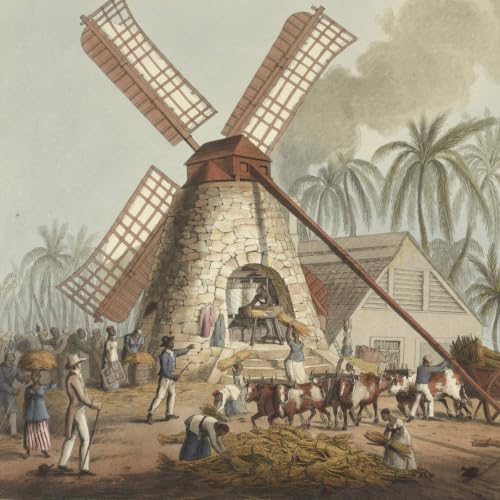
    In this episode, we discuss the rum industry in connection with grievances #16 and #17 in the Declaration of Independence: "For cutting off our Trade with all parts of the world" "For imposing Taxes on us without our Consent" Topics include the following: -an explanation of rum production, from sugarcane to the finished product -the origins of sugarcane and rum production in Barbados in the early 1600s -the development of distilleries in the Colonies, particularly Massachusetts, in the late 1600s -rum consumption in the Colonies by people in cities, slave traders, fishermen, and native Americans -the use of rum as a form of payment in the triangular slave trade -the imperial mercantilist competition between British rum and French brandy -the moral and religious history of rum and alcohol consumption -the Colonial activist movements that aimed to create political change, for example, by refusing to consume products made by enslaved people or by boycotting tea -the Molasses Act of 1733 and the Sugar Act of 1763 -the rise of rum smuggling and the association between rum and piracy -the deleted passage in the Declaration condemning slavery and its connection to the rum industry -the state of the rum industry, slavery, and the abolition movement after the formation of the United States -the development of the maple syrup industry as a moral alternative to the sugar and rum industry, which was driven by the immoral institution of slavery Prof. Smith's book can be found here: [The Invention of Rum: Creating the Quintessential Atlantic Commodity](https://www.pennpress.org/9781512828184/the-invention-of-rum/) His article in Commonplace can be found here: [Where's the Pirate?](https://commonplace.online/article/wheres-the-pirate/) The cover image features a sugarcane plantation with a mill and enslaved people in Antigua.
    Show More Show Less
    1 hr and 3 mins
  • Why Did Americans Remain Loyal to King George? Revolutionary Politics in New York City
    Jun 4 2026
    "He has abdicated Government here, by declaring us out of his Protection and waging War against us." In this episodes, we explore the many faces of Loyalism in the Colonies, particularly the Loyalist stronghold of New York City. Of course, Loyalists remained under the King's protection during the war, contrary to Grievance #23 of the Declaration of Independence. Topics include the following: -a description of the different Loyalists or Tories throughout the Colonies, including the rich and poor, black and white, Native and European, male and female -the origins of the Sons of Liberty in 1765 as a result of the Stamp Act -the development of the rift between Patriots and Loyalists -misconceptions about these categories, namely that many Sons of Liberty became Loyalists, such as Joseph Allicocke and James de Lancey -an overview of the political and legislative system of New York City and the ways in which the Stamp Act and the Quartering Act affected New Yorkers' perceptions of Parliament, the King, and their own political leaders -Alexander McDougall's opposition to de Lancey's support of the Quartering Act, and his authorship of his pamphlet To the Betrayed Inhabitants of New York -Edmund Burke's advocacy for the redress of legitimate Colonial grievances in Parliament -the growing strife between Patriots and Loyalists in Manhattan and the flight of Loyalist New Yorkers to New Jersey -the return of Loyalists to New York after the Battle of Long Island and the British capture of the city at the end of 1776 -an explanation of the oaths of allegiance to the King administered in occupied New York -the flight of Loyalists from New York City after the end of the war -the fate of Loyalists who chose to stay in the new United States after the war Dr. Minty's book can be found here: [Unfriendly to Liberty: Loyalist Networks and the Coming of the American Revolution in New York City](https://www.cornellpress.cornell.edu/book/9781501769108/unfriendly-to-liberty/#bookTabs=1)
    Show More Show Less
    52 mins
  • Revolution 250: America's Independence Story at The National Archives
    May 21 2026
    In this episode we explore the Revolution 250 exhibit at The National Archives in Kew, from 24 June 2026 to 29 November 2026: [Revolution 250](https://www.nationalarchives.gov.uk/whats-on/exhibitions/revolution-250-americas-independence-story-1763-1783/) America's Independence Story 1763–1783 Britain and America. One Story, Two Nations Topics include the following: -the story of the distribution of the Declaration first around the Colonies and then around the world -a description of the National Archive's collection of early prints of the Declaration, including the extremely rare Dunlap Broadsides -the fascinating stories of how these prints arrived in London, enclosed in letters from various British officials in the Colonies, such as Admiral Richard Howe and General William Howe -an overview of the historical scope of the exhibition from 1763 to 1783 -the practicalities of preserving, sorting, and storing records in the National Archives -the importance of intelligence gathering by Imperial officials in the Colonies, including the interception of letters and the creation of lists of likely rebels and loyalists -an overview of the intercepted letters at the exhibition and an assessment of the British intelligence operation during the run up to the war and the war itself -the Parliamentary debate in Britain in 1778 about the substance of the complaints in the Declaration of Independence -the experience of indigenous people and enslaved people during this period The cover image features a Dunlap broadside, printed in Philadelphia on the night of the 4th of July 1776.
    Show More Show Less
    1 hr and 8 mins
  • Creating the Continental Army: Civil-Military Relations in the 1700s
    May 14 2026
    "He has kept among us, in times of peace, Standing Armies without the Consent of our legislatures. He has affected to render the Military independent of and superior to the Civil power...He has abdicated Government here, by declaring us out of his Protection and waging War against us. He has plundered our seas, ravaged our Coasts, burnt our towns, and destroyed the lives of our people." In this episode, we unpack Grievances #11, #12, #23, and #24 of the Declaration of Independence and the relationship between Americans and the various types of armed troops in North America, from militias, to British regulars, to the Continental Army. Topics include the following: -the shared British and American tradition of opposing standing armies--because if they are not disbanded after wars, they are used by tyrants to take away the rights of the people -the perception of American colonists that the King had stationed 10,000 soldiers in North America in 1763 precisely so he could enforce his tyrannical policies on them -the various functions of Colonial militias in the 17th and 18th centuries, including war-fighting, civil policing, and preventing slave uprisings -the strained relationships between the Colonial militias and British regulars during the 7 Years' War and Pontiac's Revolt -the role of the Battles of Lexington and Concord in forcing Congress to create the Continental Army -the political significance of the name the Continental Army, as opposed to the American or Congressional or Colonial Army -the political significance of appointing George Washington, a Southerner and Virginian, as Commander of a mostly Northern militia force -an introduction to Washington's senior officers: Artemas Ward, Israel Putnam, and Charles Lee -initial British assessments of the strength and effectiveness of the new Continental Army -the importance of the American victory at Fort Ticonderoga in reshaping the war; namely, the capture of British soldiers meant that American rebels would not be summarily executed as seditious traitors but treated with basic PoW protections -a discussion of Grievance #24, that King George has ordered war crimes to be committed against innocent civilians -the tendency on both sides to commit war crimes against the civilian population and efforts by officers on both sides to discipline soldiers who abused the civilians population Dr. Chandler's book can be found here: [War, Patriotism and Identity in Revolutionary North America](https://boydellandbrewer.com/book/war-patriotism-and-identity-in-revolutionary-north-america-9781783274376/?v=0d149b90e739) The cover image is a drawing of an American Soldier in 1778 by Friedrich von Germann (1744–1794), Captain of the Brunswick Regiment Erbprinz. The Brunswick Regiment was not technically Hessian; nevertheless, it formed part of the subsidy regiments (or mercenaries) hired by the British to fight the Americans.
    Show More Show Less
    55 mins
  • Johann Ewald's American War Diaries: A Hessian's Memoir of the War for Independence
    May 1 2026
    "He is at this time transporting large Armies of foreign Mercenaries to compleat the works of death, desolation and tyranny, already begun with circumstances of Cruelty & perfidy scarcely paralleled in the most barbarous ages, and totally unworthy the Head of a civilized nation." In this episode, we examine one of the most important first-person accounts of the War for Independence, Johann Ewald's American War Diaries. Ewald was an elite Hessian Officer who spent 8 long years in North America fighting against the Patriots on behalf of King George. Topics include the following: -The history of mercenaries or subsidy troops in Germanic states in the 18th century -Ewald's childhood and early military career in the Seven Years' War -Ewald's first treatise on petite guerre or irregular warfare -The impact of Colonial frontiersmen--or irregular troops--on the Seven Years' War in North America -The development of British Light Infantry and Hessian Jägers, whose role it was to counteract opposing irregular forces -Ewald's deployment with his troops to New York City in October 1776 shortly after the Battle of Long Island -His role in the Battle of Fort Washington in November 1776 -His assessment of the Continental Army and the American officer corps -His subsequent influence on military theory, partisan warfare, and irregular warfare
    Show More Show Less
    55 mins
  • Military Strategies from Lexington and Concord to the Declaration of Independence
    Apr 23 2026
    "We, therefore, the Representatives of the united States of America...do, in the Name, and by Authority of the good People of these Colonies, solemnly publish and declare, That these United Colonies are, and of Right ought to be Free and Independent States; that they are Absolved from all Allegiance to the British Crown, and that all political connection between them and the State of Great Britain, is and ought to be totally dissolved. " In this episode, we take a deep dive into military history and examine how both American and British military leaders understood and analyzed the tactical, strategic, and political complexities of the American War for Independence. Topics include the following: -a description of the first military engagements of the war, the Battles of Lexington and Concord in April 1775 -the Siege of Boston, the Battle of Bunker('s) Hill, and the withdrawal of British forces from Boston -asymmetries between the Colonial militias and the British Army -the development of light infantry with rifled weapons who could harass massed formations of regular troops -the capabilities and limitations of the British Army and the Royal Navy at the time -an overview of logistics and lines of communication -the conduct of the war in the first fifteen months as described in the Declaration of Independence The cover image features a painting of the Battle of Lexington by William Barnes Wollen (1910)
    Show More Show Less
    1 hr and 3 mins
  • Colonial Infrastructure and the Declaration of Independence
    Apr 9 2026
    "He has called together legislative bodies at places unusual, uncomfortable, and distant from the depository of their public Records, for the sole purpose of fatiguing them into compliance with his measures." In this episode we explore Grievance #4 of the Declaration of Independence and the importance of Colonial infrastructure--the roads, ports, cities, and other communication structures and information systems that helped the Colonies thrive. Topics include the following: -the importance of the 7 Years' War in accelerating the development of infrastructure throughout the Colonies and into the interior -the Braddock Expedition against the French in 1755 -the expansion of the Colonial/Imperial post office, led by Benjamin Franklin -the inauguration of the monthly packet boat from Falmouth to London in 1755, with the purpose of strengthening information sharing around the British Empire -the presence of Native American infrastructure throughout North America -the "pathways of paperwork" and the centralization of British Imperial bureaucracy in New York, which set the foundation for more effective infrastructure projects -how Patriots captured and instrumentalized British Imperial infrastructure for their own political and military ends -the expansion of knowledge or information infrastructure throughout the Colonies between the end of the 7 Years' War and the start of the War for Independence -the symmetries forming between newspapers and an ever more efficient postal service -tensions between supporters of the free press and ministers who preferred censorship and who used the Stamp Act and its tax on newspapers to curtail the free spread of ideas throughout the Colonies -the development of infrastructure that was independent from the British Empire, such as the Committees of Correspondence and the Post Office, which was authorized by the Second Continental Congress in July 1775 -the rebel takeover of the Imperial postal networks -the importance of infrastructure in the expansion of the United States after independence
    Show More Show Less
    57 mins
  • The Netherlands and the Declaration of Independence
    Mar 26 2026
    "When in the Course of human events, it becomes necessary for one people to dissolve the political bands which have connected them with another, and to assume among the powers of the earth, the separate and equal station to which the Laws of Nature and of Nature's God entitle them, a decent respect to the opinions of mankind requires that they should declare the causes which impel them to the separation." In this episode, we focus on the Netherlands, the second country (after France) to acknowledge the claim made in the the Declaration of Independence, that the United States is an independent "Power of the Earth." Topics include: -the long history of Dutch settlers and traders in North America and the Caribbean -the integration of Dutch people and systems into the new British Colony of New York (for example, the Patroon system) -the importance of American traders in the Netherlands in the 1700s -a history of the Dutch weapons trade -the importance of Dutch newspapers, such as the Leiden Gazette, in spreading pro-Patriot ideas throughout Europe -the presence of both Dutch-American Patriots and Dutch-American Loyalists in the Colonies -the role of the Island of St. Eustatius in the revolutionary struggle and the FIRST SALUTE Controversy -the general attitude among the Dutch, both in the Dutch Republic and the Dutch colonies, that Britain was attempting to stifle trade in a tyrannical way, a view that led them to support the rebellious Americans -similarities and differences between the Dutch Act of Abjuration against the King of Spain in 1581 and the Declaration of Independence--of particular note is the introduction which includes a long list of grievances against King Philip. Full text is here. [Dutch Act of Abjuration](https://www.age-of-the-sage.org/history/dutch_independence_1581.html) Prof. Tieleman's most recent article can be found here. [To Shake Off the British Shackle Forever: The Political Economy of the Dutch Republic during the American Revolution](https://muse.jhu.edu/pub/56/article/927905) The cover image is a depiction of the USS Andrew Doria, flying the Patriot flag, receiving the First Salute from the Dutch Fort Orange on the Island of Saint Eustatius on 16 November 1776.
    Show More Show Less
    1 hr and 11 mins