Metamodernism Uncensored cover art

Metamodernism Uncensored

Metamodernism Uncensored

By: Sean Dempsey
Listen for free

Metamodernism Uncensored is a podcast exploring the ideas, tensions, and cultural forces shaping life beyond postmodernism. Through candid conversations on politics, culture, philosophy, faith, and meaning, the show seeks to cut through the haze of cynicism, tribalism, and ideological paralysis that defines much of contemporary America. Rather than choosing sides in the culture war, Metamodernism Uncensored pursues a dialectical synthesis... holding competing truths in tension, seeking deeper understanding, and exploring what a more integrated, constructive future might look like.Sean Dempsey Political Science Politics & Government
Episodes
  • The Altar of Judgment: Franz Kafka’s The Trial vs. Dempsey’s Justice
    Jun 29 2026

    This episode drags Kafka’s The Trial into the postmodern killing room and asks a brutal question: what happens when the absurd court no longer hides in shadows, no longer mumbles through bureaucracy, and no longer pretends justice has anything to do with truth? By comparing Franz Kafka’s foundational nightmare with Sean Dempsey’s 2024 short story “Justice,” the hosts explore how institutional absurdity has evolved from a mysterious labyrinth into a public execution ritual. Kafka gives us Joseph K., a vain, flawed, bewildered man slowly swallowed by an invisible legal machine. Dempsey gives us John, an innocent man ripped from his bed, blindfolded, denied evidence, and sacrificed before a tribunal that openly admits the facts no longer matter.

    The episode argues that Kafka diagnosed the 20th-century disease: a world where power became faceless, language became evasive, and guilt existed before accusation. But Dempsey’s “Justice” captures something darker and more recognizable in 2026: a society where cruelty is no longer embarrassed by itself. The magistrate does not need evidence because “Justice” and “Order” have become sacred words emptied of moral content. John’s innocence does not save him. In fact, the more he protests, the guiltier he appears. This is the trapdoor logic of the modern mob: denial becomes confession, due process becomes obstruction, and the accused man’s demand for proof becomes proof of his wickedness.

    Where Kafka’s horror is institutional, Dempsey’s is civic. The most damning figure in “Justice” is not merely the judge, the police, or the executioner, but the crowd. They boo, hiss, and cheer as a man is led to slaughter, not because they know he is guilty, but because the spectacle gives them moral intoxication. Kafka shows a man lost inside the machinery of law. Dempsey shows what happens when ordinary citizens become the machinery, applauding unknowable accusations as long as the blade falls on someone else.

    The episode concludes that Kafka remains the greater architect of atmosphere and ambiguity, but “Justice” offers a blunt and necessary autopsy of the present moment. If The Trial is the long illness of the soul, “Justice” is the corpse on the table. Together, the two works reveal a civilization losing its grip on evidence, mercy, and truth. The warning is simple and terrifying: beware any society that worships “Justice” more than justice, “Order” more than truth, and the cheering crowd more than the innocent man begging to be heard.

    Show More Show Less
    20 mins
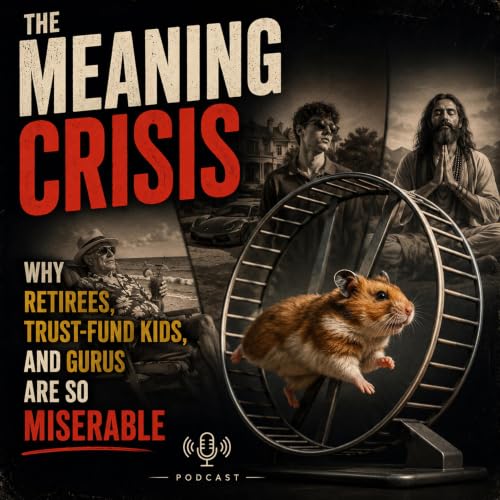
  • The Meaning Crisis: Why Retirees & Trust-Fund Kids Are So Miserable
    Jun 28 2026

    In this provocative exploration of Sean Dempsey’s poem 'Man’s Wheel', the hosts challenge one of modern culture’s most sacred assumptions: that freedom leads to happiness. Instead, they argue the opposite. The poem portrays the average worker not as a prisoner trapped on a hamster wheel, but as a fortunate soul spared from the torment of limitless choice and existential uncertainty. While modern self-help gurus preach escape from the 9-to-5, Dempsey suggests that work, routine, and responsibility are not chains to be broken but psychological scaffolding that keeps people sane. The greatest irony, he argues, is that the people most desperate to escape the wheel often discover that the wheel was protecting them all along.

    The discussion expands into a broader examination of the modern meaning crisis, asking whether humanity’s endless quest for fulfillment is itself the source of its unhappiness. Drawing on philosophy, theology, and psychology, the hosts explore a sobering possibility: purpose is not something discovered at the end of a spiritual journey but something created through daily obligations, commitments, and sacrifice. In a culture obsessed with self-actualization and personal freedom, Man’s Wheel offers a deeply unfashionable thesis: perhaps the ordinary routines we resent may be the very things standing between us and despair, and that true fulfillment begins the moment we stop searching for it...

    Show More Show Less
    19 mins
  • America 250: Can a Broken Country Celebrate Itself?
    Jun 27 2026

    America is turning 250, and the ruling class is preparing to celebrate the Constitution by continuing to ignore it.

    In this episode of Metamodernism Uncensored, the hosts unpack Sean Dempsey’s savage essay on America 250: a birthday party for a Republic drowning in debt, undeclared wars, executive overreach, and political hypocrisy. The Founders warned us against exactly this, yet the politicians who quote them most loudly are often the first to trample their principles!

    From war powers and fiscal bloat to Thomas Massie being vilified for taking the Constitution seriously, this episode asks the uncomfortable question: can America still celebrate itself without lying to itself?

    The Right wants reverence without repentance. The Left wants critique without gratitude. A metamodern patriotism demands something harder: truthful love.

    Show More Show Less
    41 mins
adbl_web_anon_alc_button_suppression_t1
No reviews yet