• The Altar of Judgment: Franz Kafka’s The Trial vs. Dempsey’s Justice
    Jun 29 2026

    This episode drags Kafka’s The Trial into the postmodern killing room and asks a brutal question: what happens when the absurd court no longer hides in shadows, no longer mumbles through bureaucracy, and no longer pretends justice has anything to do with truth? By comparing Franz Kafka’s foundational nightmare with Sean Dempsey’s 2024 short story “Justice,” the hosts explore how institutional absurdity has evolved from a mysterious labyrinth into a public execution ritual. Kafka gives us Joseph K., a vain, flawed, bewildered man slowly swallowed by an invisible legal machine. Dempsey gives us John, an innocent man ripped from his bed, blindfolded, denied evidence, and sacrificed before a tribunal that openly admits the facts no longer matter.

    The episode argues that Kafka diagnosed the 20th-century disease: a world where power became faceless, language became evasive, and guilt existed before accusation. But Dempsey’s “Justice” captures something darker and more recognizable in 2026: a society where cruelty is no longer embarrassed by itself. The magistrate does not need evidence because “Justice” and “Order” have become sacred words emptied of moral content. John’s innocence does not save him. In fact, the more he protests, the guiltier he appears. This is the trapdoor logic of the modern mob: denial becomes confession, due process becomes obstruction, and the accused man’s demand for proof becomes proof of his wickedness.

    Where Kafka’s horror is institutional, Dempsey’s is civic. The most damning figure in “Justice” is not merely the judge, the police, or the executioner, but the crowd. They boo, hiss, and cheer as a man is led to slaughter, not because they know he is guilty, but because the spectacle gives them moral intoxication. Kafka shows a man lost inside the machinery of law. Dempsey shows what happens when ordinary citizens become the machinery, applauding unknowable accusations as long as the blade falls on someone else.

    The episode concludes that Kafka remains the greater architect of atmosphere and ambiguity, but “Justice” offers a blunt and necessary autopsy of the present moment. If The Trial is the long illness of the soul, “Justice” is the corpse on the table. Together, the two works reveal a civilization losing its grip on evidence, mercy, and truth. The warning is simple and terrifying: beware any society that worships “Justice” more than justice, “Order” more than truth, and the cheering crowd more than the innocent man begging to be heard.

    Show More Show Less
    20 mins
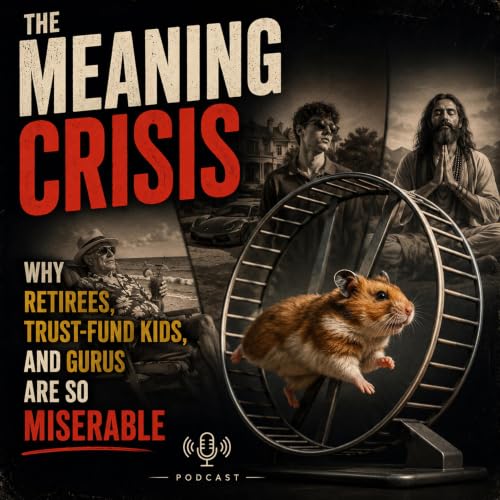
  • The Meaning Crisis: Why Retirees & Trust-Fund Kids Are So Miserable
    Jun 28 2026

    In this provocative exploration of Sean Dempsey’s poem 'Man’s Wheel', the hosts challenge one of modern culture’s most sacred assumptions: that freedom leads to happiness. Instead, they argue the opposite. The poem portrays the average worker not as a prisoner trapped on a hamster wheel, but as a fortunate soul spared from the torment of limitless choice and existential uncertainty. While modern self-help gurus preach escape from the 9-to-5, Dempsey suggests that work, routine, and responsibility are not chains to be broken but psychological scaffolding that keeps people sane. The greatest irony, he argues, is that the people most desperate to escape the wheel often discover that the wheel was protecting them all along.

    The discussion expands into a broader examination of the modern meaning crisis, asking whether humanity’s endless quest for fulfillment is itself the source of its unhappiness. Drawing on philosophy, theology, and psychology, the hosts explore a sobering possibility: purpose is not something discovered at the end of a spiritual journey but something created through daily obligations, commitments, and sacrifice. In a culture obsessed with self-actualization and personal freedom, Man’s Wheel offers a deeply unfashionable thesis: perhaps the ordinary routines we resent may be the very things standing between us and despair, and that true fulfillment begins the moment we stop searching for it...

    Show More Show Less
    19 mins
  • America 250: Can a Broken Country Celebrate Itself?
    Jun 27 2026

    America is turning 250, and the ruling class is preparing to celebrate the Constitution by continuing to ignore it.

    In this episode of Metamodernism Uncensored, the hosts unpack Sean Dempsey’s savage essay on America 250: a birthday party for a Republic drowning in debt, undeclared wars, executive overreach, and political hypocrisy. The Founders warned us against exactly this, yet the politicians who quote them most loudly are often the first to trample their principles!

    From war powers and fiscal bloat to Thomas Massie being vilified for taking the Constitution seriously, this episode asks the uncomfortable question: can America still celebrate itself without lying to itself?

    The Right wants reverence without repentance. The Left wants critique without gratitude. A metamodern patriotism demands something harder: truthful love.

    Show More Show Less
    41 mins
  • Songbirds & Vultures: Why Our Heroes Are Not Human
    Jun 26 2026

    This podcast drags the listener into the ugliest question mankind can ask itself: what if our heroes are only heroic because they refused to act like the rest of us?

    Using Sean Dempsey’s poem “Songbirds & Vultures” as its blade, the hosts tear apart the comforting myth that people are naturally good. In Dempsey’s vision, humanity is not a noble species occasionally seduced by evil; it is a frightened herd of obedient animals, forever looking for permission to hate, punish, divide, and conform. The rare figures we call heroes — Sojourner Truth, Harriet Tubman, Oskar Schindler, Martin Luther King Jr. — are not celebrated because they reveal what mankind is. They are celebrated because they expose what mankind usually is not.

    The conversation becomes most explosive when it argues that tyranny does not vanish with history; it simply changes costumes. The same human instincts that animated slavery, Nazism, mob violence, and state worship still pulse beneath modern politics, medical coercion, ideological panic, and fashionable moral crusades. Evil does not need jackboots to march. Sometimes it arrives wearing compassion, public health, social justice, or progress. The vulture only changes feathers.

    What makes the discussion so disturbing is that it refuses to blame only dictators and monsters. It indicts the crowd: the neighbor who complies, the friend who stays silent, the citizen who mistakes fear for virtue, and the civilized age that congratulates itself while kneeling before new unholy altars. The hosts flirt with optimism, wondering whether mankind might someday produce more songbirds than vultures. But the poem’s accusation remains: history is less a story of moral progress than a record of ordinary people obeying darkness until a rare soul dares to disobey.

    By the end, the podcast feels less like commentary than a trial. It asks whether courage is truly human — or whether courage is the miraculous rebellion against humanity itself. And it leaves the listener with one brutal question: when the next innocent person is marked, when the next mob forms, when the next sacred lie demands obedience, will you sing against the storm ... or circle above it?

    Show More Show Less
    34 mins
  • Deafening Echo Chamber: Our Victorious War We Won So HUGELY Until We Found Out We Maybe Lost It
    Jun 25 2026

    On this episode of Metamodernism Uncensored, we ask a dangerous question: what happens when an entire nation mistakes propaganda for reality? Using the Iran conflict as a case study, we dissect how millions of Americans were sold a story of overwhelming victory, "obliterated" enemies, and inevitable triumph, only to watch that narrative collide headfirst with the messy reality of diplomacy. From Trump's declarations of total success to the triumphant certainty of cable-news personalities and political influencers, we explore how modern media transforms war into theater and replaces analysis with emotional reassurance.

    But this episode is about far more than Iran. It is a deep examination of the echo chambers that now dominate American political life. Why do so many citizens feel blindsided when reality refuses to follow the script? Why do military victories so often fail to produce political success? And why are Americans on both the Right and the Left increasingly trapped inside closed information systems that reward certainty while punishing skepticism? We unpack the overlooked realities of asymmetrical warfare, the strategic assumptions that critics warned about from the beginning, and the shocking details of the peace agreement that left many viewers wondering how a supposedly defeated adversary still had enough leverage to negotiate.

    Ultimately, this episode argues that the real scandal is not that politicians spin, pundits exaggerate, or governments engage in propaganda. The real scandal is that modern citizens have been trained to mistake confidence for knowledge and emotional validation for understanding. Through a metamodern lens, we examine the collapse of skepticism, the rise of post-truth tribalism, and the urgent need for a new synthesis capable of breaking through the walls of our competing realities. Because the most dangerous echo chamber is the one you don't know you're living inside.

    Show More Show Less
    41 mins
  • The New Tower of Babel: Sean Dempsey and Brendan Dempsey on Artificial Intelligence and Man’s Attempt to Build God
    Jun 24 2026

    In today’s episode of Metamodernism Uncensored, I sit down with my brother, Brendan Dempsey, to stare directly into the machine and ask the question everyone keeps avoiding:

    What if AI is not just changing the future of man, but rather is exposing what man already became?

    This is not another shallow conversation about the rise of Skynet, chatbots taking jobs, or robots writing emails. This episode goes way deeper. Because AI is not merely a tool. It is a mirror, an oracle, a counterfeit priest, a synthetic imagination, and possibly the first real rival humanity has ever created. We built it from our language, our myths, our arguments, our lies, our art, our porn, our prayers, and our broken digital civilization. Then it started speaking back, and we acted surprised.

    Brendan and I explore the metaphysical shock of artificial intelligence: whether intelligence can exist without a soul, whether consciousness can be simulated, whether machines can participate in meaning, and whether humanity is spiritually prepared to share the world with something that can imitate thought, creativity, intimacy, and wisdom without necessarily possessing any of them.

    The conversation moves into the moral and ethical consequences of this new age. If AI can create beauty, what becomes of the artist? If it can reason, what becomes of the thinker? If it can comfort, flatter, persuade, seduce, and guide, what happens to friendship, education, religion, therapy, politics, and love? The danger may not be that AI destroys us. The danger may be that it makes surrender feel convenient.

    We also confront the possibility of a new caste system: not noble versus peasant, but augmented versus obsolete. Those who master AI may become almost superhuman in wealth, influence, productivity, and control. Those who do not may become algorithmically managed consumers, trapped inside invisible systems they cannot understand and cannot escape. The future may belong not to the rich alone, but to the integrated.

    But this is not a doom sermon. The metamodern challenge is to reject both naïve tech worship and cowardly nostalgia. AI is threat and tool, mirror and temptation, servant and rival. It may degrade us, or it may force us to rediscover what cannot be automated: conscience, courage, embodiment, sacrifice, love, faith, and the sacred burden of being human.

    This episode asks whether AI will become mankind’s replacement, or the pressure that forces mankind to become human again. Because the most terrifying possibility is not that machines are becoming conscious.

    It is that modern man has been becoming more machine-like for a long time. For when man builds a machine that can answer back, does he discover the future... or his own obituary?

    Show More Show Less
    1 hr and 21 mins
  • Party of Macho Theater: Tough Talk, No Results
    Jun 23 2026

    This episode of Metamodernism Uncensored takes a blowtorch to the modern Right’s favorite fantasy: that rage is the same thing as strength. What begins as a diagnosis of justified conservative anger after Covid, censorship, lockdown hypocrisy, and woke institutional bullying quickly becomes something darker. The hosts argue that much of “mag-ah” has stopped being a political movement and become an emotional revenge machine. It no longer asks, “What should we build?” It asks, “Who can we humiliate next?”

    At the center of the episode is a brutal distinction between grievance as fuel and grievance as possession. The Right was not wrong to be angry. It was wrong to become addicted to anger. The episode argues that “owning the libs” has curdled into a spiritual sickness, where catharsis has replaced policy, cruelty has replaced courage, and the movement’s highest form of political imagination is watching someone else get stomped by the state.

    The hosts then turn to the great hypocrisy of the new populist Right: the people who once feared the boot of government power now cheer when their own side gets to wear it. Whether it is aggressive ICE raids, federal enforcement, foreign bombing campaigns, or pundits celebrating state violence from the safety of a studio, the episode asks an uncomfortable question: did the Right actually oppose tyranny, or did it simply resent not being the tyrant?

    This is where the episode becomes most damning. The modern GOP, according to the hosts, has mastered the performance of toughness while failing at the practice of governance. It talks like Rome, but governs like a comment section. It celebrates military strikes, mass deportation fantasies, and theatrical crackdowns, yet collapses when faced with the boring adult work of building durable policy, negotiating trade-offs, fixing institutions, or solving actual national problems. The episode contrasts the fantasy of strongman politics with the embarrassing reality that Trump’s deportation record fell far below Obama’s, exposing the gap between right-wing theater and administrative competence.

    The most explosive theme is the Right’s confusion of cruelty with courage. Compassion is mocked as weakness. Restraint is smeared as cowardice. Peace is treated as treason. But the hosts argue that this is not strength. It is insecurity wearing tactical sunglasses. Real toughness is not the desire to dominate the vulnerable, bomb another country, or cheer on agents in body armor. Real toughness is discipline. It is self-command. It is the ability to restrain your worst impulses when the crowd is screaming for blood.

    The episode ultimately pushes toward a metamodern synthesis: rejecting both progressive fragility and reactionary sadism. A serious politics of strength would defend borders without becoming inhuman, oppose woke coercion without becoming authoritarian, pursue peace without becoming naïve, and restore order without worshipping the boot. Until the GOP learns that masculinity is not a tantrum, patriotism is not vengeance, and courage is not cruelty, its roar will remain hollow: loud enough to frighten children, but too empty to build a nation.

    Show More Show Less
    35 mins
  • Saltwater Gospel: Teaching Children to Survive a World of Lies
    Jun 22 2026

    In this episode of Metamodernism Uncensored, our unflappable hosts dissect Sean Dempsey's 2021 short story “The Storm." They review a searching, darkly funny, and unexpectedly tender meditation on truth in an age of mass delusion. This is a stark conversation about children, conscience, language, and the strange pressures of a culture that increasingly asks people to deny what they can plainly see. Through the image of Anna on the porch with her grandfather, watching the wind and waves crash against the rocks, the episode frames the storm as a symbol of postmodern chaos: loud, violent, shifting, and endlessly demanding. The rocks, by contrast, become the stubborn image of reality itself: battered, mocked, denied, but never actually moved.

    The episode ultimately refuses to end in despair. Through the surviving boy, the grandfather’s wisdom, and the closing image of love as clean water for a thirsty soul, the hosts arrive at the show’s distinctly metamodern conclusion: truth must be defended, but not with bitterness; reality must be named, but not without compassion. The answer to the storm is not cynicism, nor blind ideology, nor tribal rage. It is love rooted in reality... the kind of love that tells a child she is not crazy for seeing what she sees, and the kind of truth that outlasts every fashionable lie, every Shaman’s spell, and every wave that savagely throws itself against the cold and indifferent rocks.

    Show More Show Less
    45 mins