• #148 It's You, Not Me...Right?
    Feb 4 2026

    In this conversation, Jim Sammons and Rich Visotcky discuss various aspects of team dynamics, particularly focusing on Scrum Masters and the importance of engagement and interest in work. We explore the expectations placed on Scrum Masters, the significance of caring about the work being done, and how to navigate conflicts within teams around their work, tool choice, communication patterns, and more.

    Key highlights include:

    • Interest in work drives better performance and outcomes.
    • Navigating conflict requires understanding the context.
    • Caring about the work leads to better results.
    • Frustrations in work often stem from organizational decisions.
    • Shifting mindsets from tool dependency to problem-solving is crucial.
    • Different teams require different types of support and skills.

    Chapters

    00:00 Intro

    00:16 Should Scrum Masters Be Interested?

    01:23 Do Process People Need to Grasp The Backlog?

    04:48 Do Care and Interest Go Hand in Hand?

    08:14 Marker 4

    08:14 Did the Creators of Agility Expect People to Care?

    10:56 Do You Need to Know How the Sausage is Made?

    13:41 The Legend of "Json the Troublemaker"

    18:25 It's Not Them, It's You

    21:39 The Way of Working

    26:30 What Gets You Riled Up?

    29:49 It Makes Sense, and it Makes Me Angry

    34:52 The "User" Will See You Now

    37:03 What Riles Rich Up?

    42:35 Part of the Solution?

    46:29 On the Next Episode...

    Connect with Product Fields:

    📢 Follow the podcast for more inspiring stories
    💬 Join the conversation on LinkedIn - https://linkedin.com/company/mastering-agility

    📩 Contact us for trades or sponsorships

    👉 If you enjoyed this episode, leave a review and share it with someone who needs to hear it!

    Connect with our hosts:

    https://www.linkedin.com/in/jamessammons/

    https://www.linkedin.com/in/richvisotcky/


    Check out our sponsors:

    https://www.xebia.com

    https://www.wiserbees.com

    https://www.jointinsights.com

    https://www.productfields.com

    Show More Show Less
    49 mins
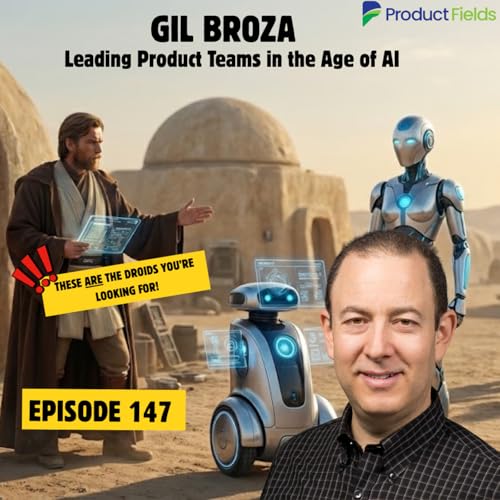
  • #147 Leading Product Teams in the Age of AI - With Gil Broza
    Jan 15 2026

    Gil Broza joins our hosts, Jim Sammons and Rich Visotcky, for the first episode of the Product Fields podcast in 2026! In this conversation, we discuss the evolving landscape of agility and product management in the age of AI. Together, we explore how AI has transformed product delivery, the importance of accountability, and the need for leaders to adapt their strategies to ensure effective team dynamics. Too often, we have seen companies go full-on into AI without any strategy or understanding of the consequences. Through our discussion, we dive into the balance between leveraging AI for efficiency while maintaining critical thinking and human oversight, and the need for a thoughtful approach to integrating AI into work processes.

    00:00:00 Intro

    00:02:04 Agility Beyond Tech: Adapting Principles for Non-Tech Teams

    00:03:44 The Relevance of the Agile Manifesto, Values, and Principles

    00:08:44 AI's Impact on Product Delivery and Management

    00:12:15 Going Back to Principles in the Age of AI

    00:16:52 Accountability in the Age of AI

    00:28:03 The AI Industrial Revolution: Trust and Human Connection

    00:33:58 The Atrophy of Skills in the Age of AI

    00:35:07 The Impact of AI on Communication and Authenticity

    00:45:38 The Dangers of Over-Reliance on AI

    00:47:27 Fundamentals in the Age of AI

    00:50:45 The Danger of Agency and AI

    00:53:01 The Future of Work and AI Integration

    00:57:46 Quantity vs. Impact

    01:01:20 Closing

    Connect with Product Fields:

    📢 Follow the podcast for more inspiring stories
    💬 Join the conversation on LinkedIn - https://linkedin.com/company/mastering-agility
    📩 Contact us for trades or sponsorships

    👉 If you enjoyed this episode, leave a review and share it with someone who needs to hear it!

    Connect with our guests:

    Gil Broza: https://www.linkedin.com/in/gilbroza

    Subscribe to Gil’s newsletter: https://3pvantage.com/subscribe-newsletter/

    Attend Gil’s course, “Leading AI-Enabled Product Teams”: https://3pvantage.com/leapt/

    Check out our sponsors:

    https://www.xebia.com

    https://www.wiserbees.com

    https://www.jointinsights.com

    https://www.productfields.com

    Show More Show Less
    1 hr and 5 mins
  • #146 Can Mindset be Quantified? - With Dr. Karen Eilers and Christiaan Verwijs
    Jan 6 2026

    Join hosts Rich Visotcky and Jim Sammons as they delve deep into the agile mindset and its significance in team dynamics from a research-backed perspective. Joining them in this episode are Dr. Karen Eilers and Christiaan Verwijs who are leading studies exploring the agile mindset from the individual and team level. Through their research and the help of Columinity, they describe how to factors like motivation, morale, collaborative exchange, value focus, and management support improve team effectiveness. Together, we discuss the development of reliable measurement scales, the importance of data in understanding team effectiveness in order to take action, and the challenges of selection bias and trust in survey data. We also dip our toes into the pools of dynamic reteaming and its effects on team cohesion and team outcomes.

    Whether you’re a manager looking to help your teams hit their stride, a team member trying to understand how to improve yourself to improve those around you, or a research and data junkie curious about people and teams, this episode has you covered!

    Want to learn more about your team and the research?

    Participate (and get immediate actionable feedback!): https://questionnaire.columinity.com/setup/model/agilemindset

    Preliminary findings: https://blog.columinity.com/how-a-team-level-agile-mindset-shapes-team-effectiveness/

    Scientific paper on Agile Mindset: https://www.sciencedirect.com/science/article/pii/S0040162522001822

    Contact Columinity: https://columinity.com/research

    Connect with our guests:

    Karen Eilers: linkedin.com/in/dr-karen-eilers/

    Christiaan Verwijs: linkedin.com/in/christiaanverwijs/

    Connect with Mastering Agility:

    📢 Follow the podcast for more inspiring stories
    💬 Join the conversation on LinkedIn - linkedin.com/company/mastering-agility
    📩 Contact us for trades or sponsorships

    👉 If you enjoyed this episode, leave a review and share it with someone who needs to hear it!

    Check out our sponsors:

    www.xebia.com

    www.wiserbees.com

    www.jointinsights.com

    www.productfields.com

    Find more at www.masteringagility.org

    Show More Show Less
    53 mins
  • S06 E10 Dave Snowden on Organizing for Emergence
    Dec 21 2023

    In this conversation, Dave Snowden discusses various topics related to complexity, agility, and decision-making. He shares his experiences with travel and speaking engagements, emphasizing the importance of listening to the audience and adapting his presentations accordingly. Dave highlights patterns and cynicism in the Agile community, cautioning against the commoditization of Agile and the reliance on motivational speakers. He explains the principles of organizing for emergence and complexity, emphasizing the need to work with how things are and focus on local interactions. Dave also discusses the outcome of complexity models, the risk of losing purpose in breaking things down, and the challenge of organizational attention span. He concludes by discussing the contribution opportunities for Hexi and the importance of creating a capability to handle unknown unknowables. The conversation explores the concept of constant complexity in the world and the need for adaptability and strategic thinking.

    The impact of AI and ecological collapse is discussed, highlighting the potential risks and opportunities they present. The tension between control and empowerment in organizations is examined, along with the role of risk in decision-making. The importance of building ecosystems and embracing distributed decision-making is emphasized. The conversation concludes with a reflection on the impact of work and the future of the Agile landscape.

    Takeaways

    • Listen to the audience and adapt presentations accordingly

    • Beware of the commoditization of Agile and the reliance on motivational speakers

    • Organize for emergence and complexity by working with how things are and focusing on local interactions

    • Quantify human judgment and detect anomalies to make better decisions

    • Create a capability to handle unknown unknowables and shift to a profession mindset The world is experiencing constant complexity, and organizations need to adapt and embrace strategic thinking to navigate this reality.

    • AI and ecological collapse are significant factors that are changing the business landscape and require proactive preparation.

    • Overdependence on technology can hinder adaptability and resilience, and organizations should strive for a balance between technology and human intelligence.

    • Risk should be considered in decision-making, and organizations should focus on reducing risk through distributed decision-making and building ecosystems.

    • The impact of work extends beyond individual contributions, and collective efforts and teamwork are essential for long-term success.

    • The Agile landscape should focus on collaboration, innovation, and addressing unarticulated problems to become a sustainable movement.

      For questions or requests that you would like us to check on, please drop a message on LinkedIn or join the Mastering Agility Discord community!

      Participate as an audience member
      Mastering Agility Mural
      Mastering Agility merch


    Hosted on Ausha. See ausha.co/privacy-policy for more information.

    Show More Show Less
    1 hr and 8 mins
  • #107 Striving for Value & Quality
    Jul 16 2024

    The conversation revolves around the concept of value and its various interpretations. The hosts discuss the importance of defining and measuring value, the role of quality in delivering value, and the challenges faced by organizations in prioritizing value. They also touch on the impact of short-sightedness, the rise of disruptive competitors, and the influence of money on decision-making. The conversation concludes with a discussion on the pros and cons of different business models, such as SaaS and physical products. The conversation explores the concept of mediocrity and its impact on various aspects of work and life. It discusses the acceptance of mediocrity in education and society, the importance of measuring and striving for quality, and the need for personal and professional growth beyond mediocrity. The conversation also touches on the challenges of working in different cultural contexts and the role of uncertainty in agile practices.


    Takeaways

    • Value is a widely used but often misunderstood term in the business world. It is important to define and measure value in order to make informed decisions.

    • Quality plays a crucial role in delivering value. Organizations should prioritize quality and avoid sacrificing it for short-term gains.

    • Employee happiness and engagement can be leading indicators of value. Creating a positive work environment can lead to better outcomes and customer satisfaction.

    • The rise of disruptive competitors and the need to stay ahead of the market require organizations to be adaptable and open to innovation.

    • Money can influence decision-making and lead to arrogance and mediocrity. It is important to balance financial considerations with long-term value creation.

    • Different business models, such as SaaS and physical products, have their own advantages and challenges. Organizations should carefully consider the trade-offs when choosing a business model. Mediocrity is often accepted and tolerated in education and society, but there is a need to strive for higher standards and quality.

    • Measuring and objectively assessing quality is becoming easier, and it is important to prioritize and invest in high-quality work.

    • Being a mediocre scrum master or leader is not ideal, but it is better than being harmful. Strive for excellence and continuous improvement.

    • Understanding cultural contexts and adapting to different dynamics within teams is crucial for effective collaboration.

    • Embracing uncertainty and creating structures for long-lasting change are essential in agile practices.


    Check out our sponsor:
    www.xebia.com

    www.scrummatch.com

    www.wiserbees.com

    www.masteringagility.org


    Hosted on Ausha. See ausha.co/privacy-policy for more information.

    Show More Show Less
    49 mins
  • S05 E10 A Mystery Koala guest and the R Word
    Jun 27 2023

    For questions or requests that you would like us to check on, please drop a message on LinkedIn or join the Mastering Agility Discord community!

    Participate as an audience member
    Mastering Agility Mural

    Sander Dur

    Sander Dur is a Professional Scrum Trainer at Scrum.org, podcast host of Mastering Agility, Professional Scrum Master and Lead Agile Consultant, and trainer at Xebia. Besides this, he's an avid writer for predominantly Serious Scrum on Medium.com. Sander has a major passion for the human side in complex domains. Ensuring a high level of psychological safety, therefore, is a critical part of his work. Organizations in complex domains can only survive when innovating. Innovation can only take place with the right balance between low social friction and high intellectual friction. While most organizations now understand how to apply Agile frameworks, they struggle with the delivery of value. Psychological safety is the next step in this evolution and Sander has a huge drive to help organizations reach that step.

    Sander is enthusiastic, open-minded, and ambitious. He finds interpersonal relationships and intrinsic motivations very important in team dynamics. Besides his work, Sander loves to spend time with his family, enjoys sports and eating healthy, barbecuing, riding his motorcycle, and traveling.

    Jim Sammons

    My passion is helping people to:

    • Do more of the right work (and less of the wrong work).
    • Create more actual teams than just groups of people who work together.
    • Learning how to improve themselves, their team, and their organization incrementally.
    • Understand that less, not more, is usually part of the answer to some of the hardest questions we all face.
    • See their workplaces, teams, and their sphere of influence as something that is evolving, which requires an evolution of all of its parts to adapt.

    Throughout my career, I have worked with clients of all sizes, industries, and technologies. Whether it’s leading a transformative strategy at a Fortune 100 or helping a new startup understand its unique value proposition the common focus I bring to each role is “making people better.”

    Support the show

    Contact us at:

    Masteringagility.org
    https://xebia.com/academy/nl/trainers/sander-dur

    https://www.linkedin.com/in/jamessammons/
    https://www.linkedin.com/in/sanderdur/


    Hosted on Ausha. See ausha.co/privacy-policy for more information.

    Show More Show Less
    51 mins
  • S06 E12 Omnipresence and Needing to be Perfect
    Jan 2 2024

    Summary
    In this second part of the conversation, Jim and Sander discuss their holiday plans and reflect on the highlights of the podcast in 2023. They also share their dream guests for future episodes and discuss the importance of understanding root causes in problem-solving. They explore how Scrum Masters can help teams become more effective and the need to build environments for product success. They also discuss the challenges of avoiding reactive approaches and the importance of continuous improvement. Finally, they discuss the importance of recognizing blind spots and areas for improvement. In this conversation, Jim and Sander discuss various topics related to their professional lives and personal preferences. They explore the balance between quality and satisfaction, the importance of professional emotional regulation, and the need to bury unwanted concepts. They also touch on the issue of hate and ad hominem attacks on social media and the value of constructive feedback. The conversation concludes with a discussion about the misuse of the Shu-Ha-Ri model and the joy of holiday food traditions.


    Takeaways

    • Reflecting on the highlights of the past year can provide valuable insights and learning opportunities.

    • Understanding root causes is important for effective problem-solving and preventing recurring issues.

    • Scrum Masters can have a wider impact by building their skills and focusing on continuous improvement.

    • Creating environments for product success is crucial for long-term value creation.

    • Avoiding reactive approaches and focusing on proactive measures can lead to better outcomes.

    • Recognizing blind spots and areas for improvement is essential for personal and professional growth. Balancing quality and satisfaction is important in professional work.

    • Professional emotional regulation is crucial for maintaining composure and being a calming influence.

    • It's okay to have strengths and weaknesses, and not everyone has to be good at everything.

    • Unwanted concepts and practices should be buried to make room for more effective approaches.

    • Hate and ad hominem attacks on social media should be replaced with constructive feedback.

    • Being candid is important, but it's essential to avoid being an asshole.

    • Teaching should be focused on practical application rather than just theoretical knowledge.

    • Being a little like Mr. Miyagi and withholding certain information can be beneficial in facilitating learning.

    • Helping others should not be driven by selfish motives.

    • Identifying as a teacher or educator depends on the specific context and knowledge.

    • Food and holiday traditions bring joy and create memorable experiences.

    Don't forget to check out our sponsor: https://scrummatch.com/en


    Hosted on Ausha. See ausha.co/privacy-policy for more information.

    Show More Show Less
    41 mins
  • S01 E16 Talking Tech Debt with Steve Porter
    Jun 28 2021

    Technical debt is one of those things that can really bite your ass when you're not taking care of it. Tech debt sneaks in and before you know it, you’re spending more time repaying that debt rather than delivering actual value. But not all tech debt is wrong. And not everything that is perceived as tech debt is actually that. What about undone work? And what can we do to prevent this from accumulating? To what extent do we need to be transparent about it? Steve Porter, Scrum.org’s Professional Series Manager and developer at heart, joins us in this episode of Mastering Agility to discuss this.

    What you’ll discover in this show:

    - Introducing tech debt might be a good thing

    - There is a difference between tech debt and work that is just not done

    - Estimation of effort is still needed. Also discussing what has been done to remove it could be good to do during Sprint Reviews

    Speakers:

    Steve Porter

    Supporting the Professional Scrum Trainer community

    Steve Porter works with the Scrum.org team of experts and its wider trainer community to create and maintain its Professional Series of courses and assessments. Steve guides this collaborative process to ensure training is current and meets the needs of the professional Scrum community. Before joining Scrum.org, Steve was the product owner for TeamPulse, Telerik’s agile project management tool. He has also provided application lifecycle management (ALM) consulting services for organizations around the globe. At his core, Steve is still a developer. He taught himself how to code at an early age and has spent years turning ephemeral ideas into functioning software. It's the joy of this craft that Steve brings to all his interactions at Scrum.org.


    Contact Steve Porter:
    https://www.scrum.org/resources/blog?uid=119

    https://twitter.com/stevevrporter

    https://www.linkedin.com/in/stevevrporter/

    Sander Dur (host)

    Scrum Master, Agile Coach, trainer, and podcast host for ‘Mastering Agility”

    Sander Dur is a business agility enthusiast, with a passion for people. Whether it’s healthy product development, agile leadership, measurement, or psychological safety, Sander has the drive to enable organizations to the best of their abilities. He is an avid article writer, working on a book about Scrum Mastery from the Trenches, and is connecting listeners with the most influential people in the industry.

    https://www.linkedin.com/in/sanderdur/
    https://agilitymasters.com/en
    https://sander-dur.medium.com/

    Additional resources:

    Support the show

    Contact us at:

    Masteringagility.org
    https://xebia.com/academy/nl/trainers/sander-dur

    https://www.linkedin.com/in/jamessammons/
    https://www.linkedin.com/in/sanderdur/


    Hosted on Ausha. See ausha.co/privacy-policy for more information.

    Show More Show Less
    50 mins