Episodes

  • 232: Real Housewives of Per-Ramesses with Prof. Peter Brand
    Apr 20 2026
    Hybrid episode (narrative & interivew). The Hittite Queen, Maat-Hor-Neferura, may have been surprised to find she wasn't the only King's Great Wife. In fact, Ramesses had already turned to other women to be his Queens. Notably, his eldest daughter Bint-Anat ("Daughter of Anat") became King's Great Wife, along with several of her younger siblings. Why did Ramesses "marry" his own offspring, and what does that mean for the royal family? Also, we meet Ramesses' oft-forgotten sister, Tia. In Part 2, we are joined by Prof. Peter Brand to discuss life in the pharaonic palaces. How did they organise their royal households, what terms survive to illuminate this world? And how can Egyptologists understand life in Ramesses' great family? Music by Luke Chaos & Keith Zizza, used with permission. Logo image: Bint-Anat as King's Great Wife, from Ramesses' colossal statue now in the Grand Egyptian Museum. Learn more about your ad choices. Visit megaphone.fm/adchoices
    Show More Show Less
    1 hr and 26 mins
  • 231: The Hittite Queen of Egypt
    Apr 13 2026
    Married before first sight. In regnal year 34 (1259 BCE) Ramesses welcomed a princess of Hatti. Sent by her father Hattusili and mother Puduhepa, the (anonymous) princess came to Egypt and took up the rank of King's Great Wife. Today, she is known by her Egyptian name, MAAT-HOR-NEFERURA "She Who Sees Horus, the Perfection of Ra." This enigmatic woman sits at the centre of a fascinating letter archive and commemorative text. Ramesses celebrated his new bride in grand style... Music by Luke Chaos Extended version of this episode available at www.patreon.com/egyptpodcast Sources Beckman, G. (1999). Hittite Diplomatic Texts (2nd ed.). Brand, P. J. (2023). Ramesses II: Egypt’s Ultimate Pharaoh. Bryce, T. (2003). Letters of the Great Kings of the Ancient Near East: The Royal Correspondence of the Late Bronze Age. Archive.org. Edel, E. (1994). Die ägyptisch-hethitische Korrespondenz aus Boghazköi in babylonischer und hethitischer Sprache I: Umschriften und Übersetzungen. Fisher, M. M. (2013). A Diplomatic Marriage in the Ramesside Period: Maathorneferure, Daughter of the Great Ruler of Hatti. In B. J. Collins & P. Michalowski (Eds.), Beyond Hatti: A Tribute to Gary Beckman (pp. 75—119). Jung, C. (2007). Rain in ancient Egypt: A linguistic approach. In H.-P. Wotzka, O. Bubenzer, M. Bollig, & R. Vogelsang (Eds.), Aridity, change and conflict in Africa (pp. 331–344). Available in Open Access pdf at Koeln. Kitchen, K. A. (1975). Ramesside Inscriptions Historical and Biographical (Vol. 2). Kitchen, K. A. (1996). Ramesside Inscriptions : Translations (Vol. 2). Kitchen, K. A. (1999). Ramesside Inscriptions: Notes and Comments (Vol. 2). Mieroop, M. van de. (2016). A History of the Ancient Near East ca. 3000-323 BC. Polo, S. S. (2016, January 11). Inside One of Egypt’s Biggest Royal Weddings. National Geographic History. Wong, J. (2020). Have you ever seen the rain? Comments on an underrepresented phenomenon. Nile Magazine, 28, 24—35. Available at Academia.edu. Learn more about your ad choices. Visit megaphone.fm/adchoices
    Show More Show Less
    45 mins
  • Introducing Voices of Ancient Egypt with Dr. Melinda Nelson-Hurst
    Apr 10 2026
    New Egyptology podcast! Voices of Ancient Egypt is "the podcast for people who don’t just want to learn about ancient Egypt, but want to understand it at a deeper, more meaningful level. With a blend of solo deep-dives and conversations with experts and everyday Egyptophiles, this podcast brings ancient Egyptian history, beliefs, and language to life — and shows you how learning hieroglyphs is possible, no matter your age, background, or schedule. Whether you want to read hieroglyphs in museums, on social media, or on your next trip to Egypt, you’ll find the tools, stories, and encouragement to make it real." Voices of Ancient Egypt: https://podcast.voicesofancientegypt.com/ https://open.spotify.com/show/1k1kqGenm15EJttupCKE4S https://podcasts.apple.com/us/podcast/voices-of-ancient-egypt/id1834639742 Learn more about your ad choices. Visit megaphone.fm/adchoices
    Show More Show Less
    27 mins
  • The Grand Egyptian Museum is Open... Now What?
    Mar 30 2026
    In this mini episode, I explain the history and significance of the new complex (why does Egypt need a billion-dollar museum?) and discuss what will happen to Cairo's other major institutions. We also have an episode about the lesser-known "gems" of the GEM. See that and the video version of this episode at my YouTube channel: Dominic Perry Ancient Egypt https://www.youtube.com/@dominicperryae Learn more about your ad choices. Visit megaphone.fm/adchoices
    Show More Show Less
    17 mins
  • Khaemwaset Forever with Dr. Campbell Price
    Mar 23 2026
    Campbell Price is Curator of Egypt & Sudan at Manchester Museum. Enthusiasts will know him from the books Ancient Egypt in 50 Discoveries and Golden Mummies of Egypt. Interpreting Identities from the Graeco-Roman Period. You may have seen or heard him on History Hit’s The Ancients, a variety of documentaries, and this podcast! Today, Campbell joins the show once more to talk about KHA-EM-WASET. The fourth son of Ramesses II, renowned priest and conservator of ancient monuments... and fairytale hero in later ages. Campbell Price: Academia.edu. Liverpool University. Ancient Egypt in 50 Discoveries (2025) via Egypt Exploration Society. Golden Mummies of Egypt: Interpreting Identities from the Graeco-Roman Period (2023) via Google Books. Dr. Price’s non-Egyptology reading recommendation: Lucy Fulford, The Exiled (2024) https://www.hachette.co.uk/titles/lucy-fulford/the-exiled/9781399711210 Music by Keith Zizza, used with artist's permission. Learn more about your ad choices. Visit megaphone.fm/adchoices
    Show More Show Less
    57 mins
  • Introducing Lost Roman Heroes (Feed Swap)
    Mar 20 2026
    This week we’re sharing a special episode from Lost Roman Heroes, recently named a “must-listen history podcast” by Amazon Music and named one of the "Best Ancient History Podcasts" in Find that Pod! Hosted by Matteo and Matthew Storm, a father-son duo, Lost Roman Heroes brings to life the forgotten figures who helped shape ancient Rome—rebels, generals, philosophers, and outcasts. Each episode blends narrative, analysis, and just enough humor to make these stories feel vivid, human, and surprisingly relevant. Like today’s episode – where we’re sharing one of their favorite lost Roman characters – Belisarius. Part 1 of a multipart series, we’ll hear why this guy is a one-named mystery, worshipped in the ancient world, but forgotten today. When you meet Belisarius in this episode, he is not yet the legend he becomes. He’s simply a Thracian boy that makes his way to Constantinople, enters Justinian’s bodyguard and in a heartbeat is a 28 year old Magister Militum Per Orientem, leading an invasion fleet to Carthage, to punish the Vandals for their mortal insult to Roman honor. For more episodes like this, and to hear the rest of the series on Belisarius, make sure to follow Lost Roman Heroes, on Apple Podcasts, Spotify, or wherever you get your podcasts. And tell them we sent you. Learn more about your ad choices. Visit megaphone.fm/adchoices
    Show More Show Less
    1 hr and 8 mins
  • 230: Khaemwaset & the Book of Thoth
    Mar 16 2026
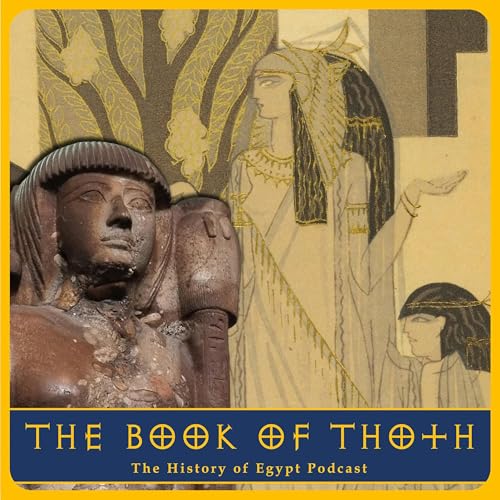
    The prince Kha-em-Waset (lived c.1260 BCE) was a learned man, and an accomplished priest. Centuries after his death, storytellers remembered the prince as a sage and magician. They told tales of his adventures, including one where Khaemwaset stole a magical book, belonging to the great god Djehuty/Thoth. In a tale of gothic horror, the prince must wrangle with the consequences of his greed... CONTENT WARNING: Story contains themes of suicide, murder, and sexual horror. Please listen with discretion. Music: Matt Uelman, "Tristram;" Keith Zizza, "Dissatisfaction," "Memories of Thebes," and "Beloved of Ma'at;" Ray Noble & His Orchestra, "Midnight with the Stars and You (Instrumental);" TableTop Audio "The Mummy's Tomb." Logo image: Statue of Khaemwaset from Asyut, now in British Museum (photo Dominic Perry); painting of Tabubue, by M. Lalau (1932). The Tale of Khaemwaset and the Book of Thoth: Griffith, F. L. (1900). Stories of the high priests of Memphis: The Sethon of Herodotus and the Demotic tales of Khamuas. Available at Internet Archive. Lichtheim, M. (1980). Ancient Egyptian Literature Volume III: The Late Period, 125—151. Ritner, R. K. (2003b). The Romance of Setna Khaemuas and the Mummies (Setna I). In W. K. Simpson (Ed.), The Literature of Ancient Egypt: An Anthology of Stories, Instructions, Stelae, Autobiographies, and Poetry (3rd ed., pp. 453--469). Vinson, S. (2018). The Craft of a Good scribe: History, Narrative and Meaning in the First tale of Setne Khaemwas. Learn more about your ad choices. Visit megaphone.fm/adchoices
    Show More Show Less
    35 mins
  • 229: The First Egyptologist? Khaemwaset & the Apis Bulls
    Mar 9 2026
    In 1263 BCE, priests announced the death of the APIS BULL. Sacred to Ptah, the bull dwelled in the temple at Men-nefer (Memphis). Now, in year 30 of Ramesses II, the King's son KHA-EM-WASET would lead the funerary processions. Shortly after, the prince inaugurated the first phase of a now famous monument. The Lesser Vaults of the SERAPEUM begin to take shape. The prince also starts a project for which he is renowned: the preservation and restoration of old monuments. These acts have earned him the moniker "the first Egyptologist." Logo: Statue of Khaemwaset from Asyut, now in the British Museum (Photo Dominic Perry). Music: Keith Zizza www.keithzizza.net, used with artist's permission. Learn more about your ad choices. Visit megaphone.fm/adchoices
    Show More Show Less
    24 mins