Unconventional Wisdom About Conventional Wisdom cover art

Unconventional Wisdom About Conventional Wisdom

Unconventional Wisdom About Conventional Wisdom

By: Kim Miller - Hershon
Listen for free

Unconventional Wisdom About Conventional Wisdom: Where clichés come to retire and fresh thinking we inspire. Smart minds don’t think alike—and that’s the point. Unconventional Wisdom About Conventional Wisdom takes you inside the messy, brilliant, and bold thought processes of high-achieving leaders, entrepreneurs, and out-of-the-box thinkers. We skip the clichés and spotlight the real talk: the strange decisions that worked, the brilliant ideas that bombed, and the thought patterns that defy the rulebook—but still lead to growth, impact, and the occasional mic drop. If you’re tired of surface-level advice and crave the kind of wisdom that makes you pause, laugh, and level up—this is your new favorite listen. Because let’s face it: playing it safe never built anything worth bragging about.Copyright 2025 All rights reserved. Economics Leadership Management & Leadership
Episodes
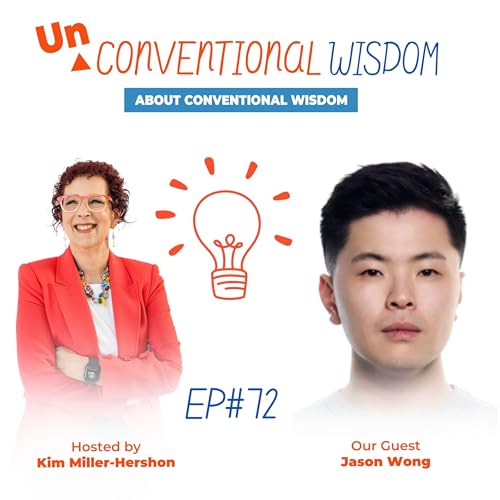
  • Unconventional Wisdom About Conventional Wisdom Podcast Episode Seventy Two with Jason Wong
    May 29 2026

    In this episode of Unconventional Wisdom About Conventional Wisdom , Kim Miller-Hershon sits down with Jason Wong a serial entrepreneur, manufacturing innovator, and the CEO of Packing Duck, a company specializing in customized packaging solutions for high-growth consumer brands.

    Having built multiple businesses across marketing, e-commerce, and manufacturing, Jason combines entrepreneurial creativity with deep operational expertise. From scaling packaging solutions for major consumer brands to building and exiting successful companies, he has spent the last decade learning how to navigate growth, leadership, hiring, and operational complexity in highly competitive industries.

    In this conversation, Jason shares why one of the biggest mistakes entrepreneurs make early on is trying to imitate larger companies instead of building strategies that fit their current stage of growth. Reflecting on his early business experiences, he explains how copying billion-dollar companies led to costly mistakes and why smaller businesses must learn to think differently, move faster, and operate more intentionally.

    Jason also dives into the realities of entrepreneurship as an immigrant founder, discussing the pressure of cultural expectations, the challenge of creating unconventional career paths, and why building businesses often requires going against traditional definitions of success. He reflects on growing up in a culture where prestigious careers and big-name institutions were prioritized, while entrepreneurship was viewed as uncertain and unconventional.

    Throughout the episode, Jason offers a refreshing perspective on leadership, people management, and company culture. He explains why leadership is rarely black and white, why understanding context matters when managing people, and how giving employees room to grow can sometimes unlock extraordinary results.

    Beyond business strategy, Jason also reflects on hiring, accountability, persistence, imposter syndrome, and the importance of creating standards that shape company culture from the top down.

    This episode explores:
    * Why copying large companies can hurt small businesses and startups
    * The lessons Jason learned from costly early entrepreneurial mistakes
    * How immigrant and cultural expectations shaped his career journey
    * Why entrepreneurship often requires going against conventional paths
    * The realities of bootstrapping businesses without outside investors
    * Why leadership and people management are rarely black and white
    * The importance of hiring for mindset, organization, and adaptability
    * How strong leadership standards influence company culture
    * Why accountability must start with leadership
    * The challenges of building and managing high-performing teams
    * Why persistence and relentless follow-up create opportunities
    * Jason’s perspective on imposter syndrome and entrepreneurial comparison

    Jason’s perspective is a powerful reminder that entrepreneurship and leadership are not about following conventional paths or trying to copy what everyone else is doing they’re about resilience, adaptability, persistence, and having the courage to create opportunities for yourself.

    If you’re an entrepreneur, founder, executive, or leader navigating growth, hiring challenges, company culture, entrepreneurship, or self-doubt, this conversation is packed with practical wisdom, mindset shifts, and real-world business insights.

    Connect with me here:
    * Website: https://www.kimmillerhershon.com
    * LinkedIn: https://www.linkedin.com/in/kmillerhershon
    * Newsletter: https://link.kimmillerhershon.com/widget/form/aEdmdA1W5MhoMCMfy5O8
    * Webinar: https://webinar.kimmillerhershon.com/?utm_source=Podcast

    Guest Details:
    *Guest: Jason Wong
    *Company: Packing Duck


    Hosted by Simplecast, an AdsWizz company. See pcm.adswizz.com for information about our collection and use of personal data for advertising.

    Show More Show Less
    33 mins
  • Feeling Like an Imposter Is the Price of Becoming Someone New | Moti Elkaim
    May 26 2026

    In this episode of Unconventional Wisdom About Conventional Wisdom, Kim Miller-Hershon sits down with Moti Elkaim a fundraising and storytelling strategist who helps startup founders turn bold visions into investor-backed companies.

    As the creator of the Pitch Cycle method, Moti has helped startup leaders raise millions across seed, Series A, and growth stages. A former CMO who helped scale companies to more than $200 million in sales, Moti is also a former public speaking lecturer at Columbia University, a top writer on startups and fundraising, and the host of the How to Sell Your Vision podcast.

    In this conversation, Moti shares why one of the biggest mistakes leaders and entrepreneurs make is judging situations too quickly instead of asking deeper questions. Using a powerful story about a little girl holding two apples, he explains how assumptions, bias, and emotional reactions can distort leadership decisions and damage relationships before we fully understand what’s actually happening.

    Moti also dives into the psychology of entrepreneurship, fundraising, and self-worth explaining why founders often underestimate the value they bring to the table when facing investors, clients, or high-level executives. He discusses how entrepreneurs can stop overcompensating, stop trying to impress everyone, and instead learn to trust the value of their own lived experiences and expertise.

    Throughout the episode, Moti offers a refreshing and highly unconventional perspective on imposter syndrome. Rather than trying to eliminate it, he reframes it as a natural part of growth, explaining that stepping into rooms where you don’t yet fully belong is often exactly how transformation happens.

    Beyond fundraising strategy, Moti also reflects on authenticity, leadership psychology, storytelling, AI, and why founders must learn to communicate their vision with confidence, clarity, and emotional intelligence.

    This episode explores:
    * Why leaders should ask more questions before making assumptions
    * How entrepreneurs can stop overcompensating and trying to impress everyone
    * Why every business relationship is an equal exchange of value
    * Moti’s unconventional perspective on imposter syndrome
    * Why growth often requires stepping into rooms where you feel uncomfortable
    * How authenticity creates stronger leadership and business relationships
    * Why lived experience matters more than credentials alone
    * How AI can help founders organize ideas, systems, and workflows
    * The importance of communicating ideas in ways that match how your brain works

    Moti’s perspective is a powerful reminder that leadership and entrepreneurship are not about pretending to have all the answers they’re about curiosity, resilience, authenticity, and having the courage to grow into the next version of yourself.

    Connect with me here:
    * Website: https://www.kimmillerhershon.com
    * LinkedIn: https://www.linkedin.com/in/kmillerhershon
    * Newsletter: https://link.kimmillerhershon.com/widget/form/aEdmdA1W5MhoMCMfy5O8
    * Webinar: https://webinar.kimmillerhershon.com/?utm_source=Podcast

    Guest Details:
    * Guest: Moti Elkaim
    * Podcast: How to Sell Your Vision
    * LinkedIn: https://www.linkedin.com/in/moti-elkaim/


    Hosted by Simplecast, an AdsWizz company. See pcm.adswizz.com for information about our collection and use of personal data for advertising.

    Show More Show Less
    35 mins
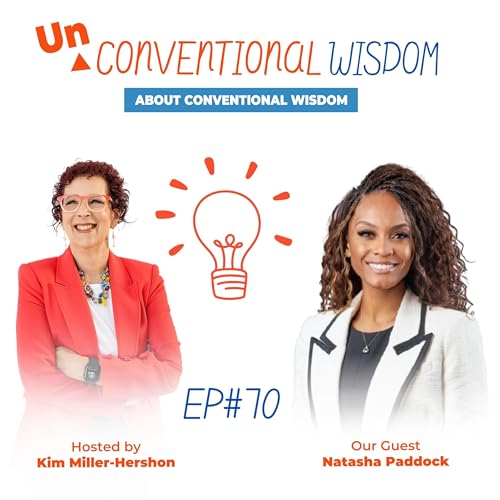
  • From Overcommitment to Alignment: Redefining Modern Leadership with  Natasha Paddock
    May 22 2026
    In this episode of Unconventional Wisdom About Conventional Wisdom, Kim Miller-Hershon sits down with Natasha Paddock CEO of the COPE Family Support Center and a mission-driven leader with a background in social work, psychology, and public service leadership. Natasha has spent her career working across government and nonprofit systems, including leadership roles in homelessness and community services across the Bay Area. Today, she leads COPE Family Support Center, where she and her team focus on strengthening family relationships through counseling, parent education, and community-based support services that help break intergenerational cycles and build healthier foundations for families. In this conversation, Natasha shares a powerful reframe on one of the most common leadership beliefs: that emotion should be removed from decision-making. While many leaders are taught to separate feeling from strategy, Natasha explains why that mindset can actually weaken leadership in human-centered work. Instead, she explores how emotional awareness when understood and managed becomes a source of clarity, compassion, and stronger decision-making. She also reflects on her early start in leadership, stepping into management roles in her early twenties within local government systems. That experience shaped her ability to navigate complexity, lead through crisis, and build systems-level thinking at a young age, while also learning the long-term responsibility of developing others. A major theme throughout the episode is the idea of alignment over balance. Natasha unpacks how leaders often struggle with competing demands from teams, communities, and organizations, and why the real challenge is ensuring your energy matches your values especially when everything feels important. The conversation goes deeper into leadership traps such as the “yes culture,” where high performers overcommit simply because they are capable. Natasha and Kim explore how this pattern can lead to burnout, bottlenecks, and a lack of strategic clarity, especially in mission-driven environments where everything feels urgent and meaningful. Natasha also opens up about unlearning the belief that strong leaders must always have the answers. Instead, she highlights the importance of curiosity, creating space for others to contribute, and building teams that are empowered to think and decide independently — rather than becoming overly dependent on leadership. One of the most reflective parts of the episode centers on imposter syndrome, identity, and transition. Natasha shares how growth often comes with discomfort and a redefinition of self, especially when stepping into new roles or environments. Rather than resisting that discomfort, she explains how leaning into it and reconnecting with lived experience and accomplishments helps leaders stay grounded and confident. Together, Kim and Natasha also explore deeper themes of bias, perspective, and lived experience, including how assumptions about identity, privilege, and workplace expectations shape how people move through the world and how leaders can become more aware of those dynamics. This episode explores: - How emotional intelligence strengthens clarity and decision-making - Why alignment matters more than traditional “work-life balance” - How overcommitment creates bottlenecks and burnout - Why strong leadership is about asking better questions, not having all the answers - The importance of building teams that contribute, not just execute - Why imposter syndrome often appears during growth and transition Natasha’s perspective is a powerful reminder that leadership is not just about systems, strategy, or output it’s about people, awareness, and the ongoing process of becoming more intentional in how we lead and show up. If you’re a leader, executive, or change maker navigating complexity, growth, or personal evolution, this conversation offers grounded insights on how to lead with clarity, empathy, and alignment even in uncertain environments. Connect with me here: Website: https://www.kimmillerhershon.com LinkedIn: https://www.linkedin.com/in/kmillerhershon Newsletter: https://link.kimmillerhershon.com/widget/form/aEdmdA1W5MhoMCMfy5O8 Webinar: https://webinar.kimmillerhershon.com/?utm_source=Podcast Guest Details: Guest: Natasha Paddock CEO: COPE Family Support CenterLinkedIn: https://www.linkedin.com/in/natasha-paddock-msw-6278b0a/ Hosted by Simplecast, an AdsWizz company. See pcm.adswizz.com for information about our collection and use of personal data for advertising.
    Show More Show Less
    36 mins
adbl_web_anon_alc_button_suppression_c
No reviews yet