• 137 | How Entrepreneurs Use Real Estate to Build Wealth Without Becoming a Landlord with Chris Larsen
    Jun 23 2026
    What if your business is generating great income but you're still not financially free? In this episode of the Vital Wealth Strategies Podcast, host Patrick Lonergan sits down with Christopher Larsen, founder and Principal of Next-Level Income, to tackle one of the biggest blind spots entrepreneurs face, building income without building lasting wealth. Chris brings over 20 years of real estate investing experience, an MBA in Finance, and a track record of over $2 billion in real estate acquisitions to the conversation. He walked away from an 18-year career in the medical device industry because he built something better, and now he dedicates his time to helping other entrepreneurs do the same. If you've ever wondered whether you're truly building wealth or just generating a bigger paycheck, this episode was made for you. Patrick and Chris break down the exact framework entrepreneurs need to achieve real financial freedom, including Chris's DIAL method for evaluating investments, the 7-year formula for replacing active income with passive income, and why owning a duplex is not the passive income strategy most people think it is. They also get into the power of real estate cycles, how to use depreciation to legally reduce your tax burden, and the generational wealth strategies that separate the Rockefellers from the Vanderbilts. Whether you're just starting to think about investing outside your business or you're ready to scale your portfolio, this conversation will challenge the way you think about money, freedom, and legacy. Key Takeaways: Financial freedom is not a net worth number, it's the point where your passive income exceeds your monthly expensesThe DIAL framework helps investors identify what matters most: Depreciation, Income, Appreciation, and LiquidityOwning small residential rentals is rarely passive, true passive income comes from partnering with an experienced operatorReal estate follows an approximately 18.5-year cycle, knowing where you are in that cycle determines which asset class makes the most senseBuying the real estate your business occupies creates a powerful tax and wealth-building strategyDiversification is critical, don't concentrate all your wealth in your business aloneLiquidity planning is non-negotiable, always maintain a minimum cash threshold to protect against black swan eventsTeaching your children about money early and giving them real financial responsibility, is the foundation of generational wealth Learn More About Chris: nextlevelincome.comnextlevelincome.com/financialfreedombooknextlevelincome.com/kids Episode Resources: The Simple Path to Wealth by JL CollinsThe Secret Life of Real Estate and Banking Resources: Visit vitalstrategies.com to download FREE resources Listen to the podcast on your favorite app: Vital Wealth Strategies Podcast | Tax & Financial Strategies for EntrepreneursFollow on Instagram at https://www.instagram.com/vital.strategiesFollow on Facebook at https://www.facebook.com/VitalStrategiesPodcastFollow on LinkedIn at https://www.linkedin.com/in/patricklonergan/ Credits: Sponsored by Vital WealthMusic by CephasArt work by Two Tone Creative Audio, video, research and copywriting by Victoria O'Brien
    Show More Show Less
    53 mins
  • 136 | Why 90% of Family Wealth Is Gone By the Third Generation (And How to Stop It) with DJ Van Keuren
    Jun 16 2026
    What separates the entrepreneurs who build lasting, generational wealth from those who watch it disappear by the second or third generation? In this episode of the Vital Wealth Strategies Podcast, host Patrick Lonergan sits down with DJ Van Keuren – Harvard educated family office real estate expert, founder of the Family Office Real Estate Institute, and a man who has personally managed real estate portfolios for some of the most prominent families in the country, including the Marriott family, to unpack the strategies, systems, and mindset shifts that turn entrepreneurial success into a lasting legacy. DJ brings decades of real-world experience navigating everything from luxury hotel acquisitions in New York City to distressed multifamily opportunities, and he doesn't hold back on exactly where wealthy families go wrong and what to do instead. Patrick and DJ dive deep into the four pillars of real estate wealth building - appreciation, depreciation, amortization, and cash flow and why the average family office allocates roughly 24% of its portfolio to real estate. DJ reveals the single biggest mistake business owners make once they accumulate significant wealth (hint: it's the same thing that made them successful in business, and they stop doing it), how to properly stress test a deal before you commit, why underwriting the operator matters far more than underwriting the deal itself, and why right now may be one of the most compelling buying opportunities in the 18.6-year real estate cycle. Whether you're evaluating your first syndication or building a multi-generational real estate portfolio, this conversation gives you the framework, the questions to ask, and the perspective to invest with confidence. Key Takeaways: The average family office allocates ~24% of its portfolio to real estate, for good reason. Appreciation, depreciation, amortization, cash flow, and leverage all work together to build wealth in ways other asset classes simply can't matchThe #1 mistake wealthy business owners make is applying zero structure to managing their own wealth, the same rigor (goals, strategy, quarterly reviews) that built the business needs to be applied to the portfolioAn Investment Policy Statement (IPS) is the foundation, it defines what you'll buy, what returns you're targeting, and whether future generations are part of the pictureAlways underwrite the operator before the deal, a great property with a bad operator is a bad investment. Ask how they navigated the Great Recession, not just what returns they postedStress test every deal, model the worst case scenario (higher cap rate at exit, higher refinancing rates) and ask if you can live with that outcome before you commitReal estate runs on an 18.6-year cycle, DJ believes we are currently at a prime buying point, with distressed multifamily assets hitting the market due to financial pressure, not property failureMultifamily has historically never exceeded 11.6% vacancy - the resilience compared to commercial or office makes it a core holding for cash flow and downside protection70% of family wealth is lost by the second generation; 90% by the third - governance, family councils, and intentional planning are the antidoteReal estate's illiquidity is a feature, not a bug, it protects families from emotional decision-making and forces the long hold that builds real wealthThe optimal number of properties in a family real estate portfolio is 15, per FORE Institute research, funds can be an efficient path to that diversification without the management burden Learn More About DJ: Family Office Real Estate Institute: fore.instituteDJ Van Keuren's personal website: djvankeuren.com Resources: Visit vitalstrategies.com to download FREE resources Listen to the podcast on your favorite app: Vital Wealth Strategies Podcast | Tax & Financial Strategies for EntrepreneursFollow on Instagram at https://www.instagram.com/vital.strategiesFollow on Facebook at https://www.facebook.com/VitalStrategiesPodcastFollow on LinkedIn at https://www.linkedin.com/in/patricklonergan/ Credits: Sponsored by Vital WealthMusic by CephasArt work by Two Tone Creative Audio, video, research and copywriting by Victoria O'Brien
    Show More Show Less
    47 mins
  • 135 | The Portfolio Income Mistake That's Silently Draining Your Wealth with Russ Gaiser & Mike Hoeflich
    Jun 9 2026
    Are you leaving hundreds of thousands of dollars on the table with your retirement income strategy? In this episode of the Vital Wealth Strategies Podcast, host Patrick Lonergan sits down with Russ Gaiser III and Mike Hoeflich - co-authors of the #1 bestselling book Beyond Breakeven: The Essential Guide to Social Security Optimization and founders of Retirement Income HQ of America, to tackle one of the most misunderstood challenges facing entrepreneurs today: turning a lifetime of accumulated wealth into a reliable, tax-efficient retirement income stream. Russ and Mike have helped thousands of couples stop guessing with their benefits and start building math-backed income plans, and in this conversation they pull back the curtain on the strategies most financial advisors either don't know or won't tell you. Patrick and his guests walk through the five pillars of retirement income optimization, expose the hidden conflict of interest that causes most advisors to give subpar Social Security advice, and break down exactly how high-net-worth entrepreneurs can design a retirement where they potentially owe zero in federal taxes. From the dangers of dollar cost ravaging and sequence of returns risk, to the tax time bomb hiding inside most 401k accounts, to the overlooked trap that leaves surviving spouses financially vulnerable, this episode is packed with actionable, math-backed strategies that can permanently change your retirement outcome. Whether you're five years from retirement or already in it, this is a conversation you can't afford to miss. Key Takeaways: Claiming Social Security at age 70 versus age 62 can mean at minimum 77% more monthly income for lifeMost financial advisors have a built-in conflict of interest when advising on Social Security timingDollar cost ravaging, not dollar cost averaging, is the real risk retirees face when drawing from market-dependent portfoliosA large traditional 401k or IRA can become a tax time bomb at RMD age, forcing taxable withdrawals that spike your tax bracket and Medicare premiumsUp to $600–$700 per month in extra Medicare premiums (IRMAA) can be triggered by poor income planningAt least 15% of Social Security income is always tax-free, making it one of the most tax-efficient income sources availableThe surviving spouse tax trap is one of the most overlooked risks in retirement planningA successful retirement income plan starts with knowing exactly how much you need and just as importantly, how much you don't Learn More About Mike and Russ: 📘 beyondbreakevenbook.com Episode Resources: The Intelligent Investor by Benjamin Graham Resources: Visit vitalstrategies.com to download FREE resources Listen to the podcast on your favorite app: Vital Wealth Strategies Podcast | Tax & Financial Strategies for EntrepreneursFollow on Instagram at https://www.instagram.com/vital.strategiesFollow on Facebook at https://www.facebook.com/VitalStrategiesPodcastFollow on LinkedIn at https://www.linkedin.com/in/patricklonergan/ Credits: Sponsored by Vital WealthMusic by CephasArt work by Two Tone Creative Audio, video, research and copywriting by Victoria O'Brien
    Show More Show Less
    41 mins
  • 134 | The IRS Loopholes Keeping Millions in Entrepreneur Pockets with Michael Moffa
    Jun 2 2026

    What if the tax strategy your CPA has never mentioned could legally eliminate hundreds of thousands of dollars in tax liability and generate cash flow at the same time? In this episode of the Vital Wealth Strategies Podcast, host Patrick Lonergan sits down with returning guest Michael Moffa, founder of Prosperity Tax Advisors, for a masterclass in advanced tax strategy built specifically for high-income entrepreneurs. Michael brings nearly 25 years of experience in private wealth advising and leads the only tax advisory firm in the country housing eight professional credentials under one roof, giving business owners access to elite-level tax planning, wealth management, and exit strategy guidance that most CPAs simply cannot provide.

    Patrick and Michael pull back the curtain on the IRS-compliant tax strategies that top earners are quietly executing right now, from cost segregation and bonus depreciation in real estate, to a healthcare technology investment strategy that turns a $100,000 investment into a $700,000 tax deduction with 7-to-1 leverage. Listeners will gain a clear understanding of what separates a legitimate tax strategy from a costly mistake, including how economic substance, material participation, and proper documentation can make a strategy both powerful and audit-proof. Whether you are a business owner frustrated by a growing tax bill, planning a future liquidity event, or simply ready to stop leaving money on the table, this episode delivers the advanced tax planning insights that could change the trajectory of your wealth.

    Key Takeaways:

    • Most entrepreneurs are stuck in reactive, compliance-based tax planning - a proactive strategy can save hundreds of thousands annually
    • A legitimate tax deduction must meet three criteria: ordinary, necessary, and reasonable in amount under IRC §162A
    • The economic substance doctrine requires that a transaction change your financial position beyond tax savings alone
    • A $100,000 investment in a healthcare technology strategy can generate a $700,000 deduction and $210,000 in tax savings at a 30% tax rate, compared to $24,000 in savings through a traditional oil and gas investment
    • Captive insurance (831(b) plans) can be a powerful strategy when properly structured but policies must be ordinary and necessary to your specific business
    • Wyoming LLCs offer privacy protections and charging order protection (COPE), making them ideal for holding passive assets outside your operating business
    • Tax strategies should live on the personal side, not inside the business, to protect EBITDA and maximize your business sale multiple
    • Documentation, third-party valuations, and audit defense are non-negotiable components of any advanced tax strategy
    • Crypto gains can be offset through strategies beyond a Charitable Remainder Trust, without locking up your capital

    Learn More About Michael:

    • Prosperity Tax Advisors – https://prosperityta.com
    • Michael Moffa – mmoffa@prosperityta.com

    Resources:

    Visit www.vitalstrategies.com to download FREE resources

    Listen to the podcast on your favorite app: Vital Wealth Strategies Podcast | Tax & Financial Strategies for Entrepreneurs

    Follow on Instagram at https://www.instagram.com/vital.strategies

    Follow on Facebook at https://www.facebook.com/VitalStrategiesPodcast

    Follow on LinkedIn at https://www.linkedin.com/in/patricklonergan/

    Credits:

    Sponsored by Vital Wealth

    Music by Cephas

    Art work by Two Tone Creative

    Audio, video, research and copywriting by Victoria O'Brien

    Show More Show Less
    55 mins
  • 133 | The Investment Game Is Rigged… Here's How to Get On the Right Side of It with Mike Collins
    May 26 2026
    What if the most powerful wealth-building investment on the planet has been deliberately kept out of reach, until now? In this episode of the Vital Wealth Strategies Podcast, host Patrick Lonergan sits down with Mike Collins, founder of Alumni Ventures, one of the most active venture capital firms in the United States, for a conversation that will fundamentally change the way entrepreneurs think about building and growing wealth. Mike brings over three decades of venture capital experience, starting at TA Associates in Boston in 1986, and has spent the last 12 years cracking open access to elite startup deals for everyday investors, the same deals backed by Andreessen Horowitz, Sequoia, and Benchmark and making them available to a community of 25,000 individual investors through Alumni Ventures. Patrick and Mike go deep on exactly how venture capital works, how it differs from private equity, and why a diversified portfolio of startups may actually be one of the most prudent moves an entrepreneur can make with their wealth. They unpack the explosive opportunities emerging right now in AI, defense tech, nuclear energy, and biotech drug discovery, and reveal why 2026 is shaping up to be one of the most target-rich environments for venture investing in a generation. Mike also shares the Alumni Ventures framework for evaluating deals, the tax advantages savvy investors are using, including QSBS, Roth IRA conversion strategies, and cash balance plan rollovers and why the illiquidity of venture capital is actually one of its greatest strengths for long-term wealth building. This is a must-listen for any entrepreneur serious about putting their money where the real value is being created. Key Takeaways The best venture capital deals have historically been locked behind institutional access; Alumni Ventures pools capital from 25,000 individuals to co-invest alongside tier-one VCs like Andreessen Horowitz, Sequoia, and Benchmark under the same termsA smart VC strategy targets a portfolio of approximately 100 companies built over 3–4 years - 5–10% of those investments can generate returns large enough to make the entire portfolio worthwhileVenture capital and private equity are fundamentally different, VC bets on early-stage growth companies while PE focuses on established businesses, leverage, and financial engineeringAdding alternatives like venture capital to a portfolio reduces overall volatility and protects against the compounding damage that market drawdowns cause to long-term wealthThe illiquidity of venture capital is a feature, not a flaw, it eliminates emotional short-term decision making and forces the patient, disciplined approach that actually builds generational wealthAI is just one of several exciting frontiers right now, nuclear energy, space communications, defense tech, and AI-driven drug discovery are all generating compelling venture opportunities in 2026Powerful tax strategies including QSBS (Section 1202), Roth IRA conversions on discounted private holdings, and cash balance plan rollovers can dramatically reduce or eliminate the tax burden on venture capital gainsAlumni Ventures offers flexible entry points including diversified funds, sector-specific funds, and individual deal access so investors can participate at whatever level fits their goals and risk toleranceBy the time a company goes public, the most explosive growth phase is already over; getting in early through venture capital means investing where value is actually being created, not chasing it after the fact Learn More About Mike: Website: av.vc Resources: Visit www.vitalstrategies.com to download FREE resources Listen to the podcast on your favorite app: Vital Wealth Strategies Podcast | Tax & Financial Strategies for Entrepreneurs Follow on Instagram at https://www.instagram.com/vital.strategies Follow on Facebook at https://www.facebook.com/VitalStrategiesPodcast Follow on LinkedIn at https://www.linkedin.com/in/patricklonergan/ Credits: Sponsored by Vital Wealth Music by Cephas Art work by Two Tone Creative Audio, video, research and copywriting by Victoria O'Brien
    Show More Show Less
    50 mins
  • 132 | More Americans Drink Coffee Than Water - Here's Why That's an Investment Opportunity with Adam Jason
    May 19 2026

    Did you know more Americans drink coffee every day than a glass of water and yet almost nobody thinks of coffee as an investment opportunity? In this episode of the Vital Wealth Strategies Podcast, host Patrick Lonergan sits down with Adam Jason, co-founder of Green Coffee Company and former Wall Street capital markets attorney, to unpack one of the most compelling alternative investment opportunities available to accredited investors today. Patrick and Adam explore how Green Coffee Company became the largest coffee producer in Colombia, why the traditional coffee supply chain is fundamentally broken, and how their farm-to-cup model is disrupting an industry worth billions. From major retail partnerships with Target and Walgreens to serving as the official coffee for Carnival Cruise Lines and the Western US National Parks, Green Coffee Company is quietly building something extraordinary and a Nasdaq IPO is on the horizon within 18 months.

    For entrepreneurs and high-net-worth investors looking to diversify beyond stocks and bonds, this episode of the Vital Wealth Strategies Podcast is essential listening. Patrick and Adam break down why alternative investments like coffee commodities can dampen portfolio volatility, how pre-IPO opportunities create asymmetric upside, and why traceability and sustainability aren't just feel-good buzzwords, they're competitive advantages driving real revenue growth. Whether you're a seasoned investor exploring private market opportunities or an entrepreneur looking to align your wealth-building strategy with your values, this conversation delivers the insight, inspiration, and actionable perspective you need to think differently about where your money works hardest.

    Key Takeaways:

    • Coffee is the second most traded commodity on earth behind petroleum, with 2 billion cups consumed daily worldwide
    • Green Coffee Company owns approximately 10,000 acres and 10 million coffee trees, making them the largest coffee producer in Colombia
    • Their farm-to-cup supply chain model provides full traceability, a major differentiator as ESG standards and ethical sourcing demands increase
    • The Juan Valdez brand has grown from zero to 2,500+ retail doors in just over a year, including Walgreens (1,400 stores) and Target (317 stores)
    • Alternative investments like coffee can reduce portfolio volatility by operating independently of traditional stock and real estate markets
    • Green Coffee Company is structured as a US Delaware holding company, giving investors the comfort of US law, US banking, and a familiar legal framework
    • A Nasdaq IPO is targeted within 18 months, creating a potential pre-IPO opportunity for accredited investors with a $100,000 minimum commitment
    • To connect with Adam Jason and learn more about investment opportunities, find him directly on LinkedIn

    Learn More About Adam:

    • Adam Jason's LinkedIn profile: Adam Jason | LinkedIn

    Resources:

    Visit www.vitalstrategies.com to download FREE resources

    Listen to the podcast on your favorite app: Vital Wealth Strategies Podcast | Tax & Financial Strategies for Entrepreneurs

    Follow on Instagram at https://www.instagram.com/vital.strategies

    Follow on Facebook at https://www.facebook.com/VitalStrategiesPodcast

    Follow on LinkedIn at https://www.linkedin.com/in/patricklonergan/

    Credits:

    Sponsored by Vital Wealth

    Music by Cephas

    Art work by Two Tone Creative

    Audio, video, research and copywriting by Victoria O'Brien

    Show More Show Less
    40 mins
  • 131 | How Busy Entrepreneurs Are Quietly Building Real Estate Empires with Matthew Ricciardella
    May 12 2026
    What if busy entrepreneurs could build real estate empires without ever leaving their lane? In this power-packed episode of the Vital Wealth Strategies Podcast, host Patrick Lonergan sits down with Matthew Ricciardella, co-founder of Crystal View Capital, to uncover exactly how savvy entrepreneurs are quietly building real estate empires through institutional-grade manufactured housing investments. Matthew shares how Crystal View Capital has spent over two decades acquiring affordable housing communities across 32 states, delivering outsized returns to investors, including a 26% gross IRR on their first fund, all while busy entrepreneurs focus on what they do best: running their businesses. Patrick and Matthew pull back the curtain on the strategies that real estate empires are built on, from NOI-driven value creation and vertical integration to tax efficiency through cost segregation and accelerated depreciation. Whether you are a busy entrepreneur sitting on underperforming capital or someone looking to diversify beyond your business, this episode breaks down how to leverage other people's expertise to build generational wealth in real estate. Matthew also shares the one question every investor must ask before committing capital to any real estate sponsor and the answer might surprise you. Key Takeaways: Busy entrepreneurs can build real estate empires by investing as a limited partner (LP) and leveraging expert operators rather than managing properties themselvesManufactured housing is one of the most compelling affordable housing investment opportunities in today's market, with strong demand tailwinds across 32 statesControlling NOI (Net Operating Income) is the key to forcing appreciation, the best operators don't wait on cap rate compression or interest rate dropsVertical integration separates great real estate operators from average ones, in-house management drives significantly better returns than third-party property managersCost segregation can allocate 80–90% of asset value to personal property, creating substantial depreciation benefits for real estate investorsAlways ask a sponsor how much of their own capital is invested as an LP, aligned incentives are everythingLong-term holds, interest-only financing, and strategic refinancing are the cornerstones of how real estate empires generate tax-efficient, compounding wealthBusy entrepreneurs who stay in their circle of competence and partner with proven real estate operators consistently outperform those who try to go it alone Learn More About Matthew: 🌐 Crystal View Capital Website: www.crystalviewcapital.com📧 Crystal View Investor Relations: invest@crystalviewcapital.com📊 Crystal View On-Demand Webinar: available at crystalviewcapital.com Episode Resources: 📚 Influence: The Psychology of Persuasion by Robert Cialdini📚 Main Street Millionaire by Codie Sanchez🎁 Vital Wealth Strategies Free Resource Vault: vitalwealth.com/resources❓ Submit Your Question for the Podcast: vitalwealth.com/questions Resources: Visit www.vitalstrategies.com to download FREE resources Listen to the podcast on your favorite app: Vital Wealth Strategies Podcast | Tax & Financial Strategies for Entrepreneurs Follow on Instagram at https://www.instagram.com/vital.strategies Follow on Facebook at https://www.facebook.com/VitalStrategiesPodcast Follow on LinkedIn at https://www.linkedin.com/in/patricklonergan/ Credits: Sponsored by Vital Wealth Music by Cephas Art work by Two Tone Creative Audio, video, research and copywriting by Victoria O'Brien
    Show More Show Less
    42 mins
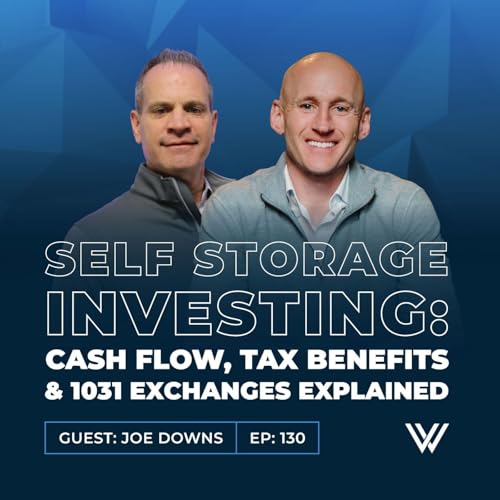
  • 130 | Self Storage Investing: Cash Flow, Tax Benefits & 1031 Exchanges Explained with Joe Downs
    May 5 2026

    In this episode, host Patrick Lonergan sits down with self-storage investing expert Joe Downs, entrepreneur, operator, and founder of The Storage Moguls, to make the case for one of the most overlooked recession-resistant real estate asset classes available today. With 80% of U.S. self-storage facilities owned by mom-and-pop operators, Joe explains why secondary and tertiary markets are overflowing with undervalued acquisition opportunities for investors willing to do the work. He breaks down three entry points - fully passive investing, hybrid owner-operator with third-party management, and active operator, showing how self-storage can generate meaningful passive real estate income with far less operational burden than traditional multifamily. Because self-storage facilities are operating businesses on commercial real estate, they qualify for SBA loans (7(a) and 504), giving investors access to favorable long-term financing that most residential strategies can't touch.

    Joe and Patrick also dig into the full wealth-building stack available to self-storage investors: appreciation, cash flow, loan amortization, depreciation, and the powerful tax benefits unlocked through cost segregation, bonus depreciation, and real estate professional status. The conversation goes deep on 1031 exchanges, how a qualified intermediary, a 45-day identification window, and a 180-day closing timeline can defer capital gains taxes indefinitely and how a stepped-up cost basis at death can eliminate them entirely. With trailing twelve-month performance metrics still priced at a discount following the 2023–2024 interest rate surge, Joe makes a compelling argument that 2026 represents one of the single greatest buying windows for self-storage since the asset class emerged and the Storage Moguls community is being built specifically to connect deal finders with capital partners ready to move.

    Key Takeaways

    • 80% of U.S. self-storage facilities are mom and pop owned, creating a massive fragmented acquisition opportunity in secondary and tertiary markets
    • Self-storage is recession-resistant, with demand driven by both economic growth and downturn.
    • Facilities qualify as commercial real estate businesses, making them eligible for SBA 7(a) and SBA 504 loans
    • Investors can participate at three levels: fully passive, hybrid owner-operator, or active operator
    • Wealth is built through five levers: appreciation, cash flow, loan amortization, depreciation, and 1031 exchanges
    • Cost segregation and bonus depreciation can accelerate tax write-offs significantly in year one
    • Real estate professional status (750 hrs/year) allows high-income earners to offset earned income with real estate losses
    • 1031 exchanges defer capital gains taxes indefinitely and a stepped-up basis at death may eliminate them entirely
    • Every dollar of NOI growth multiplies asset value at the prevailing cap rate
    • 2026 represents a rare buying window - trailing twelve metrics are discounted while the broader economy recovers

    Learn More About Joe:

    • 🌐 The Storage Moguls: thestoragemoguls.com

    Resources:

    Visit www.vitalstrategies.com to download FREE resources

    Listen to the podcast on your favorite app: Vital Wealth Strategies Podcast | Tax & Financial Strategies for Entrepreneurs

    Follow on Instagram at https://www.instagram.com/vital.strategies

    Follow on Facebook at https://www.facebook.com/VitalStrategiesPodcast

    Follow on LinkedIn at https://www.linkedin.com/in/patricklonergan/

    Credits:

    Sponsored by Vital Wealth

    Music by Cephas

    Art work by Two Tone Creative

    Audio, video, research and copywriting by Victoria O'Brien

    Show More Show Less
    52 mins