• Ken Sandy: Influence Was Always the Point
    Jun 9 2026

    Most conversations about artificial intelligence and the product manager begin by asking whether the role survives. This one begins somewhere more useful: by asking what the role was ever actually for. In this episode of On the Subject of Leadership, I speak with Ken Sandy—author of The Influential Product Manager, the lecturer who built the first product management course in the engineering school at UC Berkeley, a longtime executive coach to founders and executives, and an adviser to boards—about what is left of product leadership once the artifacts that used to define it can be produced in seconds.

    Ken's argument is not the reassuring one. The documents, specifications, and roadmaps product managers are most often judged by, he contends, were never the work; they were the residue of the work. The work was always the influence—the grounding in evidence, the advocacy for the customer, the patient assembly of agreement among people who do not report to you. If that is right, the commoditisation of the artifacts is not a threat to the discipline but a solvent applied to it: it dissolves what was never essential and leaves the essential in plain view.


    This is a conversation about leadership at least as much as product. It moves from the counter-intuitive proposition that having no authority is an advantage, through the documents organisations cling to long after anyone reads them, to the questions boards are asking about AI—and the rather better questions Ken believes they should be asking instead.


    Takeaways

    1. Why the absence of formal authority is not a constraint to work around, but the very thing that forces sound product judgement.
    2. Renewal as subtraction: why growth is often a matter of forgetting the right things, not learning new ones.
    3. The artifacts organisations sustain as ceremony, long after the people demanding them have stopped reading them.
    4. The two anti-behaviours of AI-era product work: skipping the thinking, and feeding the beast.
    5. Why boards ask risk-aversion questions when they should be asking opportunity questions—and why a director who has never used the tools can do neither well.
    6. Deterministic versus probabilistic products, and what the distinction demands of governance.
    7. Intent over permission: the leadership move that keeps momentum without burning trust.


    Chapters

    [00:00] Introduction
    [04:41] What influence actually means
    [10:00] Why having no authority is an advantage
    [17:29] One skill in, one skill out: the forced choice
    [24:42] The artifacts we cling to
    [33:07] Two anti-behaviours: skipping the thinking, feeding the beast
    [40:58] Curiosity over age, and the fear of the tools
    [45:33] The board's wrong questions: risk versus opportunity
    [54:19] Deterministic versus probabilistic, and what directors must understand
    [01:02:51] The chapter to read first, and the one to revise
    [01:09:27] Lightning round and close


    Guest Links & References

    • Ken Sandy
    • Influential Product Manager
    • Referenced in this episode: L. David Marquet, Turn the Ship Around! (2013)


    About the Show

    On the Subject of Leadership is a long-form interview series on governance, organisational culture, and the realities of decision-making — without slogans or motivational gloss.


    Hosted by Dr Robert N. Winter.


    Subscribe / Follow

    Newsletter / Website: robert.winter.ink

    LinkedIn: dr-robert-winter

    X: @DrRobertWinter

    Instagram: DrRobertWinter

    Mastodon: social.winter.ink/@robert

    YouTube: @OnTheSubjectOfLeadership


    Credits

    Recorded remotely via Riverside

    Music: The Hidden Thread by Roberto Prado / Artlist

    Show More Show Less
    1 hr and 20 mins
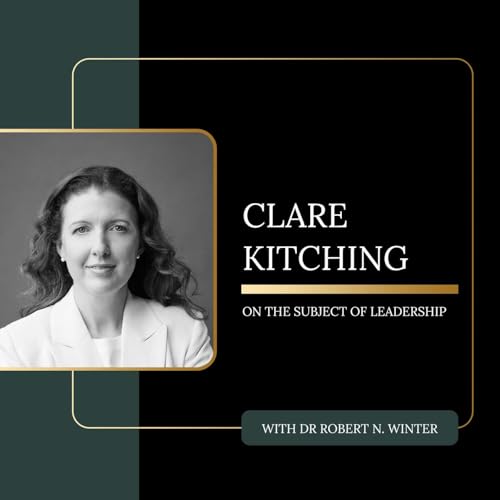
  • Clare Kitching: Make My Business Grow, How Can I Do This?
    May 26 2026

    Most organisations now claim to be adopting artificial intelligence. Far fewer can describe what they are actually adopting it into. In this episode of On the Subject of Leadership, I speak with Clare Kitching, founder of Cambiq Consulting—formerly of McKinsey, QuantumBlack, and Treasury Wine Estates—about what responsible AI leadership actually requires in this country, at this moment.

    Clare's argument is organisational rather than technological: governance cannot exist as a paper exercise; shadow AI persists because employees do not know whether policies exist; and the genuinely strategic question—how do I grow my business—is precisely the question the technology cannot answer for you.


    Takeaways

    1. The institutional credibility leaders quietly outsource, and what is left when they leave.
    2. Why executives who have never logged in cannot lead AI adoption credibly.
    3. The difference between what clients say they want to know and what they are actually asking.
    4. The portfolio of productivity, growth, and reimagination—and why most organisations confuse the three.
    5. Curiosity as the distinguishing trait, regardless of age or education.
    6. The maintenance problem for which nobody planned.
    7. The team-level conversation that has yet to happen in most organisations.


    Chapters

    [00:00] Introduction
    [03:44] Welcome & opening question
    [04:37] Outsourcing your identity to the institution
    [07:36] Buzzwords versus business problems
    [10:24] What to unlearn from McKinsey
    [13:09] The executive who has never used AI
    [17:03] Just get started: the case for low-stakes entry
    [19:41] The best AI tool is the one you use
    [22:01] Chasing the bleeding edge: a waste of attention
    [24:25] Shopping for permission, or open to challenge?
    [26:54] No excuses: curiosity as the differentiating trait
    [29:27] It's not age, it's not education: the mindset argument
    [31:45] Curiosity, cognitive load, and burnout risk
    [33:11] AI as a brainstorming partner: the filtering problem
    [34:07] Productivity, growth, or reimagination: the portfolio question
    [36:42] You can't cut your way to success, even with AI
    [37:33] When to go for efficiency gains first
    [39:41] The question AI cannot answer: how to grow your business
    [41:03] Risk appetite, psychological safety, and where to start
    [42:07] Freeing up time: staff development as the upside
    [42:58] The three-month journey to meaningful adoption
    [45:51] AI is not set-and-forget: the maintenance problem
    [47:11] The bottom-up conversation: rank and file as drivers
    [49:17] Three bullet points versus three pages: the volume problem
    [50:53] Synthesis as a leadership discipline
    [52:38] Lightning round
    [54:03] Close


    Guest Links & References

    • Clare Kitching
    • Cambiq Consulting


    About the Show

    On the Subject of Leadership is a long-form interview series on governance, organisational culture, and the realities of decision-making — without slogans or motivational gloss.


    Hosted by Dr Robert N. Winter.


    Subscribe / Follow

    Newsletter / Website: robert.winter.ink

    LinkedIn: dr-robert-winter

    X: @DrRobertWinter

    Instagram: DrRobertWinter

    Mastodon: social.winter.ink/@robert

    YouTube: @OnTheSubjectOfLeadership


    Credits

    Recorded remotely via Riverside

    Music: The Hidden Thread by Roberto Prado / Artlist

    Show More Show Less
    54 mins
  • Nine Years, One Number
    May 19 2026

    A bonus release from the Inner Circle feed, made available to all listeners. Weekly article readings are normally reserved for Inner Circle members; this is the opening piece of a four-part series, opened more widely as a way in. The remaining three articles are available to read at robert.winter.ink or to hear on the Inner Circle's private podcast feed. Join the Inner Circle at robert.winter.ink


    For nine consecutive years, three of the world's most influential research operations have surveyed thousands of executives on artificial intelligence. The technology has matured through three or four generational shifts. The proportion of organisations capturing real financial value from any of it has remained, with a stubbornness that is almost dignified, somewhere between five and twenty per cent. This article sets out the longitudinal evidence, names the half-lie that allows the contemporary conversation to ignore it, and previews the three pieces to follow.


    In This Article

    • The technology has changed enormously. The numbers have not. MIT and BCG in 2017 found that five per cent of companies had extensively incorporated AI; McKinsey in 2025 finds six per cent capturing meaningful EBIT impact. The proportion has moved within a narrow band for nearly a decade.
    • "AI is moving too fast for the surveys to be reliable" is the half-lie at the centre of the executive conversation. The technology is moving fast at the level of model capability. It is not moving fast at the level of enterprise value capture, which is the level a board needs to care about. The conflation provides cover for the executive who cannot deliver.
    • Research for Governing Digital with Courage and Clarity surfaced an unusual pattern of anonymity. Contributors who saw the landscape clearly were happy to be named. Those insisting on the convenient lie — that the inconvenient findings were stale — would only speak unattributed.
    • Trollope worked out the social mechanics 150 years ago. In The Way We Live Now (1875), Augustus Melmotte raises capital across London society for a railway that will never be built. The fraud is not in the prospectus. The fraud is in the dinner.
    • These numbers are the empirical case for the saviour industrial complex thesis: the substitution of expensive acquisition and confident signalling for the patient development of organisational capacity.
    • Three pieces follow this one. The Permanent Pilot examines why only a quarter of organisations have moved AI to production after nine years of trying. The Theatre of Transformation examines the gap between deep-transformation claims and the absence of job redesign. The Books That Don't Balance, reserved for Inner Circle members, ties the threads together with a six-question diagnostic for boards.

    A Thought With Which To Sit

    Those who tell whole lies are merely concealing the truth. Those who tell half-lies have forgotten where they put it.


    Coming Up

    The remaining three articles in the series are available to read on the site and to hear on the Inner Circle's private podcast feed. Subscribe via the Commons at robert.winter.ink for site access, or join the Inner Circle for the audio.


    Further Reading

    • Trollope, A. — The Way We Live Now (1875).
    • Ransbotham, S., Kiron, D., Gerbert, P., & Reeves, M. — Reshaping Business with Artificial Intelligence (2017).
    • McKinsey & Company — The State of AI in 2025: Agents, Innovation, and Transformation (2025).
    • Khurana, R. — Searching for a Corporate Savior: The Irrational Quest for Charismatic CEOs (2002).
    Show More Show Less
    11 mins
  • Pascal Uerlings: Good Thing, Bad Thing, Who Knows?
    May 12 2026

    Most technology transformations do not stall because the technology fails. They stall because no one in the room has resolved a prior question—what, precisely, is being changed, and who is accountable for that change surviving contact with the business. Pascal Uerlings has spent six years working at that unresolved question, building one of Australia's more prominent Salesforce and AI implementation consultancies in the process. This is a conversation about why most AI initiatives fail in the operating model rather than the server room, what genuine psychological safety actually requires of a leader, and the gap between the founder narratives one reads on LinkedIn and the slower, less photogenic work of building something that lasts.


    Takeaways

    1. The model that made Pascal walk: why a consultancy organised around revenue targets cannot, in practice, organise around customers
    2. Founding J4RVIS in April 2020, weeks before the pandemic — and why timing concerns were never the strongest argument against doing it
    3. The structural reasons AI pilots produce enthusiasm in strategy decks and entropy in operating models
    4. Voice agents and the architecture of agentic AI: why the future is multiple agents talking to each other, and why that resembles the integration challenges of the past at higher sophistication
    5. The mischaracterisation of Gen Z as disengaged — and how the complaint usually says more about the leaders making it
    6. What it actually takes to build a culture of safety in cross-cultural teams, particularly across Australia and the Philippines
    7. Imposter syndrome reframed not as a deficit but as evidence of care — and why performing certainty is a worse leadership failure than admitting doubt

    Chapters

    [00:00] – Cold open
    [01:14] – Subscriber message
    [03:14] – Introduction
    [05:37] – From Belgium to Australia: the path to founding J4RVIS
    [13:00] – Building a people-centred consultancy: values before customers
    [19:15] – Pulling the trigger: launching weeks before COVID
    [23:09] – Imposter syndrome as a leadership superpower
    [29:19] – Why AI initiatives stall before production
    [39:04] – Voice agents and the architecture of agents talking to agents
    [48:22] – Leading across generations and cultures
    [57:12] – Identity, safety, and leading from who you are
    [01:02:56] – Good thing, bad thing, who knows? Lessons from six years
    [01:06:58] – Lightning round and close


    Guest Links & References

    • Pascal Uerlings — linkedin.com/in/puerlings/


    About the Show

    On the Subject of Leadership is a long-form conversation series examining leadership, governance, organisational life, and decision-making—without slogans or performative certainty.


    Hosted by Dr Robert N. Winter.


    Subscribe / Follow

    Newsletter / Website: robert.winter.ink

    LinkedIn: dr-robert-winter

    X: @DrRobertWinter

    Instagram: DrRobertWinter

    Mastodon: social.winter.ink/@robert

    YouTube: @OnTheSubjectOfLeadership


    Credits

    Recorded remotely via Riverside

    Music: The Hidden Thread by Roberto Prado / Artlist

    Show More Show Less
    1 hr and 9 mins
  • The Chair's Dilemma: When the Board Becomes the Problem
    May 8 2026

    A bonus release from the Inner Circle feed, made available to all listeners. Weekly article readings are normally reserved for Inner Circle members; this is one of the occasional pieces opened more widely. Join the Inner Circle at robert.winter.ink

    The most dangerous failure in corporate governance is rarely the rogue executive or the captured auditor. It is the quieter pattern of a board of intelligent, well-credentialled directors collectively unable to act on what each of them already privately suspects. This week's article works through how that silence forms, why governance codes cannot legislate against it, and what a chair can do about it before the crisis breaks rather than after.

    In This Article

    • Board failure usually looks ordinary. The dramatic governance scandal is rarer than the Monday meeting at which a softening result is referred to the next strategy session and nothing follows.
    • Pluralistic ignorance, not lack of information, is the principal mechanism. Directors privately hold concerns they fail to voice because they assume their colleagues do not share them.
    • Governance codes describe the architecture of a boardroom but say very little about its inhabiting. A board with every box ticked can still fail at the task its structure exists to enable.
    • Burke's 1774 distinction between trustee and delegate, addressed to the electors of Bristol, defines the office of director more accurately than any code currently on the books.
    • The markers of a healthy board are not exotic. They are visible to anyone who attends one for an hour, and the conditions for them are established years before any crisis arrives.

    A Thought With Which To Sit

    The director is a trustee of the company's long-term interest, not a delegate of the room's mood. Boards forget this and call the forgetting collegiality.

    Further Reading

    • Janis, I. L. — Victims of Groupthink (1972)
    • Westphal, J. D., & Bednar, M. K. — Pluralistic Ignorance in Corporate Boards, Administrative Science Quarterly (2005)
    • Sonnenfeld, J. A. — What Makes Great Boards Great, Harvard Business Review (2002)
    • Burke, E. — Speech to the Electors of Bristol (1774)
    Show More Show Less
    10 mins
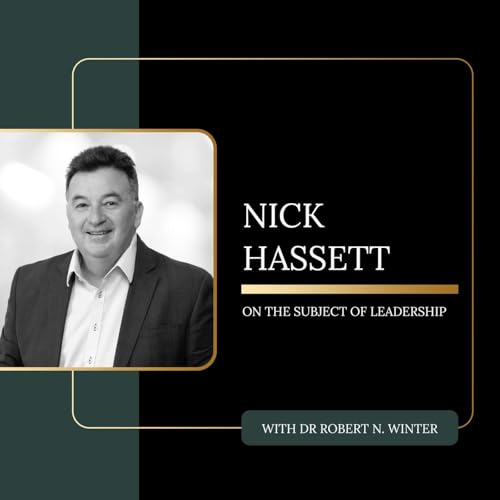
  • Nick Hassett: The Problem Won't Be Solved by the Thinking That Created It
    Apr 28 2026
    Nick Hassett has spent more than three decades intervening in organisations under pressure—not as a theorist, but as someone called in when the politics are already difficult and the gap between what the board believes is happening and what is actually happening has grown wider than anyone has yet said aloud. His work spans banking, technology, essential infrastructure, and sport across Australia and Asia, covering the full arc of an organisation in trouble: mobilisation, intervention, and recovery.In this conversation, we explore why transformation programmes fail when the people leading the change are, in important respects, the architects of the conditions they are trying to fix. Drawing on Nick's extensive experience working at the intersection of boards, executive teams, and operational reality, we discuss what it actually takes to bring a different structure of thinking to bear—where alignment breaks down, why accountability cultures can paradoxically produce silos, and what boards are getting wrong about AI governance while their staff adopt it unsanctioned.TakeawaysWhy the thinking that built the current operating model cannot be the same thinking that dismantles it — and what a "different brand of leadership" requires in practice.How accountability cultures, left uncalibrated, create silos and destroy the cross-functional collaboration on which real execution depends.The fragility of organisational alignment — why consensus often evaporates at the boardroom door, and what that costs in misdirected effort.Where the board–CEO relationship breaks down during transformation, and why that single relationship is the first point of failure.What boards are missing about shadow AI adoption — and why banning a technology does not eliminate the risk.The question nobody asks at the start of a transformation: what does success look like, how will we measure it, and what is my exit strategy?Why the pattern repeats — Six Sigma, digital, AI — and what that tells us about the enduring nature of leadership problems beneath the technology of the moment.Chapters[00:00] – Cold open: every box ticked, still failing — the accountability trap that creates silos[01:14] – Subscriber message[01:41] – Show introduction: the thinking that built the problem cannot fix it[03:58] – A career forged by evolution: thirty-five years in strategy execution[05:22] – The constant is people: helping organisations think through problems[05:50] – The common thread across banking, infrastructure, technology, and sport: regulation and complexity[07:58] – Mobilisation, intervention, and recovery: how engagements begin[08:32] – "I'll see you in two years": why organisations that try to go it alone usually fail[10:54] – Headcount reduction as the lazy option, and strategy by "throwing wheat at the side of a barn"[13:13] – The humility to not compete on subject matter expertise[14:23] – Challenging the starting hypothesis: when the board's diagnosis is part of the problem[16:35] – Coaching through the valley of despair — and futures that don't include everyone[18:07] – Scientism versus the relational: why diagnosis alone does not produce change[18:49] – Case study: an accountability culture that siloed itself into failure[21:43] – True accountability is cross-functional: responsibility, ownership, and ramifications[22:42] – Getting off the dance floor and onto the balcony: input measures versus outcomes[23:59] – The disinterested third party: putting yourself in the MD's shoes[26:59] – Pragmatism and the rate of change an organisation can absorb[28:00] – Where alignment breaks down: the board–CEO relationship as first point of failure[31:36] – Translation risk: how board priorities wash through policy, management systems, and operations[33:41] – Alignment that is only room deep: when consensus evaporates at the door[35:08] – The investment in alignment: spend the time or guarantee the points of failure[36:02] – The board's information problem: filtered reporting and the limits of oversight[37:04] – How board directors discharge their obligations: questioning management[38:15] – Intergalactic battlestars: boards that bounce from issue to issue[39:15] – AI and the board: why workshopping how to use AI may be the worst thing a board could do[41:33] – Men in Black and collective panic: when AI-generated material is convincing but not plausible[43:49] – Shadow AI: banning a technology does not eliminate the risk[44:15] – Head in the sand: the competitive cost of inaction on AI[45:56] – Discussing failure rates: the reluctance to talk honestly about what is not working[47:10] – Digital déjà vu: ten years ago it was digital, twenty years ago it was Six Sigma[49:31] – The flight magazine and the sixteen black belts: impetuous adoption without thinking through implications[51:15] – The problem remains a leadership problem: replace the technology label, and the ...
    Show More Show Less
    1 hr and 5 mins
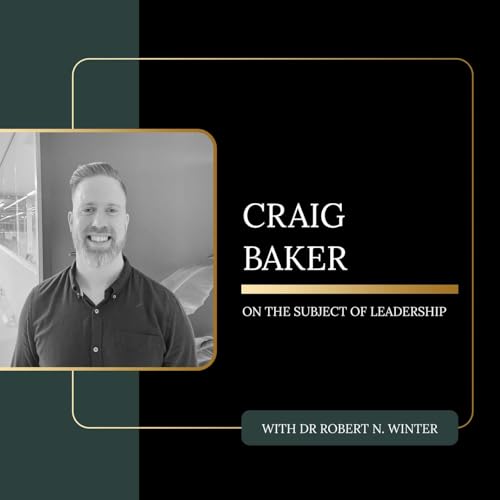
  • Craig Baker: Leadership at the Point of Contact
    Apr 14 2026
    Craig Baker has spent the past eighteen months in growth and sales leadership at Jarvis, shaping strategy and securing commitment at the front end of enterprise technology engagements—predominantly in utilities and infrastructure. When a customer gap demanded more than arm's-length management, he chose to step back into delivery. What he found was not the reassurance that a well-sold solution was tracking to plan, but friction: between what leaders confidently promise and what teams can sustainably build, between seamless integration on a slide and the reality of aging systems, regulatory constraint, and field conditions.In this conversation, we explore what happens when a leader closes the distance between the boardroom and the tools—how proximity to consequence reshapes credibility with customers and teams alike, and why the art of saying no is a consultancy's most valuable and least intuitive capability. Craig discusses what organic growth at a firm like Jarvis demands of leaders who treat the company's money and reputation as their own, and how knowing when to hand over—not just when to step in—is itself a leadership act.Along the way, we examine the tension between sales creativity and operational honesty, the distinction between building teams and merely employing them, and why the ultimate measure of leadership may be a silent legacy: behaviours that echo forward through people you no longer manage.TakeawaysWhy stepping back into delivery after selling a solution sharpened Craig's credibility—and chastened his confidenceThe discipline of saying no in the right way: to customers, to stakeholders, and to your own ambition as a consultancyHow change management, not technology, determines whether a transformation succeeds or quietly dies on arrivalThe difference between building a business organically—with your own time, money, and reputation at stake—and simply writing cheques to grow headcountWhy not everyone should be promoted into leadership, and how separating individual contributor and leadership pathways protects both people and performanceThe leader as multiplier: letting go of the tools, absorbing the blame, and ensuring the team takes the bowChapters[00:00] – Cold open: the honesty to say "I can't promise it"[03:34] – From delivery to sales: what drifted when Craig moved to the front end[06:36] – Return to the tools: what he expected versus what he found[08:55] – The confidence to prioritise: why junior staff struggle to say no[10:05] – "Not no—not right now": setting foundations before building features[12:53] – The vendor as scapegoat: saying no when you're the third party in the room[16:52] – What is the actual business problem? Technology as symptom, not cure[17:45] – Experimentation over transformation: testing hypotheses before committing millions[19:31] – Layering trust: from proximity, to process, to empirical proof[22:34] – The cost of outcomes: when the rate of return stops making sense[23:58] – Growing by reputation: why Jarvis invested in advisory over marketing[26:25] – Sales versus operations: creativity within the bounds of deliverability[30:55] – Having their back: absorbing risk so the team can experiment[33:20] – Introversion and humility: why Craig doesn't want the limelight[35:25] – The silent legacy: leadership behaviours that echo through generations[37:11] – Building teams versus employing them[38:58] – Skin in the game: when it's your own money on the line[41:47] – Knowing when to hand over: what gets you to 50 won't get you to 100[43:11] – Building the wings while flying the plane: structure at pace[45:37] – Can leadership be taught? The innate desire to be accountable[47:22] – Valuing individual contributors: not everyone needs to lead[49:56] – What must you let go of? The leader as multiplier, not maker[52:42] – "Let's figure it out together": relating to the problems your team face[54:04] – Training, coaching, mentoring: unlocking dormant capacity[55:42] – Lightning round: promises, proximity signals, and a field lesson from the utilities sectorGuest Links & ReferencesCraig Baker - LinkedInAbout the ShowOn the Subject of Leadership is a long-form conversation series examining leadership, governance, organisational life, and decision-making—without slogans or performative certainty.Hosted by Dr Robert N. Winter.Subscribe / FollowNewsletter / Website: robert.winter.inkLinkedIn: dr-robert-winterX: @DrRobertWinterInstagram: DrRobertWinterMastodon: social.winter.ink/@robertYouTube: @OnTheSubjectOfLeadershipCreditsRecorded remotely via RiversideMusic: The Hidden Thread by Roberto Prado / Artlist
    Show More Show Less
    1 hr
  • Martin Kearns: From Empowerment to Ritual—Agile’s Unintended Consequences
    Mar 28 2026
    Agile promised empowered teams and faster learning. In many organisations, it has delivered something closer to ritual—stand-ups, sprints, and dashboards—often without the autonomy those practices were meant to enable.Martin Kearns has observed this shift from the inside. An early Scrum practitioner and now an enterprise agility advisor, he has spent two decades helping organisations rethink how work is structured and decisions are made. That experience gives him a clear view of where Agile has travelled—and where it has lost its way.In this conversation, we examine the gap between the rhetoric of empowerment and the reality of managed workflows. Why do frameworks designed to increase adaptability so often produce compliance? When does cadence become control? And why do large organisations struggle to grant autonomy while still demanding predictability?We also explore the broader system: how metrics shape behaviour, how technical debt and complexity are routinely underestimated, and why new technologies such as AI risk amplifying existing organisational confusion rather than resolving it.At its core, this is a discussion about judgement. What does it take to build organisations where professionals are trusted to think, not merely to execute—and where that trust does not come at the expense of coherence or accountability?TakeawaysAgile's original promise was autonomy. In many organisations, however, the language of empowerment has survived while genuine discretion has quietly disappeared.Ritual is not the same as agility. Stand-ups, sprints, and dashboards can create the appearance of progress while masking deeper organisational rigidity.Frameworks often satisfy managerial desire for control. The attraction of scaled Agile models lies partly in their promise of predictability—yet that predictability can undermine adaptability.Complex systems resist simplistic management. Real organisational resilience requires leaders who understand uncertainty, technical debt, and the limits of planning.Leadership in complexity begins with humility. Curiosity, facilitation, and systemic awareness matter far more than adherence to any particular methodology.Technological enthusiasm should be treated cautiously. AI and automation may transform work, but they cannot substitute for clear thinking about how organisations actually function.Chapters[00:00] - Intro[05:12] - The promise vs. reality of frameworks like Scrum and SAFe[07:07] - The systemic roots of organisational dysfunction[09:35] - Navigating the push for certainty in complex work[11:17] - Strategic partnerships versus contractual thinking[13:26] - The challenge of translating strategy to teams[15:35] - The danger of technical debt and iterative band-aids[17:29] - AI hype, failure rates, and agility in the age of technology[19:57] - The influence of investment bubbles on organisational agility[22:36] - The importance of self-awareness and psychological safety[24:53] - Handling complex problems and avoiding oversimplification[27:51] - The role of creativity and discovery in continuous learning[31:28] - The path of least resistance and reframing change[35:32] - Facilitating with authenticity and emotional intelligence[38:33] - The importance of reflection and stopping habits[41:52] - The limitations of NLP, life coaching, and systemically focused agility[44:40] - The leadership boundary of influence and expertise[46:51] - Legal and ethical considerations around mental health at work[51:35] - The value of diverse perspectives and humility in teams[56:52] - The cognitive biases of certainty and overconfidence[61:25] - The power of open dialogue and shared understandingGuest Links & ReferencesMartin Kearns - LinkedInBook (coming soon)About the ShowOn the Subject of Leadership is a long-form conversation series examining leadership, governance, organisational life, and decision-making—without slogans or performative certainty.Hosted by Dr Robert N. Winter.Subscribe / FollowNewsletter / Website: robert.winter.inkLinkedIn: dr-robert-winterX: @DrRobertWinterInstagram: DrRobertWinterMastodon: social.winter.ink/@robertYouTube: @OnTheSubjectOfLeadershipCredits / DisclosuresRecorded remotely via RiversideMusic: The Hidden Thread by Roberto Prado / Artlist
    Show More Show Less
    1 hr and 6 mins